Diagnostic visit
from $95
Credited toward the repair when you go ahead. A visit that ends "this is showroom mode" is a short one, and we would rather that were the outcome than an expensive one.
Miami-Dade · Broward · Palm Beach
Refrigerators and drawers, ice makers and ice machines, wine coolers, beverage centers and convertible freezers — nothing that cooks and nothing that washes. A quarter of what this maker builds lives outside, which in South Florida is a different job rather than a different location. Tell us the model number and what the appliance is doing.
What we repair
A refrigerator loses cold quietly. An ice machine tells you with the ice before it tells you with a lamp. A dual-zone wine cooler drifts in one half while the other holds. And an outdoor unit fails for reasons no indoor appliance has. Start from the one you own.
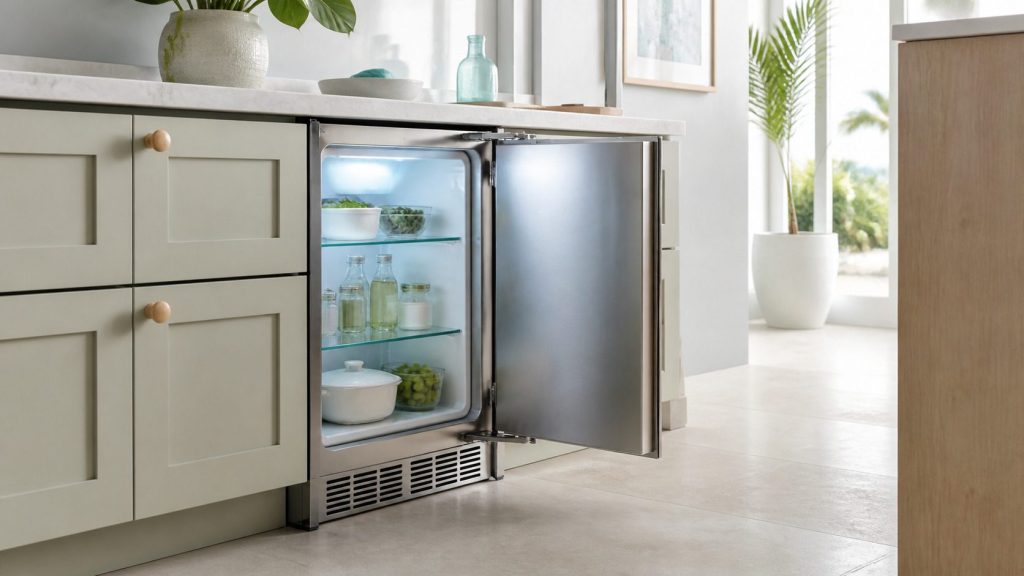
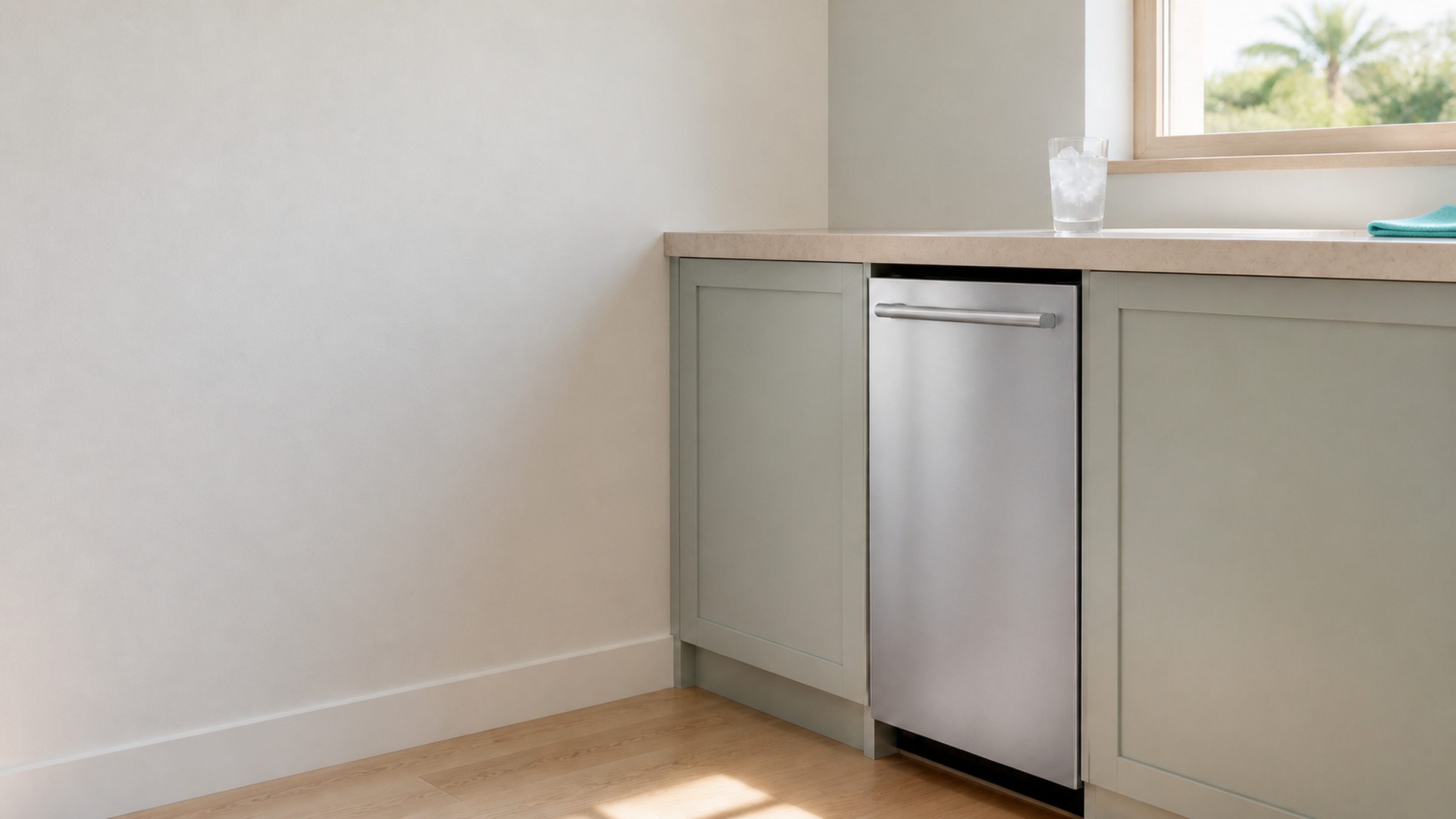
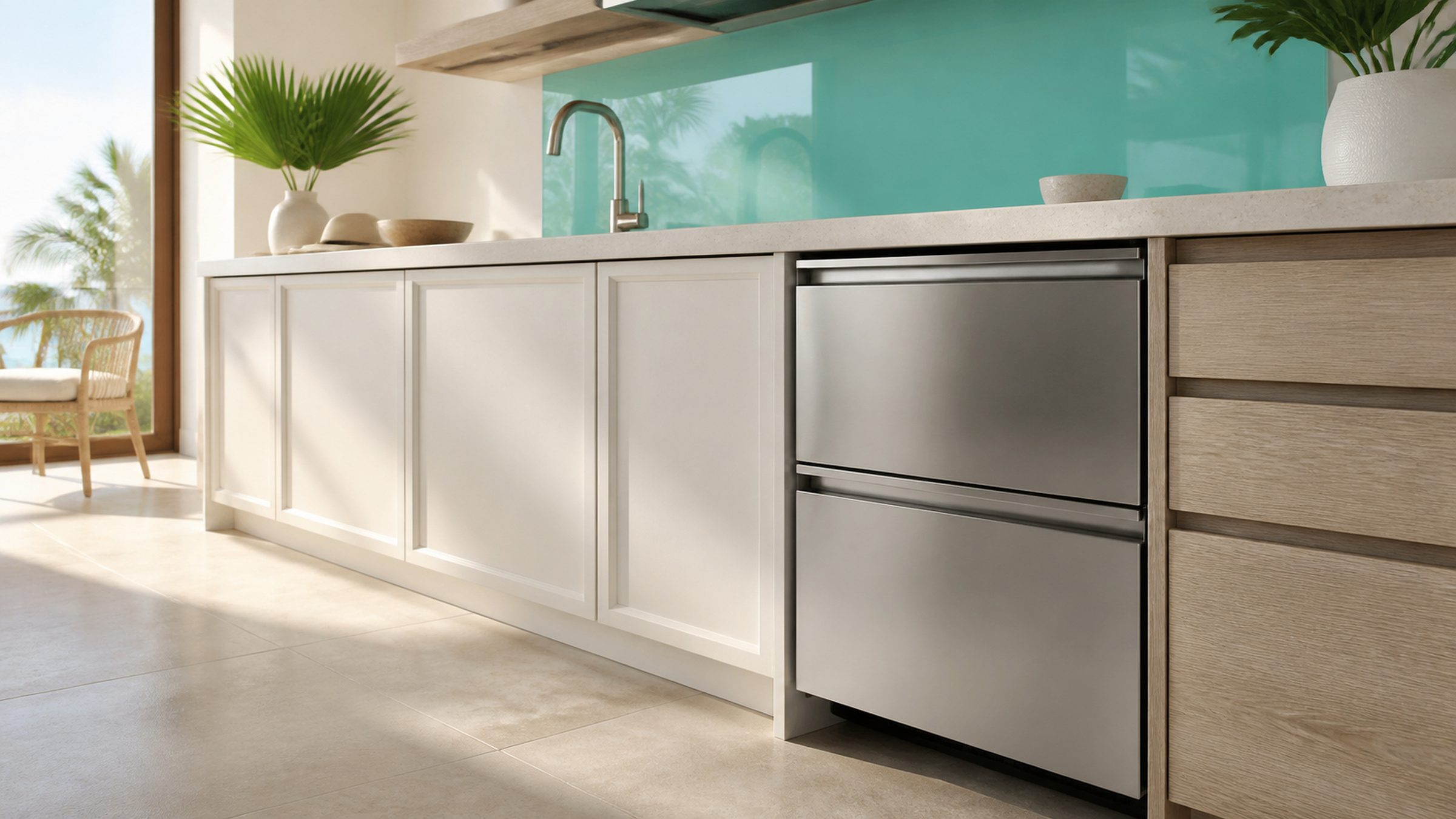
25 refrigerators and refrigerated drawers in U-Line's US catalog, and almost all of them are built into something. Fifteen, eighteen and twenty-four inches wide, in solid, glass and panel-ready fronts, plus the 36-inch modular pair and the drawers. Tell us the model and whether it carries your own cabinet front — that decides how the visit is planned before anything else does.
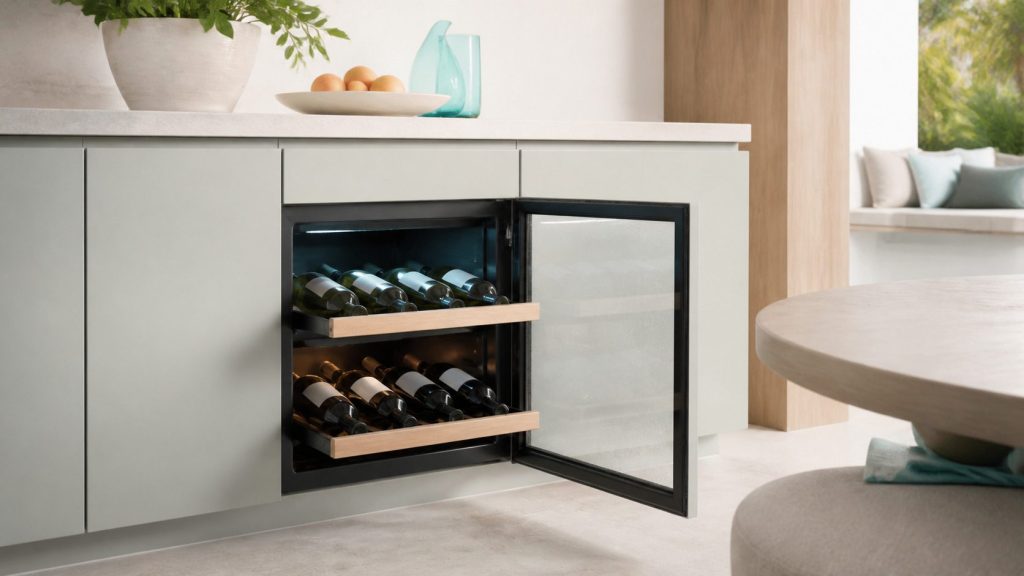
17 wine models in the US catalog, five of them holding two zones independently. Wine refrigeration is not food refrigeration set warmer: it holds a temperature you chose rather than the coldest available, it manages humidity instead of driving it out, and it is built to keep vibration away from the bottle. Which cabinet you have, and whether one zone or both are wrong, is most of the diagnosis.
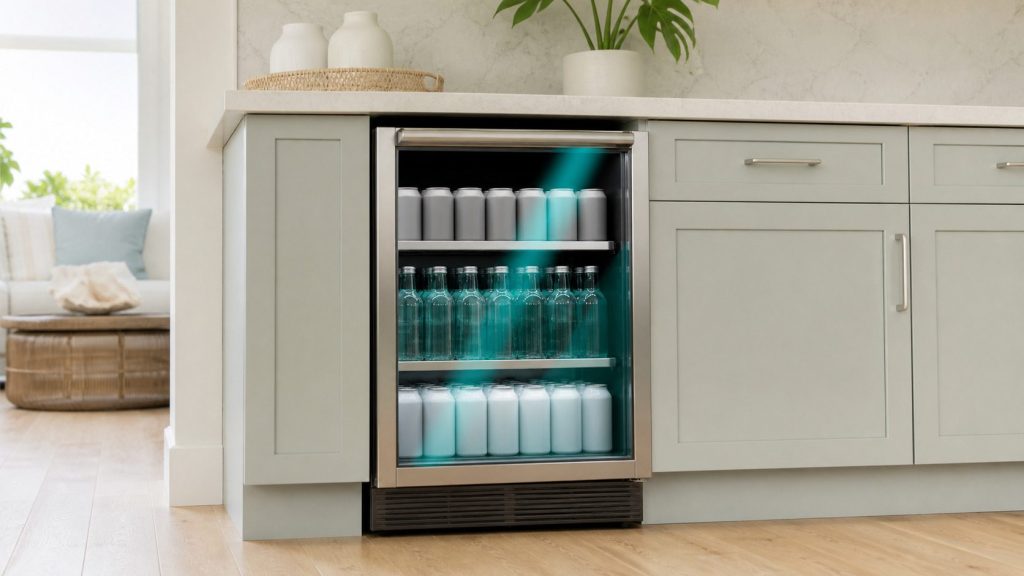
16 beverage centers in the US catalog, three of them dual-zone. A beverage center is the cabinet between a refrigerator and a wine cooler: colder than wine, warmer than food storage, and shelved for cans and bottles rather than for produce. The dual-zone models are the ones that do both at once, and they are the ones that arrive with half the cabinet wrong.
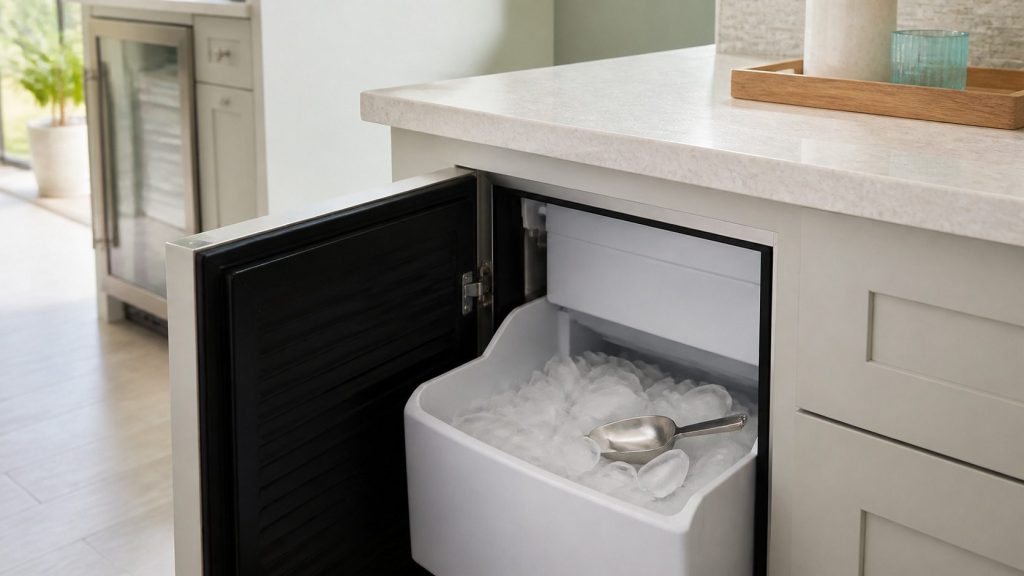
10 crescent ice makers and combination refrigerator/ice makers. U-Line has been building these since 1962 and they are the simplest cold appliance in the range: a fill valve, a mold, a heater to release the ice, and a mechanical arm that stops the machine when the bin is full. When one stops, the cause is nearly always water arriving, water leaving, or the harvest sticking.
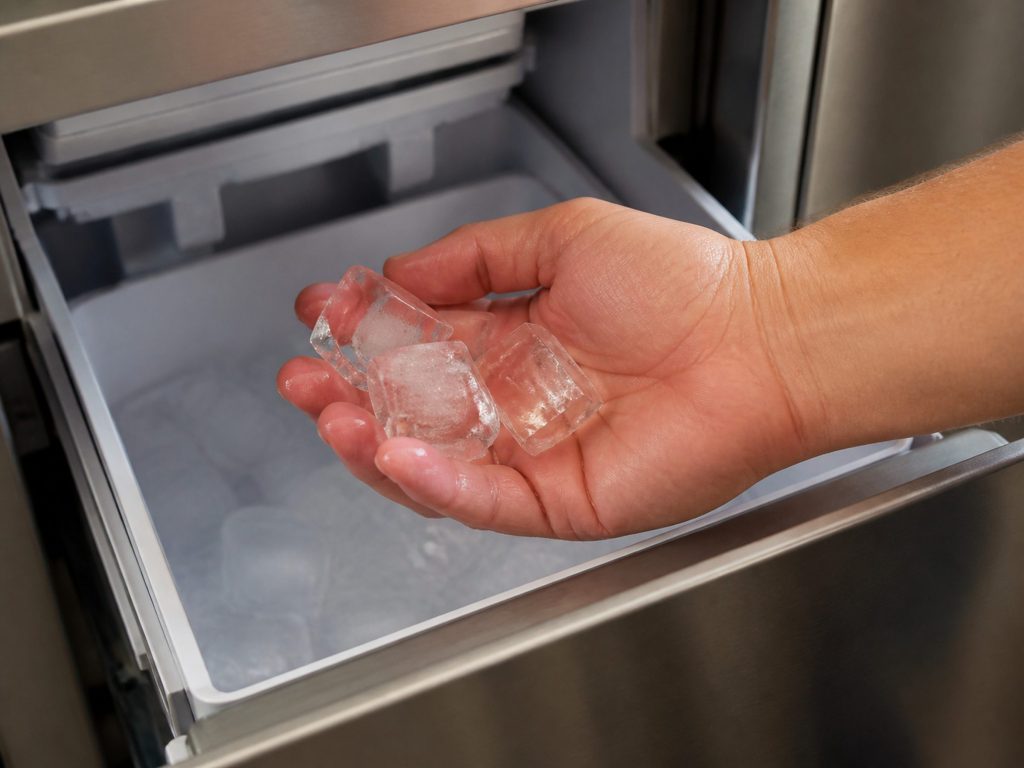
6 ice machines — clear ice, craft clear ice and nugget — and they are a different appliance from a crescent ice maker. Clear ice is made by freezing moving water slowly; nugget ice is made by driving a screw through ice on the wall of a cylinder. Both have a water circuit, a harvest and, on most installations, a drain. Anything that interrupts the water changes the ice before it stops the machine.
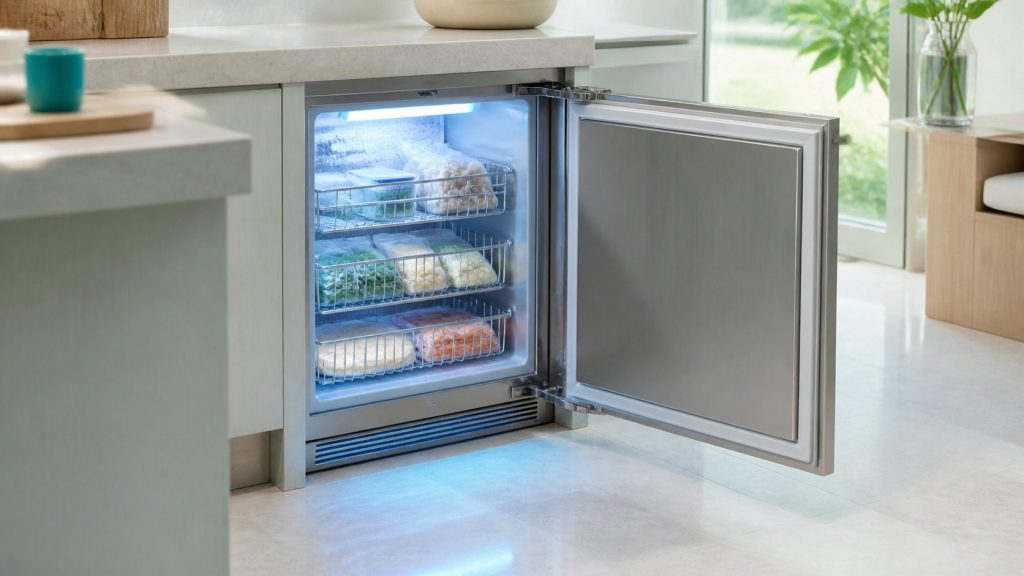
2 convertible freezers — cabinets that will run as a freezer or as a refrigerator, indoors or outdoors, depending on what you ask them for. That flexibility adds a possibility nothing else in this catalog has, and it is the first thing to check when a freezer is not freezing: it may simply have been asked to be a refrigerator.
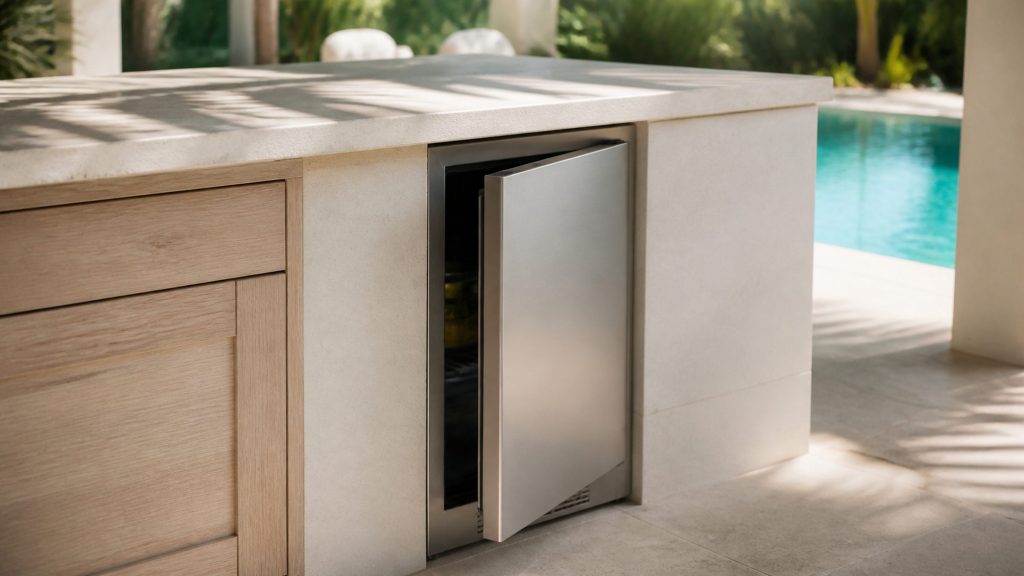
26 of the 76 models in U-Line's US catalog are outdoor units, and several more are marine. That is a quarter of the range living in salt air, sun and August humidity — conditions the appliances are built for, and built for with maintenance. Out here the interval between services is shorter than any manual assumes, and salt does to a repair what nothing in a kitchen does.
South Florida
What the control is logging
On most makes this block decodes what is on your screen. U-Line writes the same sentence in every manual it prints: all errors are logged in memory, and only the door error is displayed and has an audible signal — so on fifteen of these numbers the log is behind a hidden key held for ten seconds. The 3000 Series is the exception and does the opposite: it writes twelve notifications in plain words on the display. The meanings below are the maker's own either way.
The two lists U-Line prints, and why the difference matters
All errors are logged in memory. Only door error is displayed on the display and has an audible signal. — U-Line User Guide & Service Manual
What a U-Line display can actually show you
A door icon
The one error with a display and a sound. Five minutes open, then a tone every minute until it is shut.
11 · 12 · 13
On the ice machines, shown as bare digits rather than as codes — water level high, water level low, auger.
ER, or E and a digit
The 2000 Series. The maker's own answer is the door, and it declines to decode the rest in print.
1 – 16, or 99
Not an error at all. A factory test mode, or the board showing which machine it thinks it is.
The numbers, as the maker writes them
| E0 · E9 | Door 1 and door 2 open too long. The only errors that reach the display and sound. |
|---|---|
| E1 · E2 | Thermistor 1 and 2 open — the cabinet sensor and the evaporator sensor have stopped answering. |
| E5 · E6 | The same two sensors shorted: answering out of range rather than not at all. |
| E3 · E7 | The third sensor, open and shorted. Multi-zone and combination cabinets only. |
| E11 · E12 | Water level in the tray or reservoir reading high, and reading low. Shown as 11 and 12. |
| E13 | Auger error — the screw that makes nugget ice. Shown as 13. |
| P1 | Drain pump circuit open, and the maker qualifies it: only if the unit has a drain pump. |
| No Comm · Zone T Open | The 3000 Series does not use numbers at all. Twelve notifications in words, on the display, each with the maker's own solution beside it. |
Every row is quoted from a User Guide & Service Manual downloaded from U-Line's own site. Five of the fifteen E numbers sit on the control board's list and in no model's own service menu, and the pages for those say so rather than implying they apply to your machine. The twelve 3000 Series notifications are a separate system with its own table and its own pages.
If you have a number, write it down before anything clears it — the log is the evidence and clearing it throws away the order things happened in. Then read the model and serial off the plate on the upper right or rear wall inside.
Every number and every signalThis is the make whose codes were invented wholesale once already: a sibling network published about 38 U-Line "codes" that were really symptoms. Anything here that is not in a manual is not on this site, and the numbers that are get published with the manual they came from.
How a visit runs
The plate is on the upper right or the rear wall inside. A photograph of it, and of whatever the display is showing, saves a great deal of guessing — on this make the display shows so little that what you can see is worth more than usual.
Sensors, seals, switches, fans and filters travel. An inlet valve or a drain pump comes on an ice machine call. If the description points at the sealed system, we bring recovery equipment rather than discovering we needed it.
The modes get ruled out first because they are free, then the error log is read, then a measurement is taken. Nothing is opened until you have the scope and the figure. The diagnostic comes off the bill when you go ahead.
A unit that came out of joinery goes back level and aligned against its neighbors. And where a repair approaches what the appliance is worth — the current range publishes between $1,909 and $6,219 — you hear that before the work rather than after it.
What it costs
On cold equipment the money divides on one line — either the sealed system is involved or it is not. Every figure here is a starting point for this equipment in South Florida, researched rather than invented, with the reasons attached.
from $95
Credited toward the repair when you go ahead. A visit that ends "this is showroom mode" is a short one, and we would rather that were the outcome than an expensive one.
from $145
The maker's own first answer for a unit that is not cold enough. Under a counter, at floor level, in a Miami kitchen, a condenser fills faster than any manual assumes.
from $165
The cheapest service here and the one that prevents the most expensive. Scale is what ends ice machines in South Florida, and the maker's six-month interval is optimistic on this water.
from $165
The most likely single failure on this make, and the one the appliance hides behind its own backup mode. Measured against the maker's figure rather than swapped on sight.
from $285
The auger is the machine. What moves this figure most is how long it ran after it jammed — a machine switched off at the first grinding noise needs less than one that was left going.
from $650
Licensed work with recovery equipment, and on the current range the refrigerant is R600a. The most over-diagnosed repair on this appliance, and everything cheaper is ruled out first.
Every figure here is a starting point and a researched market range for South Florida, never a quote. The exact cost is confirmed after an on-site diagnostic and agreed in writing before anything is opened.
Prices for every U-Line job, and what changes themWhere we work
Fifty-nine cities and neighborhoods, each with a page saying what we actually see there. Tell us where you are when you book — an outdoor cabinet on a terrace and the same unit in a kitchen island are different visits.
Neighborhoods people ask for by name
Coverage is the whole of Miami-Dade, Broward and Palm Beach — the pages below are the places people search for by name, not the edge of where we drive. Terraces and summer kitchens on the water are a real part of this work rather than an exception to it.
The model number and a line about the behavior, plus a photograph of the display if there is anything on it. You will have the scope and the price in writing before anything is opened.
This article is based on:
Asked most often
Neither. We are an independent repair company working on this equipment in South Florida, and we say so on every page. If your appliance is inside the maker's own warranty we will tell you and point you at them, because that is your money rather than ours.
Water level in the tray or reservoir reading high — the maker prints it as E11 and notes that it is displayed as 11, which is why searching for it as an error code finds so little. Eleven, twelve and thirteen are the three numbers people on this make actually see, and they are water, water and the auger. One honest caveat: they sit on the control board's printed list and no model's own service menu among the manuals we read claims them, so whether one can reach your machine depends on whether your machine has the part behind it.
Look at the degree symbol before you call anybody. If it is flashing rather than steady, the appliance is in showroom mode — a demonstration setting that runs the display and the light and switches the refrigeration off entirely. Hold the light key and the power key together for five seconds. Floor models get sold and units arrive in this mode more often than anyone expects.
On this make that is most often a temperature sensor, and the appliance is designed not to mention it. U-Line's Self Preservation Mode keeps a unit cooling on a fixed cycle when a zone thermistor fails, to protect the contents until somebody looks at it — on the 2000 Series that is ten minutes on and forty off, regardless of what the cabinet needs. Nothing appears on the display. The error is in the log, and reading it turns a sealed-system quote into a sensor.
Yes, and it is a quarter of what this maker builds — twenty-six of the seventy-six models in the US catalog are outdoor, plus the marine series. Say so when you book: salt air changes the condenser service, corrodes the fixings around a repair, and shortens the interval between visits compared with anything in a kitchen.