Appliance
U-Line outdoor refrigeration
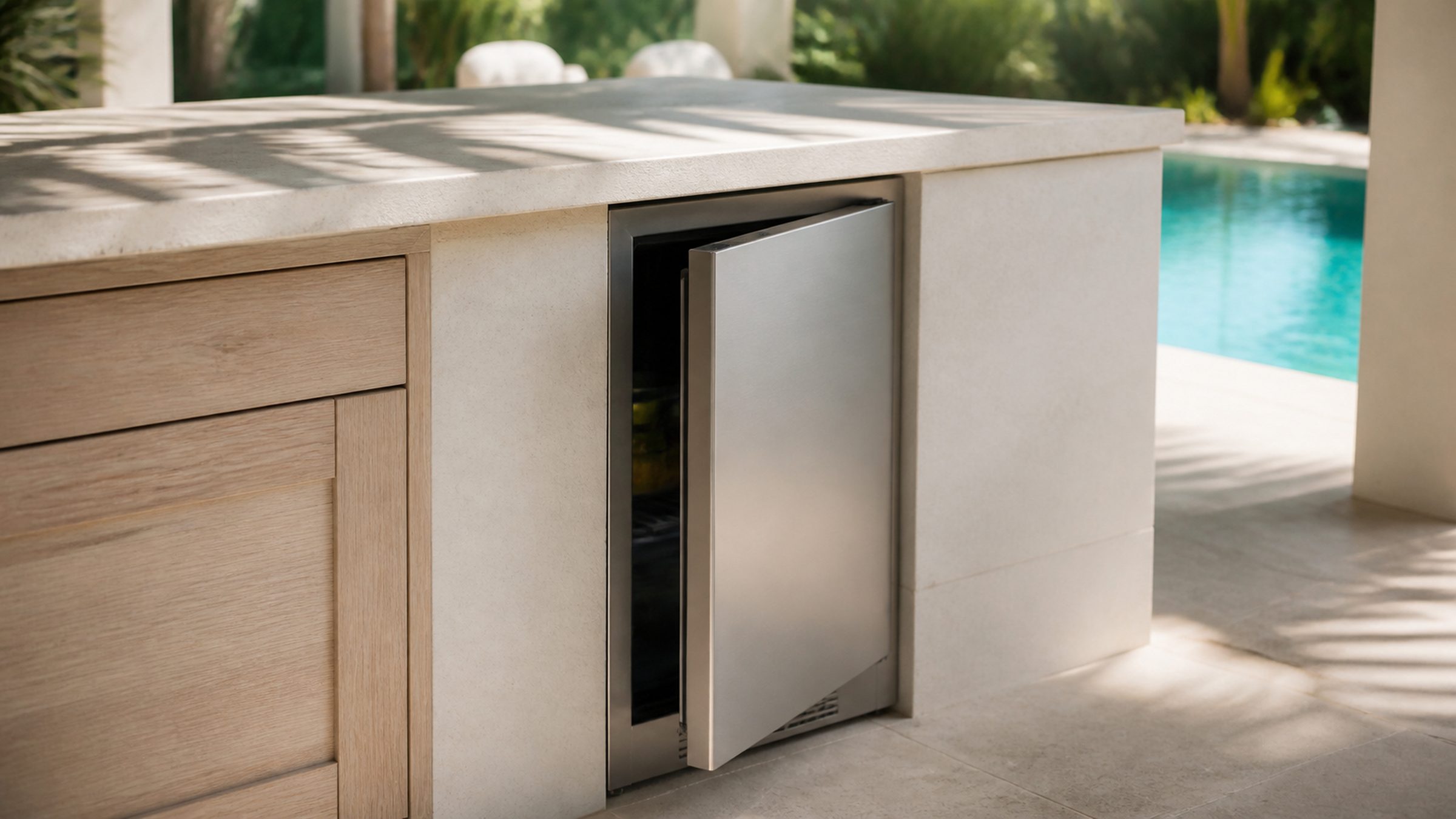
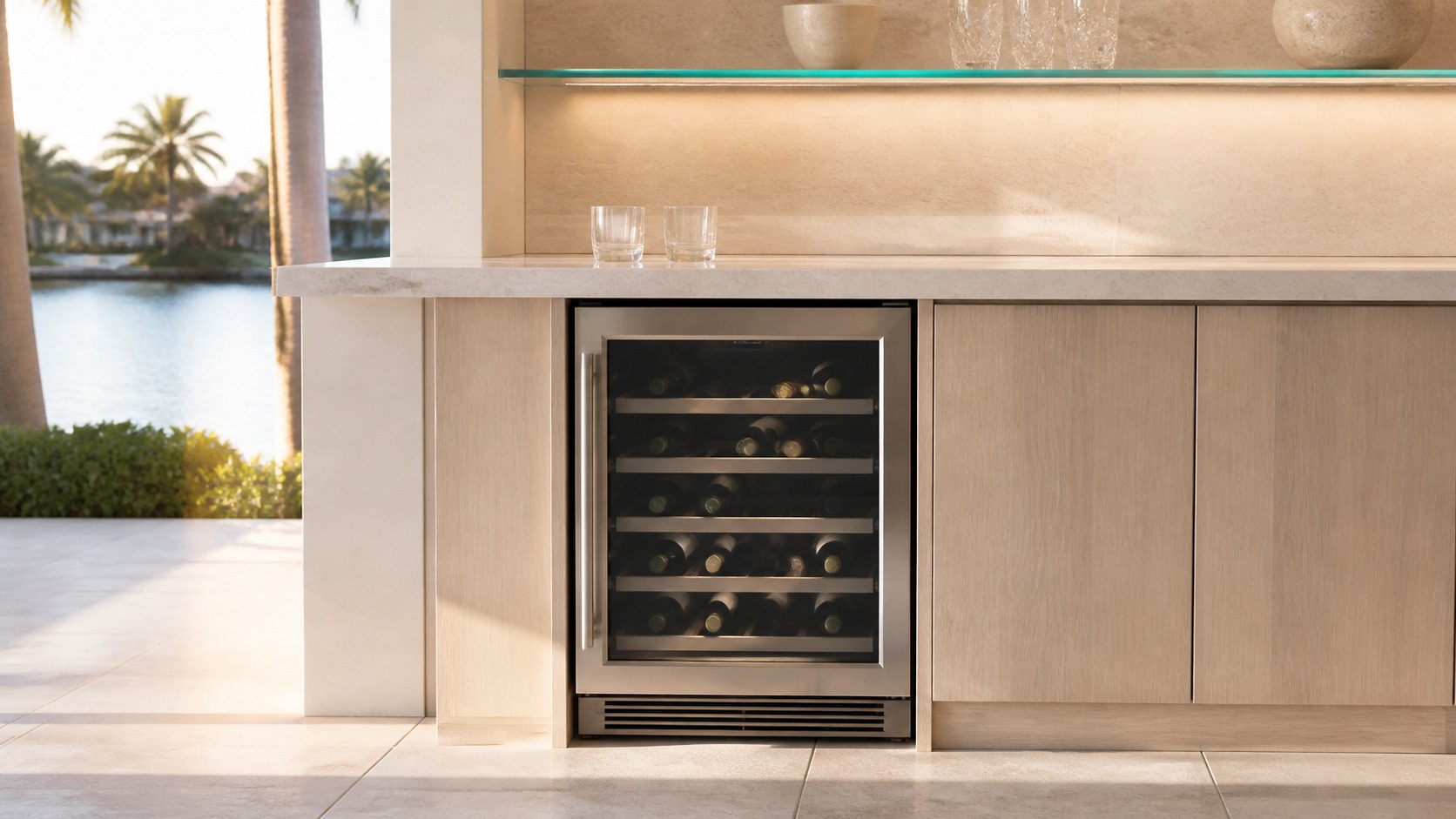
26 of the 76 models in U-Line's US catalog are outdoor units, and several more are marine. That is a quarter of the range living in salt air, sun and August humidity — conditions the appliances are built for, and built for with maintenance. Out here the interval between services is shorter than any manual assumes, and salt does to a repair what nothing in a kitchen does.
- 7 symptoms we are called out to
- From $95 diagnostic, credited to the repair
- 59 cities and neighborhoods covered
- OEM parts available on order
The short version
What this equipment is, for a repair
Configurations
26 models · terraces, summer kitchens and boats
Access
Planned before the visit, not discovered on arrival
Parts
OEM, available on order
Diagnostic
From $95, credited to the repair
What goes wrong with it
Symptoms we are called out to on U-Line outdoor refrigeration
Each one covers the likely causes in the order they are worth checking, and what to do in five minutes before booking anything.
-
It hums, it lights up, and nothing is cold Not cooling but still running
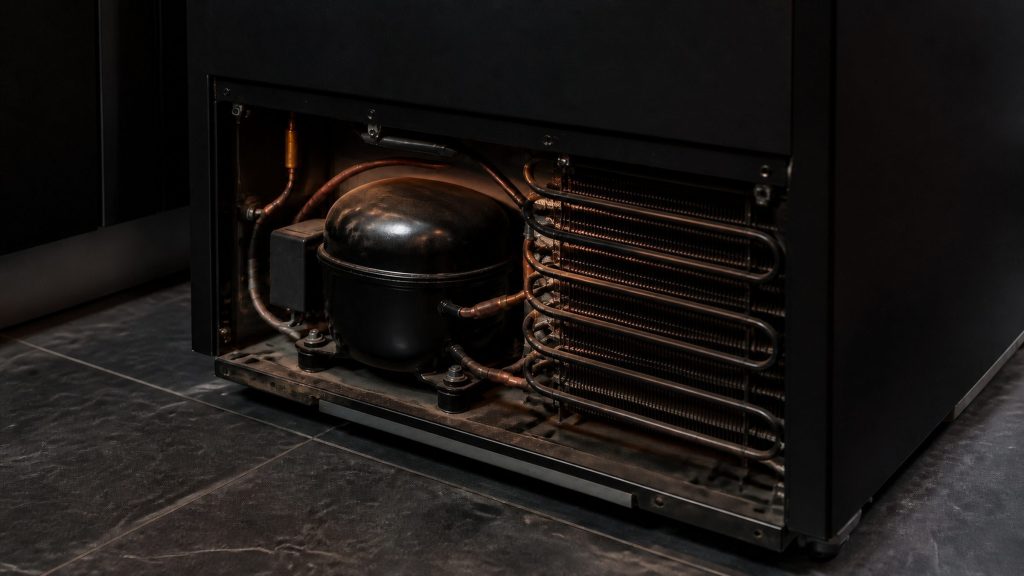
The most common call on this make and the one with the cheapest answer hiding inside it. Before anything is opened, two modes have to be ruled out — one of them lights the display, works the light and deliberately stops the refrigeration.
- Running, lit, and warm inside
- Started after a move or a delivery
- Everything looks normal except the temperature
-
It works, but it never quite arrives Not cold enough
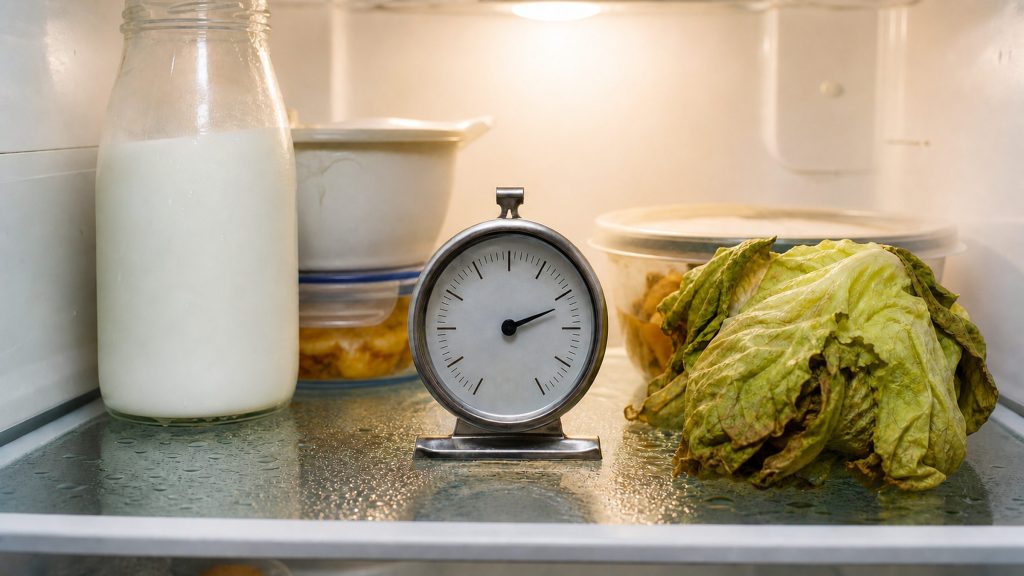
A cabinet that is cold, but not at its set point, and never has been since something changed. On this make that pattern has a specific and documented cause that shows nothing on the display, which is why it gets lived with for months.
- A few degrees out, all the time
- Worse when the kitchen is warm
- Runs longer than it used to
-
Water in, harvest, water out — in that order Ice maker not making ice
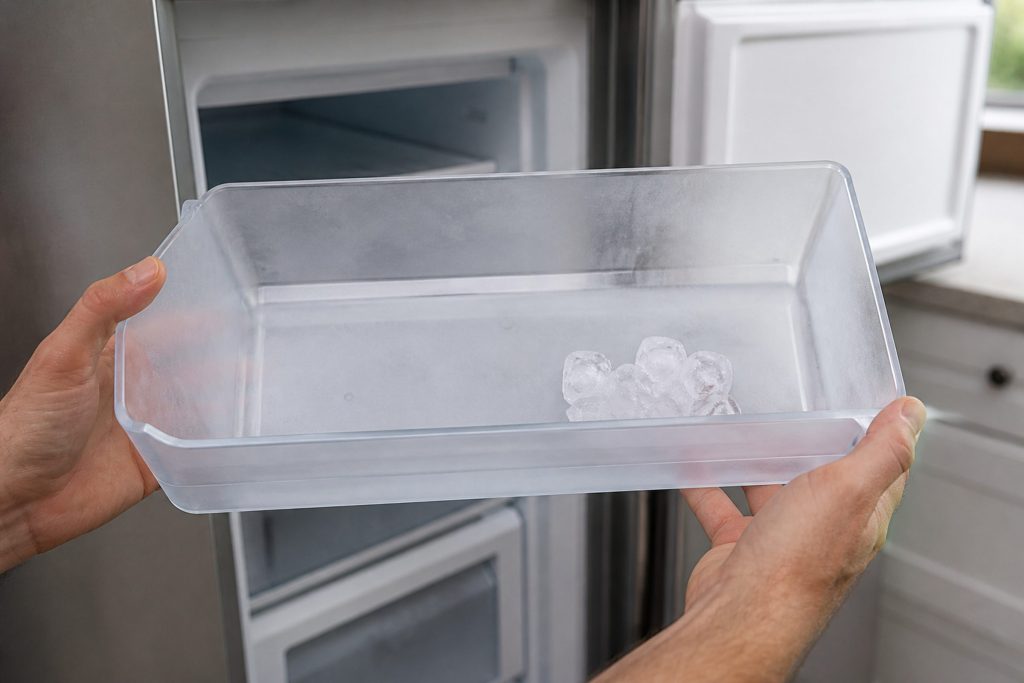
The most searched thing about this make by a wide margin. Almost every cause is on the water side rather than the cold side, and the first three checks cost nothing and are the answer more often than everything else put together.
- Stopped completely
- Making less and less over weeks
- Freezing water but never dropping it
-
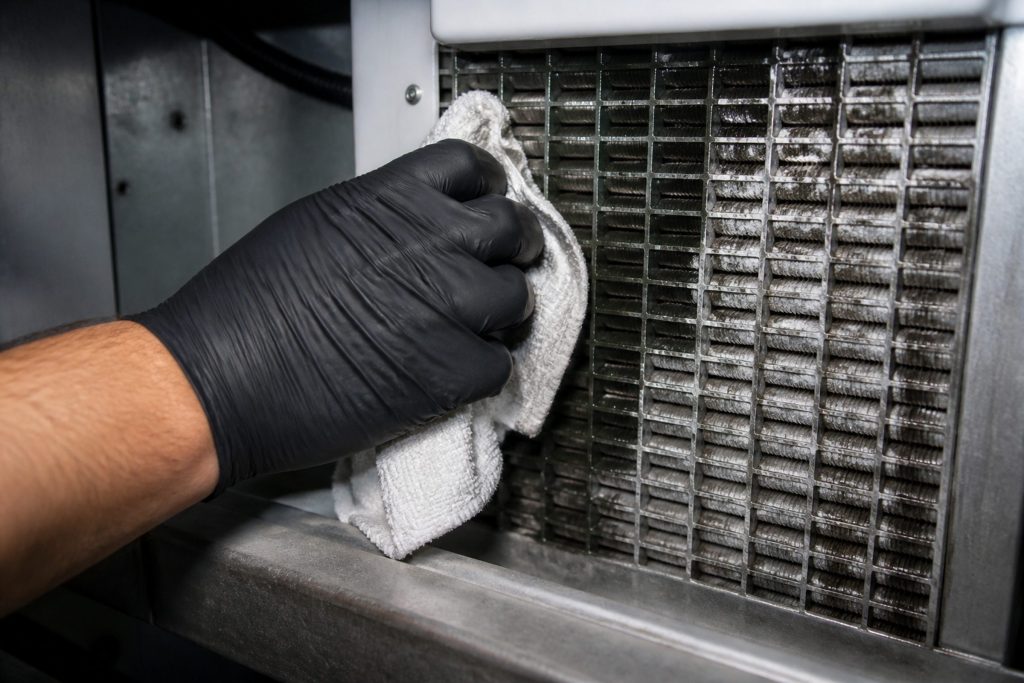
Ice where the machine did not intend it The ice maker is freezing up
A block instead of cubes, ice bridging the mold, a bin frozen into one lump, or an evaporator growing a coat. Different machines fail this way for different reasons, and the shape of the ice is the clue.
- A solid block instead of cubes
- Ice bridging across the mold
- Frost building where there was none
-
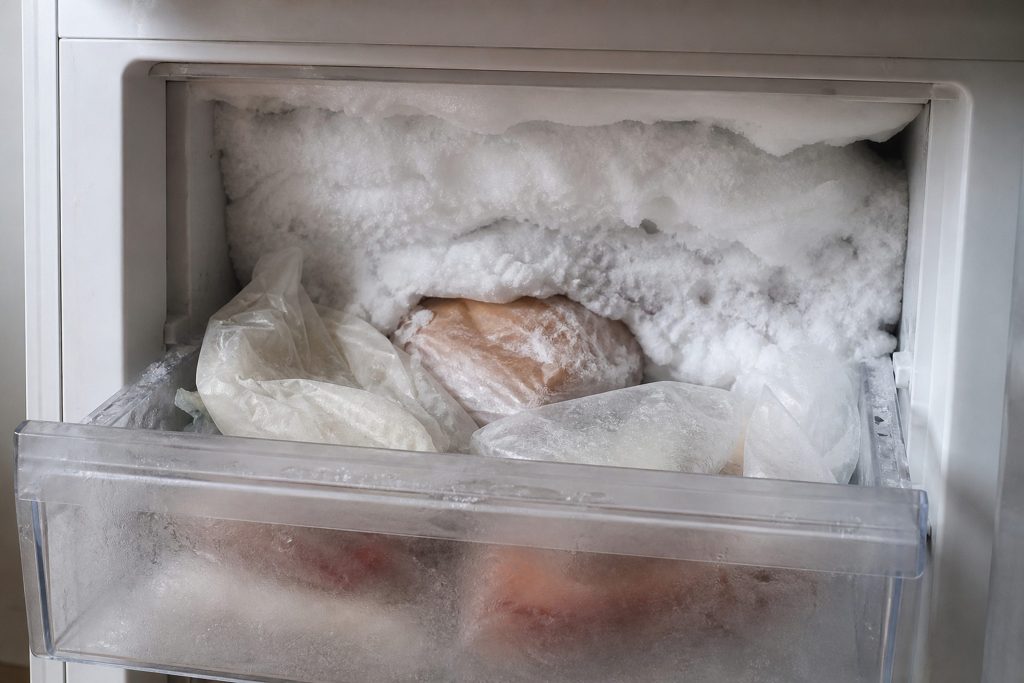
Some of it is normal, and the maker gives the threshold Frost building up inside
Frost on the evaporator plate vents is normal on these units and melts during each off cycle — the manual says so. What is not normal is a quarter of an inch or more, and in a humid kitchen the difference between the two arrives faster than the manual assumes.
- Ice on the back wall
- Frost that never melts away
- A quarter inch or more of build-up
-
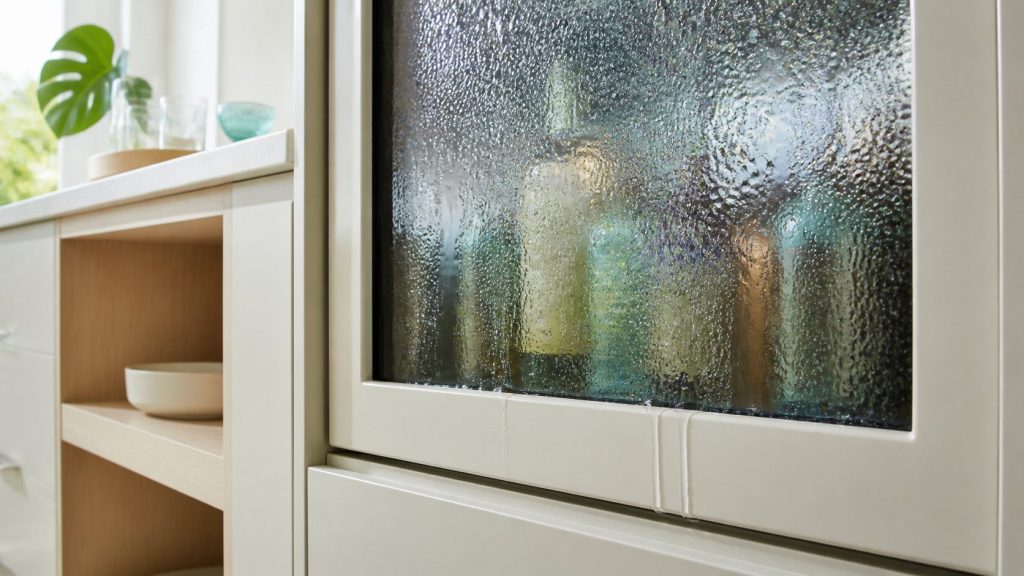
Outside is weather, inside is the appliance Condensation on the door or the outside
Water on the outside of a cabinet in South Florida is often the room rather than the appliance, and the maker says so: the unit is exposed to excessive humidity and the moisture dissipates as humidity falls. Water on the inside of a glass door is a different question.
- Beads on the outside of the door
- Misting on the inside of the glass
- Damp on the cabinetry around it
What we do on it
Repairs we carry out on U-Line outdoor refrigeration
Starting figures for this equipment in South Florida. The exact cost is confirmed after an on-site diagnostic — and this is not the whole list of what can go wrong, so call if your problem is not here.
-
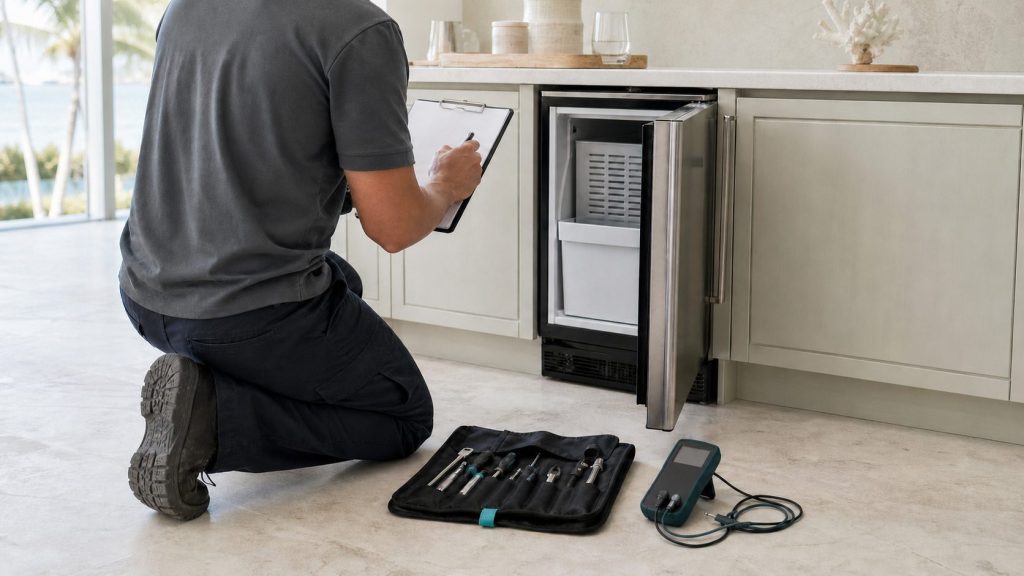
from $95 Diagnostic visit
We find out what is actually wrong before anybody quotes a part. On a U-Line that starts with a question most visits skip: is the appliance reporting a problem, or is it in a mode somebody enabled by accident? A unit that lights up and will not cool is showroom mode as often as it is a sealed system, and the two are not the same conversation. The fee is credited toward the work when you go ahead.
- Modes ruled out before any part is named
- The error log read, not guessed at
- Credited toward the repair
-
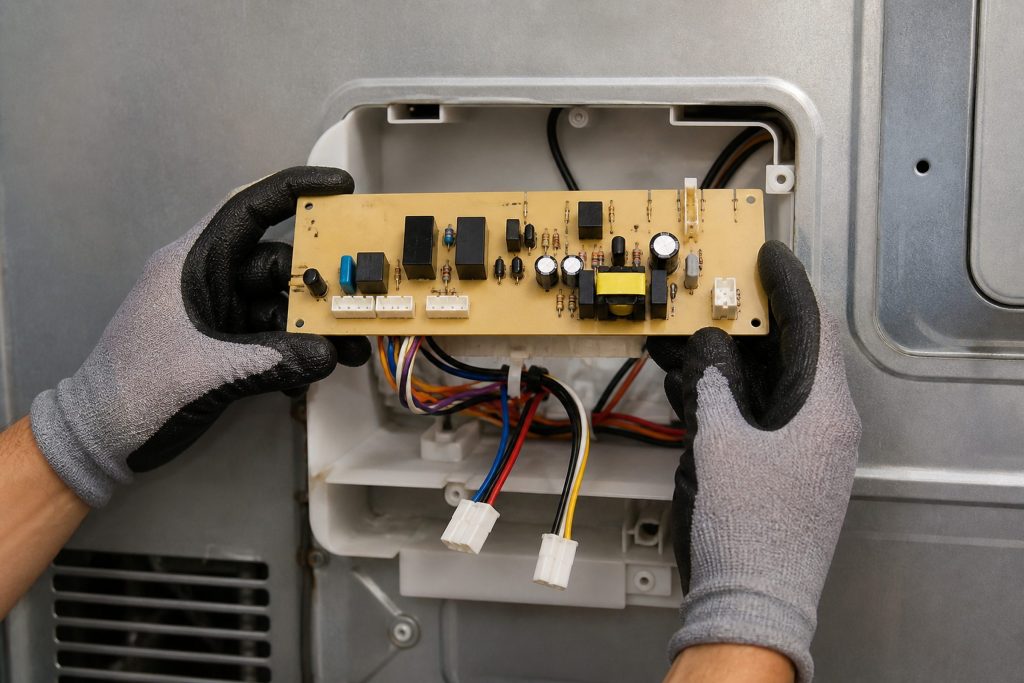
from $245 Control board and display repair
The part people reach for first and the one the maker itself says is rarely the cause. Its own manual calls the main control very robust and asks for the board to be fully diagnosed before it is removed — and then prints the flow chart to do it with. We follow that chart, because the alternative is an expensive part fitted to a problem it does not fix.
- Diagnosed the maker's way before it is condemned
- A blank display is checked as a mode first
- A new board is programmed to your model, or nothing works right
-
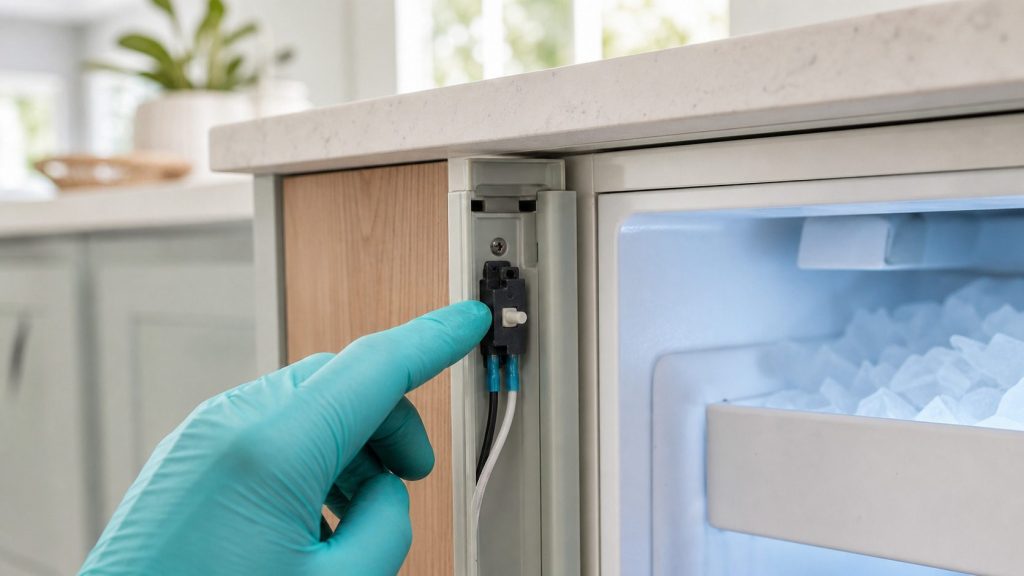
from $135 Door switch and door alert repair
The unit beeps every minute and shows a door icon, and the door is shut. On this make the door is the one error that reaches the display and makes a sound, which means it is also the one people live with for weeks. It is a switch and a magnet, and the maker's own power flow chart ends on replacing it.
- Plunger switches on solid doors, reed and magnet on glass
- The alert traced to the switch or to the door, not both
- Alignment checked against the cabinetry either side
-
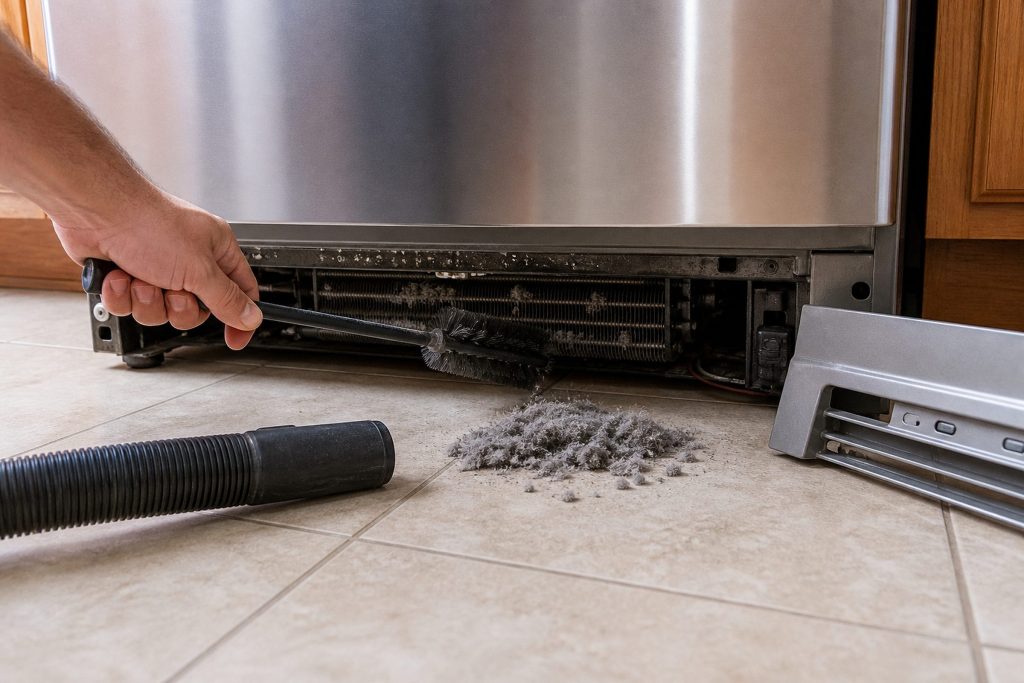
from $145 Condenser and airflow service
The maker's own first answer for a unit that is not cold enough is the grille and the condenser, and on an undercounter appliance it is right more often than anywhere else: the condenser sits behind a grille at floor level, in a kitchen, under a counter. It fills with dust and lint, and the unit does not complain — it just runs longer and holds less.
- The maker's own first check for "not cold enough"
- Cleaned the way the manual allows, not with a chemical
- Clearance around the unit checked, not only inside it
-
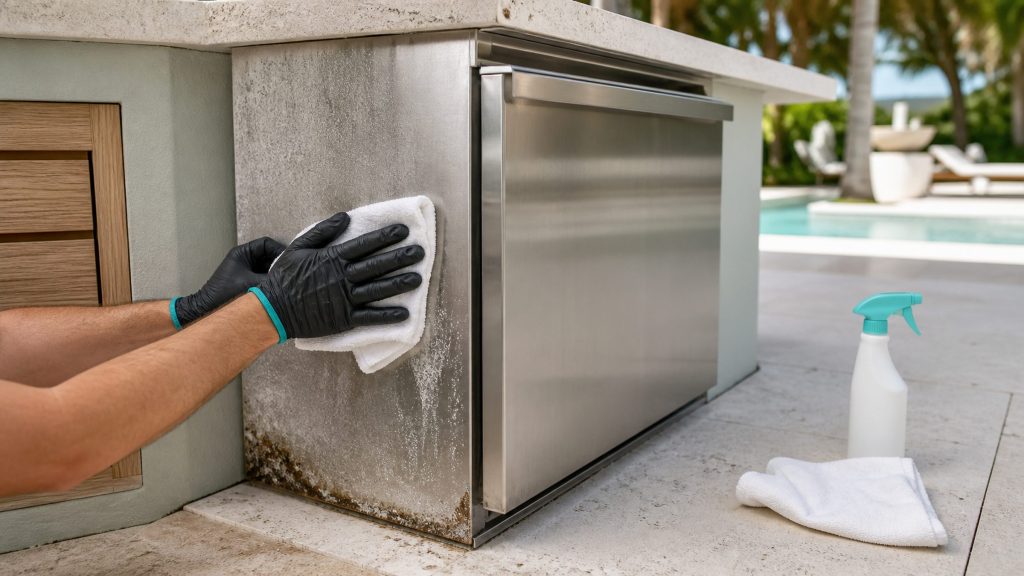
from $195 Outdoor and marine unit service
A quarter of this catalog lives outside, and salt air is a different repair rather than a different setting. An outdoor unit's condenser breathes whatever the yard has, its fasteners corrode, and on the Marine models the appliance is on a boat. It is priced above the indoor condenser service because it is more work, and it is scheduled differently because the interval between services is shorter.
- Salt, humidity and what they do to a condenser
- Corrosion checked on the fixings, not only on the coil
- Marine and 230V models included
-
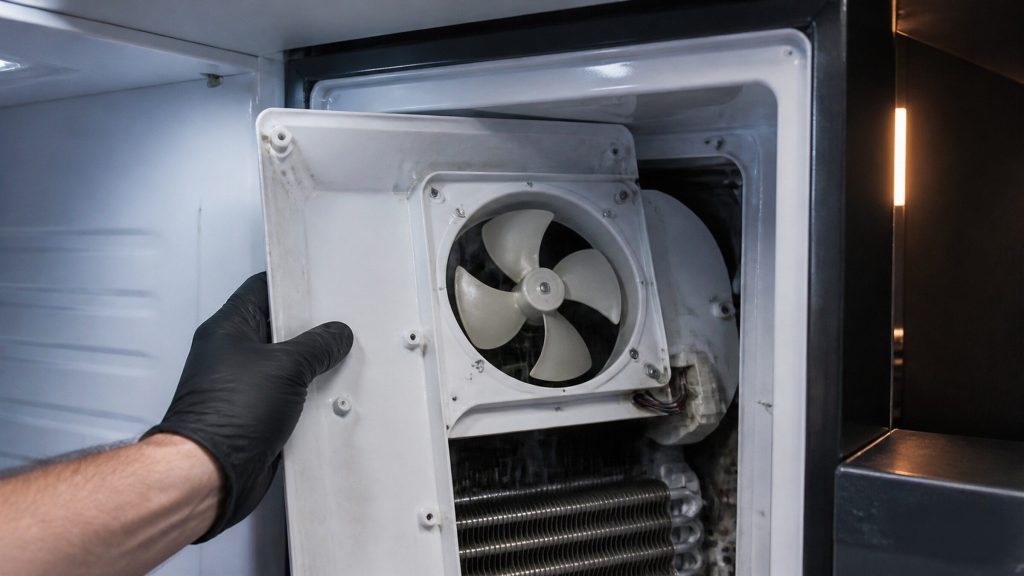
from $175 Evaporator fan and running-noise repair
A U-Line that has become noisy usually has one of two things wrong, and the maker names both: refrigeration tubing touching the cabinet, and a fan blade obstructed by wiring, foam or packaging. Neither is expensive. Both sound alarming through a cabinet door in a quiet room, which is why the call usually comes at night.
- The two causes the maker names, checked first
- Normal operating sounds told apart from problems
- Tubing repositioned rather than replaced where that is the answer
-
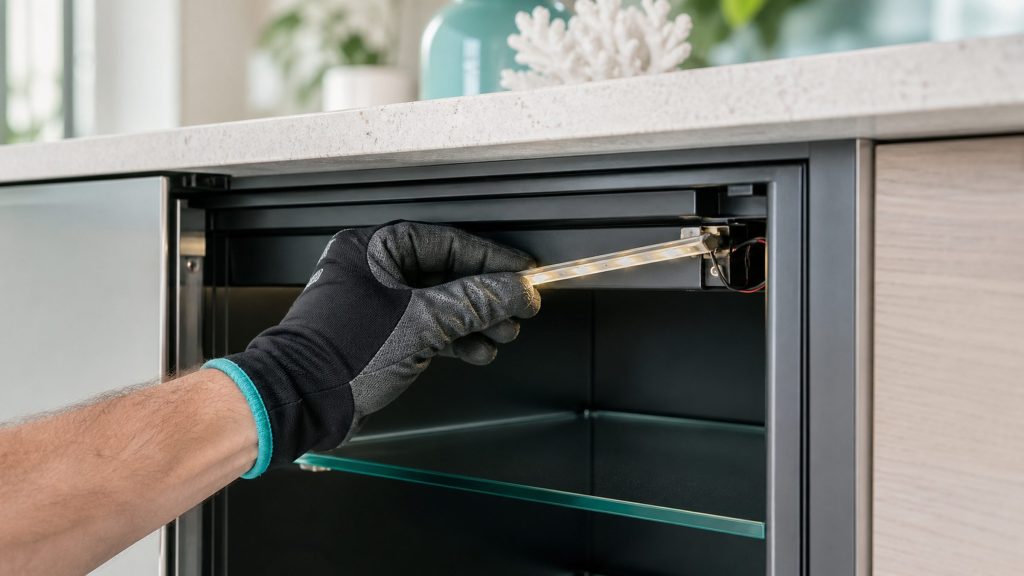
from $135 Interior lighting and BrightShield repair
LED strips, the actuator bracket the maker names in its own troubleshooting table, and on current models the antimicrobial module. Small parts and awkward access, and one particular trap: a light that will not come on is a Sabbath-mode symptom before it is a lamp, and a light that stays on when the door shuts is usually the bracket rather than the switch.
- Sabbath mode and the light switch ruled out first
- The actuator bracket the manual names, adjusted
- Color and brightness settings checked on current models
-
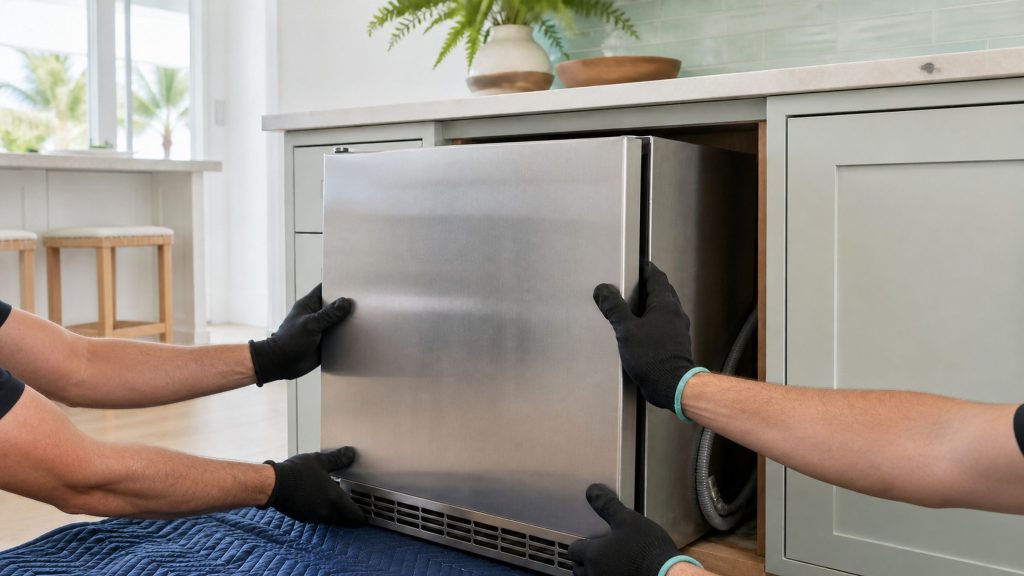
from $195 Built-in removal and reinstallation
Its own line on the invoice because it is its own work, and because it is invisible in a quote that does not name it. Nearly every U-Line is under a counter, many are behind a custom panel, and several are in a run with an anti-tip bracket and a fixed water connection. Getting the appliance out without damaging the joinery, and back in aligned, is a real part of most repairs on this make.
- Quoted openly instead of buried in the repair
- Anti-tip, grille, water and drain reconnected properly
- Aligned back into the run, not just pushed back
-

from $145 Appliance maintenance
The visit that stops the other visits. On this equipment it is a short and specific list, and in this climate it pays for itself: a condenser at floor level in a humid kitchen, a seal that works harder here than anywhere, a drain that must not block, and on an ice machine a cleaning cycle the machine itself has been asking for.
- Condenser, seals, doors, drain — and the ice cycle where there is one
- The maker's own intervals, adjusted for South Florida
- Findings written down, not just fixed
-
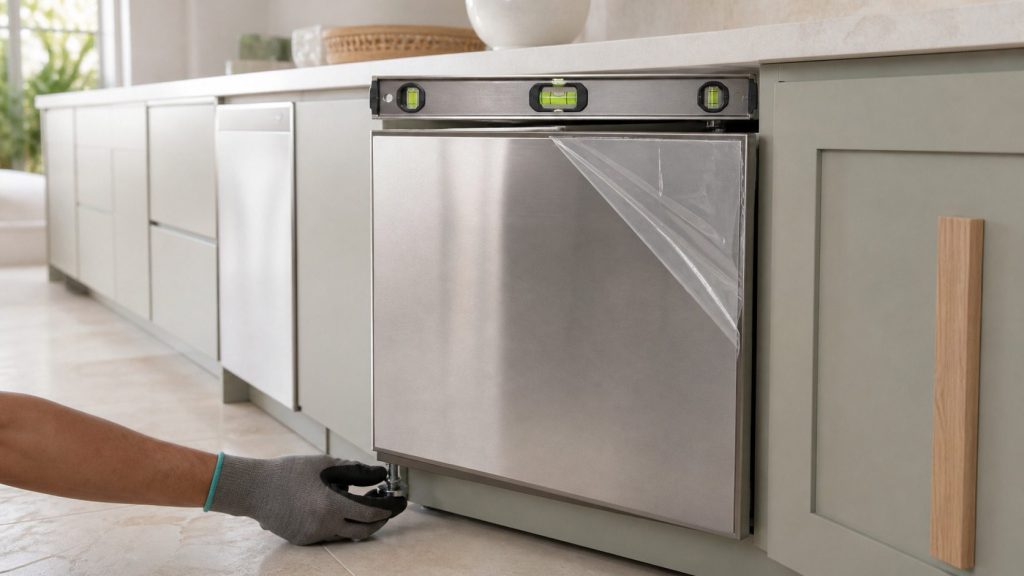
from $295 Appliance installation
U-Line publishes a cutout, a clearance, an anti-tip requirement, a door swing procedure and a water hookup, and a unit installed against those specifications behaves for years. One installed without them produces exactly the complaints this site is otherwise about: a door that will not seal, a condenser that cannot breathe, a drain that backs up.
- Cutout and clearance against the maker's own figures
- Anti-tip bracket fitted, every time
- Water and drain done properly on the machines that need them
In more detail
About U-Line outdoor refrigeration
A quarter of this catalog is outdoors
Twenty-six outdoor models and a marine series is an unusual proportion, and it reflects what U-Line is for: undercounter refrigeration built into places other refrigeration does not go. Summer kitchens, terraces, pool bars, boats. In South Florida that is most of the reason these appliances are bought.
Salt is the difference, not heat
Heat is a load these appliances are designed for and manage. Salt is what changes them: it holds moisture against metal, it takes a condenser's ability to shed heat away gradually rather than suddenly, and it corrodes fixings, brackets and door hardware so that a straightforward repair becomes twice the job. Nearly every outdoor call comes back to how close to the water the appliance is.
What the manual says about ambient
U-Line names excessive ambient temperature and direct sunlight in its own troubleshooting table, alongside the door and the condenser. An appliance in afternoon sun with no shade is being asked for more than it can give, and that is worth establishing before anything is diagnosed as a problem with the machine.
Which models these are
The Outdoor Collection covers refrigerators, refrigerator drawers, convertible freezers, crescent ice makers and clear ice machines, and the Marine Series adds 230V models built for boats. They carry the same control platforms as their indoor equivalents, so everything on the rest of this site about sensors, modes and the error log applies here too.
What to have ready when you call
The model number from the plate on the upper right or the rear wall inside, what the appliance is doing rather than what you think has failed, whether it is built into a run or standing in a gap, and anything showing on the display — photographed rather than described. On this make the display shows very little, so what you can see is worth more than usual.
This article is based on:
- Official manufacturer documentation
- Internal repair procedures
- Technician repair history
- Company quality standards
Before you book
Questions about U-Line outdoor refrigeration
Does an outdoor unit really need different service?
Yes, and it is the interval rather than the work. An outdoor condenser collects salt as well as dust, and salt holds moisture against metal — so it stops shedding heat sooner and the fixings around it corrode while the refrigeration is still fine. A schedule that works for a kitchen unit does not work three blocks from the water.
It was fine last summer and it is struggling now.
A year of salt is a measurable amount on a coil. Outdoor units degrade gradually and then miss a summer, which is why they are worth servicing on a schedule rather than on a complaint. Look at the condenser: grey rather than clean means it is not shedding heat.
Should I cover it in the off season?
Only with something that breathes. A sealed cover on an outdoor appliance in this climate traps humidity against it, which does more harm than the weather it was keeping out.
What is different about the marine models?
They are built for a boat — 230V on several of them, and hardware chosen for constant motion and constant salt. The refrigeration is the refrigeration; what changes is everything around it, and the access, which on a boat is its own conversation.
Where we do it
Across Miami-Dade, Broward, and Palm Beach
Same terms everywhere we go: an on-site diagnostic first, the price agreed in writing, and the exact figure confirmed once we have seen the unit.
Neighborhoods people ask for by name