U-LineRepair Miami

7 appliances · 76 models · a quarter of them outdoors

Everything U-Line builds, and nothing that cooks.

Undercounter refrigeration is what this maker has done since 1962, and it does it in more shapes than any other brand on this fleet: refrigerators and drawers, crescent ice makers, clear and nugget ice machines, wine coolers, beverage centers, convertible freezers, and twenty-six models built to live outside.

  • 7 appliance types on this site
  • 76 models in the maker's US catalog
  • 26 of them built for outdoors
  • 20 no longer made, and still under counters here

Start from the machine

Seven appliances, and they fail in different languages

A refrigerator loses cold quietly. An ice machine tells you with the ice first. A dual-zone wine cooler drifts in one half. An outdoor unit fails for reasons no indoor appliance has.

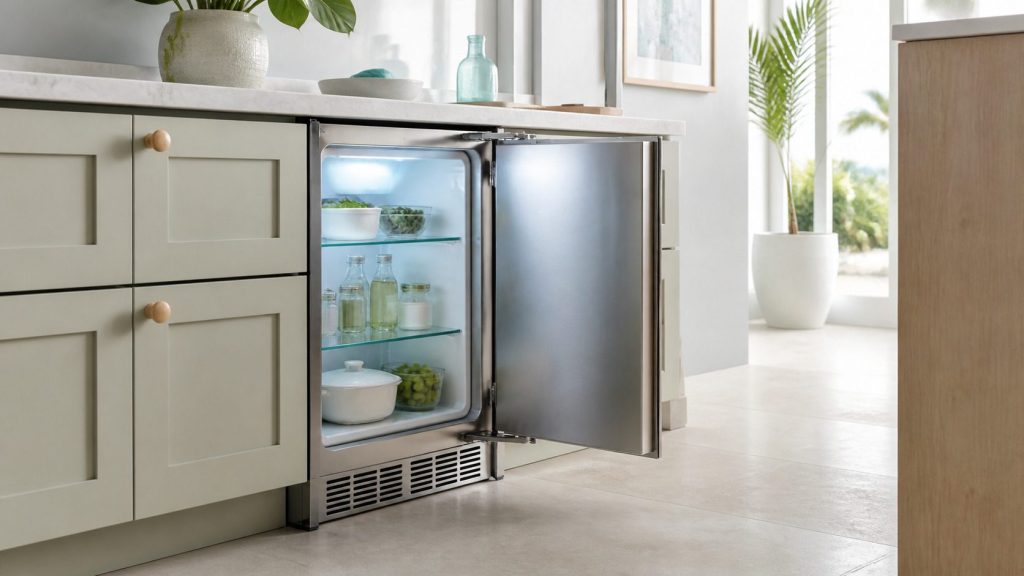
  • A stainless built-under refrigerator 24 inches wide standing open beneath a pale stone worktop, glass shelves inside holding bottles and covered dishes, cool interior light, the ventilation grille along its base visible, pale cabinetry either side.
    25 models · solid, glass and integrated · drawers

    U-Line refrigerator

    25 refrigerators and refrigerated drawers in U-Line's US catalog, and almost all of them are built into something. Fifteen, eighteen and twenty-four inches wide, in solid, glass and panel-ready fronts, plus the 36-inch modular pair and the drawers. Tell us the model and whether it carries your own cabinet front — that decides how the visit is planned before anything else does.

    • 15, 18, 24 and 36 inches, mostly built in
    • Panel-ready fronts change the visit, not the repair
    • Drawers and combination cabinets included
    Refrigerator repair
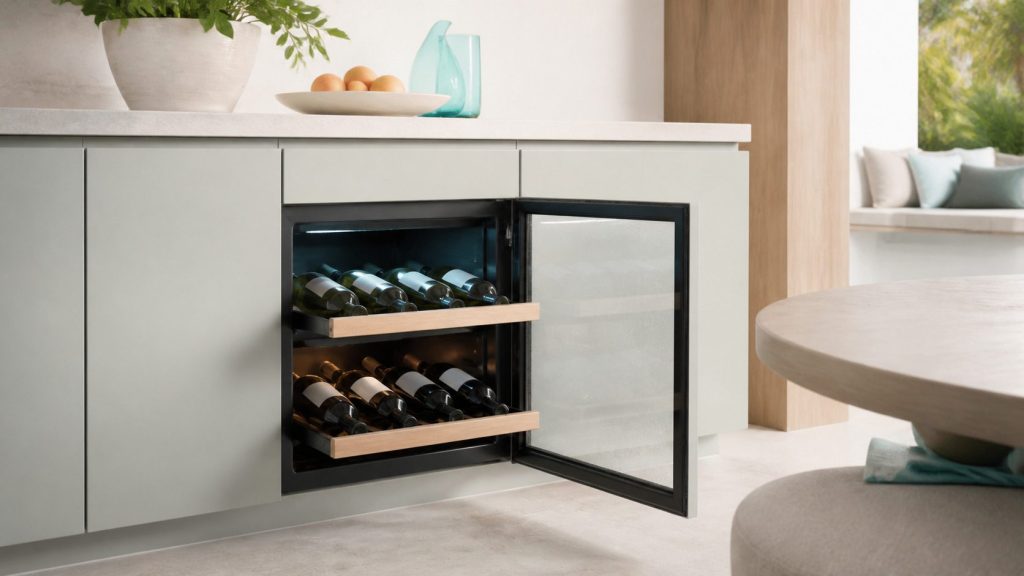
  • A built-under wine cooler with a glass door standing open beneath a pale worktop, two wooden shelf runners drawn out with bottles lying on them, the upper compartment lit slightly cooler than the lower, condensation faint on the inside of the glass.
    17 models · single and dual zone · 15 to 36 inches

    U-Line wine cooler

    17 wine models in the US catalog, five of them holding two zones independently. Wine refrigeration is not food refrigeration set warmer: it holds a temperature you chose rather than the coldest available, it manages humidity instead of driving it out, and it is built to keep vibration away from the bottle. Which cabinet you have, and whether one zone or both are wrong, is most of the diagnosis.

    • One zone drifting while the other holds
    • Warmer than a fridge on purpose — set against wrong
    • Humidity and vibration, which food cabinets ignore
    Wine cooler repair
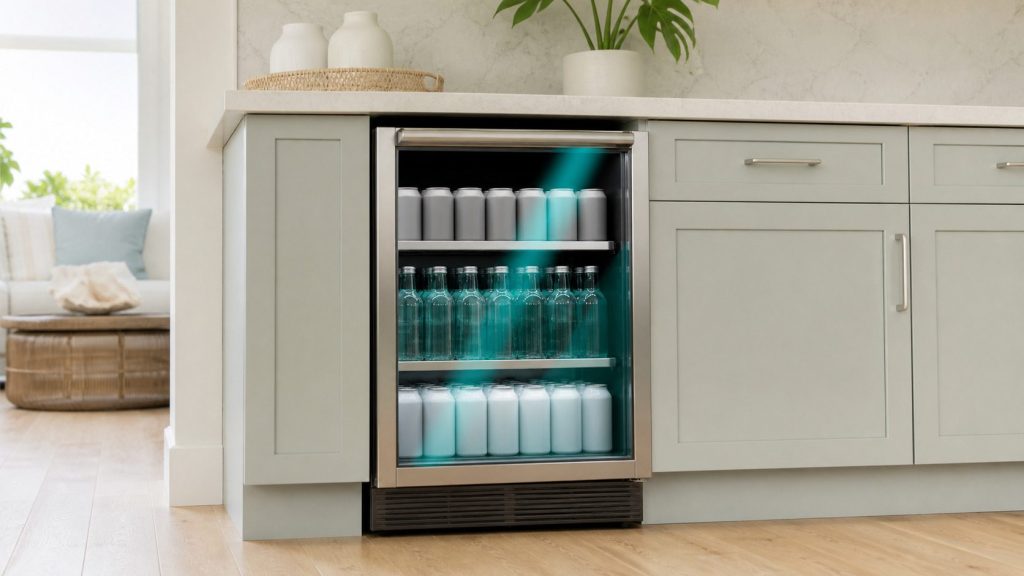
  • A glass-fronted built-under beverage cabinet beneath a pale stone worktop, its door closed, cans and bottles standing in neat rows on three lit shelves behind the glass, a turquoise reflection across the door, pale cabinetry around it.
    16 models · single and dual zone · glass and solid

    U-Line beverage center

    16 beverage centers in the US catalog, three of them dual-zone. A beverage center is the cabinet between a refrigerator and a wine cooler: colder than wine, warmer than food storage, and shelved for cans and bottles rather than for produce. The dual-zone models are the ones that do both at once, and they are the ones that arrive with half the cabinet wrong.

    • Colder than wine, warmer than a fridge
    • Dual-zone models fail one half at a time
    • Glass doors, and what that does in this climate
    Beverage center repair
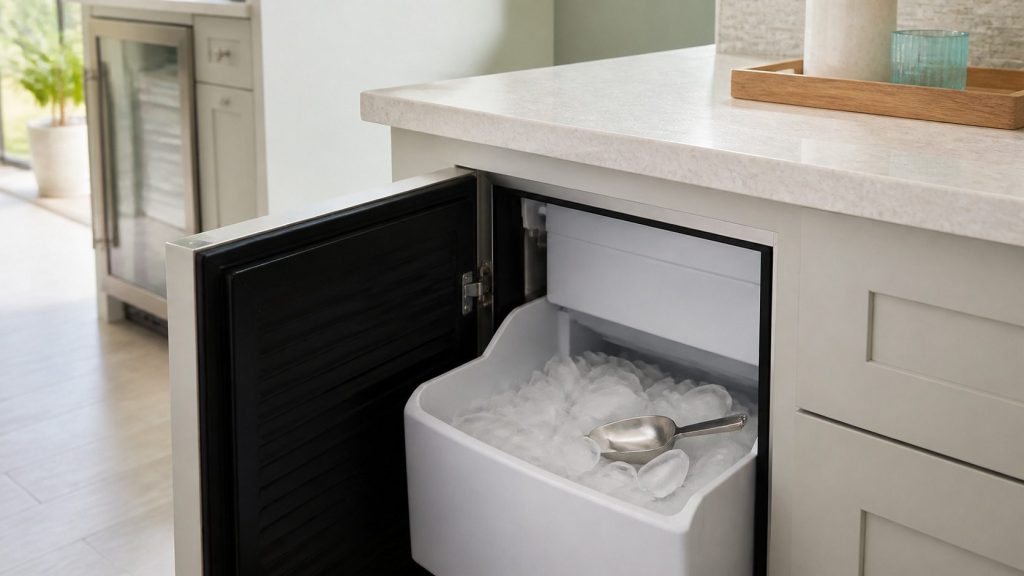
  • A built-under ice maker beneath a pale worktop with its door swung open to show the storage bin part filled with crescent-shaped ice, the curved cubes clearly not square, a metal scoop resting on top of them.
    10 models · crescent ice · U-Line's oldest line

    U-Line ice maker

    10 crescent ice makers and combination refrigerator/ice makers. U-Line has been building these since 1962 and they are the simplest cold appliance in the range: a fill valve, a mold, a heater to release the ice, and a mechanical arm that stops the machine when the bin is full. When one stops, the cause is nearly always water arriving, water leaving, or the harvest sticking.

    • Crescent cubes, mechanical harvest, bin arm
    • Water problems outnumber everything else
    • No service menu on most of them
    Ice maker repair
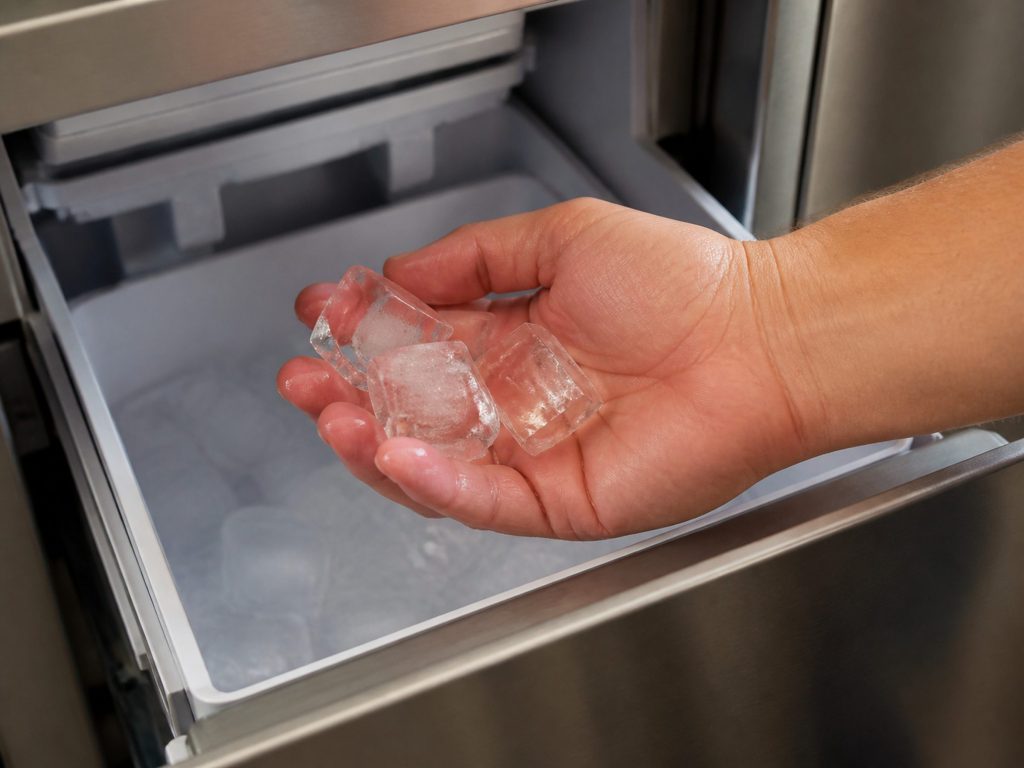
  • A cupped hand lifting a few large clear ice cubes out of the bin of a 15-inch undercounter ice maker, the rest of the bin below in soft focus
    6 models · clear ice, craft ice and nugget

    U-Line ice machine

    6 ice machines — clear ice, craft clear ice and nugget — and they are a different appliance from a crescent ice maker. Clear ice is made by freezing moving water slowly; nugget ice is made by driving a screw through ice on the wall of a cylinder. Both have a water circuit, a harvest and, on most installations, a drain. Anything that interrupts the water changes the ice before it stops the machine.

    • Clear, craft and nugget — three different machines
    • The ice itself is evidence before anything fails
    • Scale is what ends them in this climate
    Ice machine repair
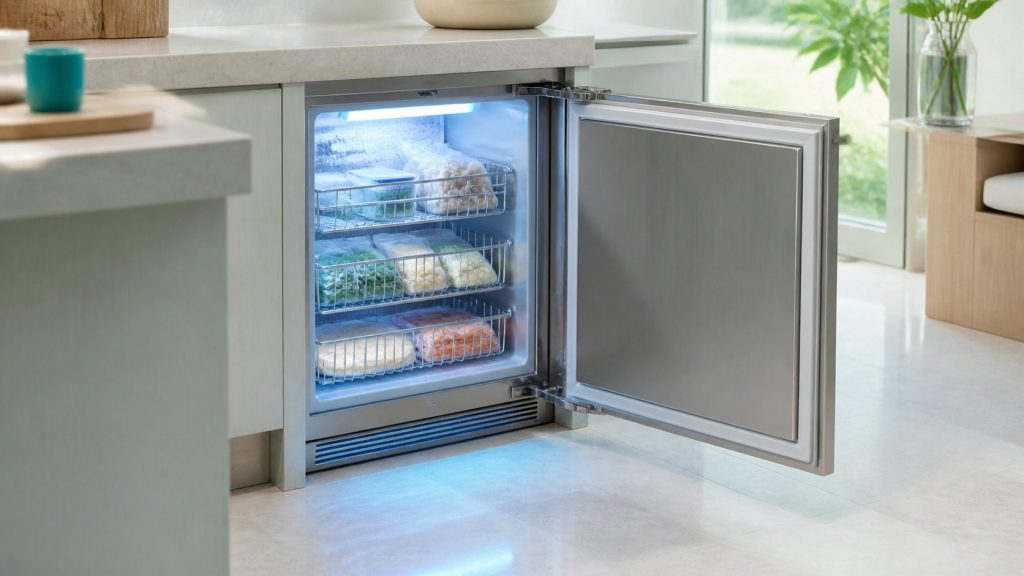
  • A built-under stainless cabinet beneath a pale worktop with its door open on wire baskets of frozen food, a thin bloom of frost on the rear wall, cold blue interior light spilling onto the pale floor.
    2 models · convertible · indoor and outdoor

    U-Line freezer

    2 convertible freezers — cabinets that will run as a freezer or as a refrigerator, indoors or outdoors, depending on what you ask them for. That flexibility adds a possibility nothing else in this catalog has, and it is the first thing to check when a freezer is not freezing: it may simply have been asked to be a refrigerator.

    • Converts between freezer and refrigerator
    • Less margin than a refrigerator when a sensor fails
    • Frost has a published threshold on this make
    Freezer repair
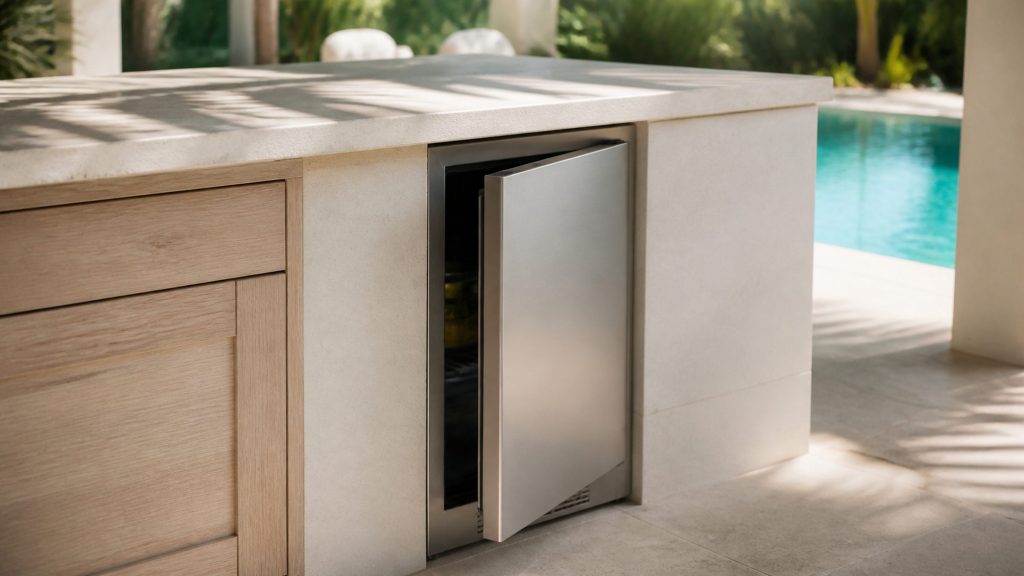
  • A stainless built-under refrigerated cabinet set into pale rendered masonry on a shaded poolside terrace, its door slightly open, bright Florida daylight, palm shadow across the stone top, turquoise pool water out of focus behind.
    26 models · terraces, summer kitchens and boats

    U-Line outdoor refrigeration

    26 of the 76 models in U-Line's US catalog are outdoor units, and several more are marine. That is a quarter of the range living in salt air, sun and August humidity — conditions the appliances are built for, and built for with maintenance. Out here the interval between services is shorter than any manual assumes, and salt does to a repair what nothing in a kitchen does.

    • A quarter of the catalog lives outside
    • Salt corrodes the fixings before it stops the cooling
    • Marine models, and the boats they are on
    Outdoor unit repair

What an undercounter cabinet is

Not a small refrigerator. A different appliance.

There is less air in it, so a door left open changes everything inside it quickly. The condenser sits at floor level behind a grille, in a kitchen, where it collects what floors collect. And the cabinet is usually surrounded on three sides by joinery, which decides both how it sheds heat and how anybody reaches it.

That is why the same three things account for most of what goes wrong across every appliance on this page: a temperature sensor, the condenser and the grille, and the door. Everything else is less likely than those three put together — including the sealed system, which is the one people assume.

What each repair costs
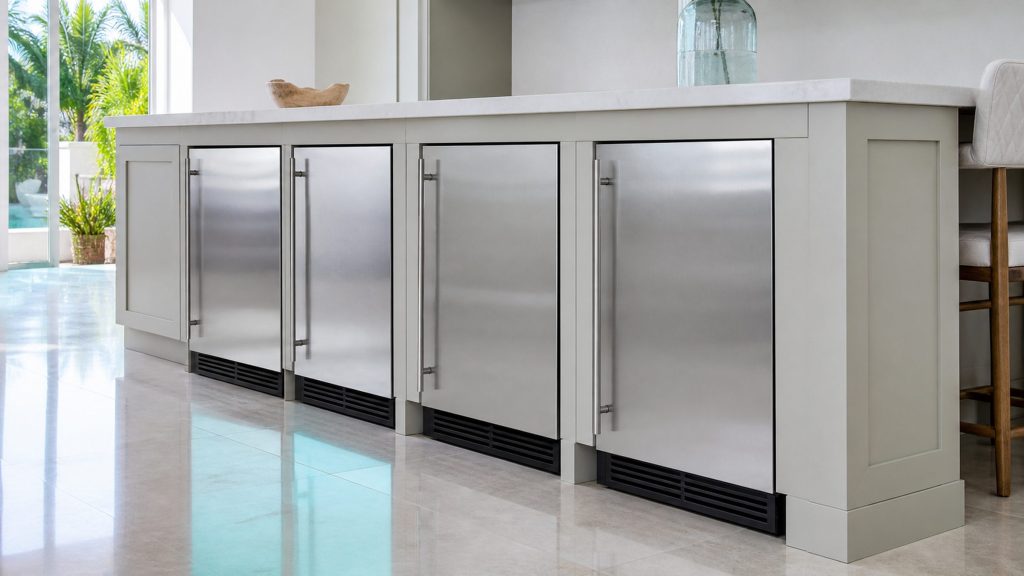
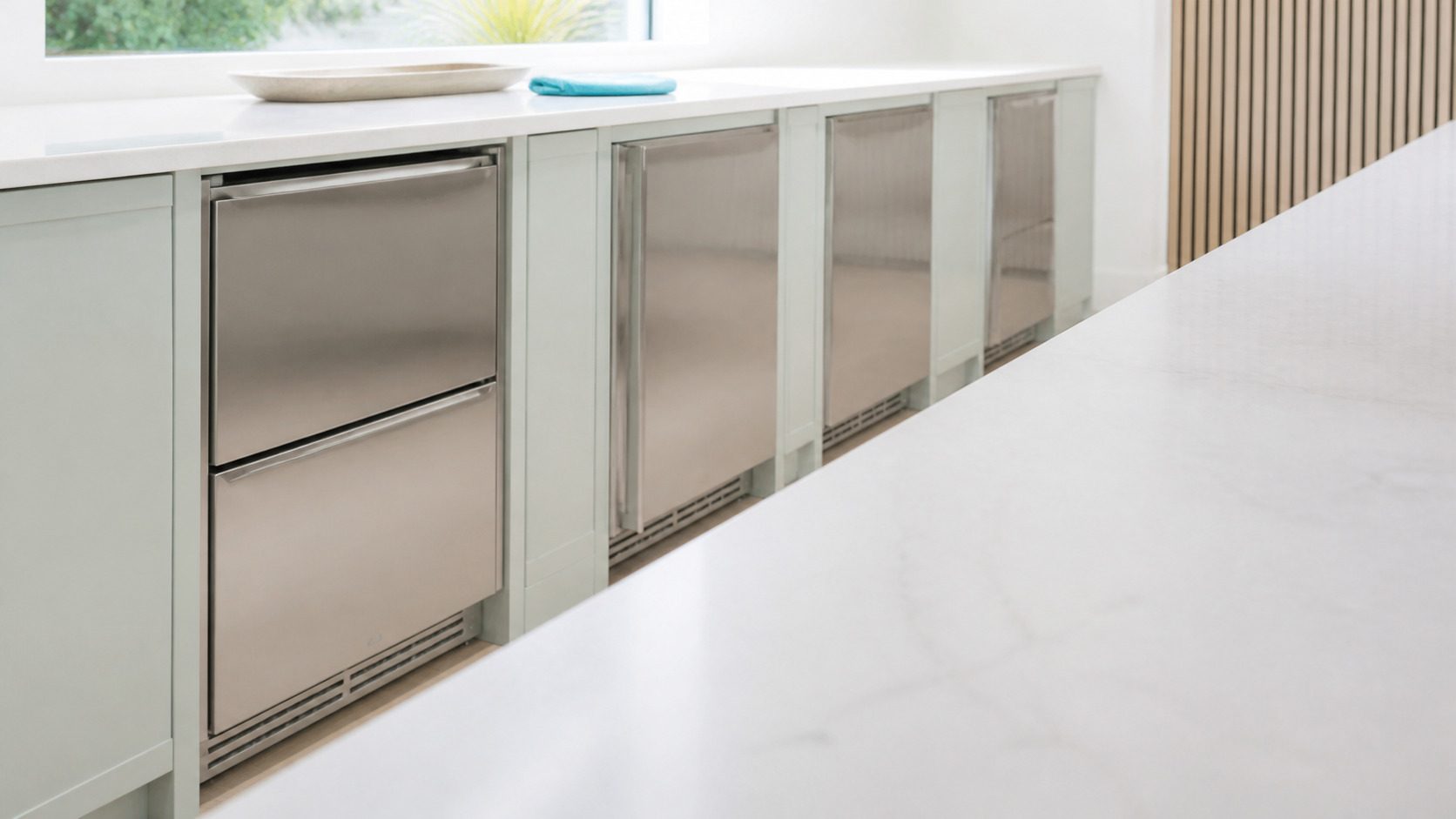
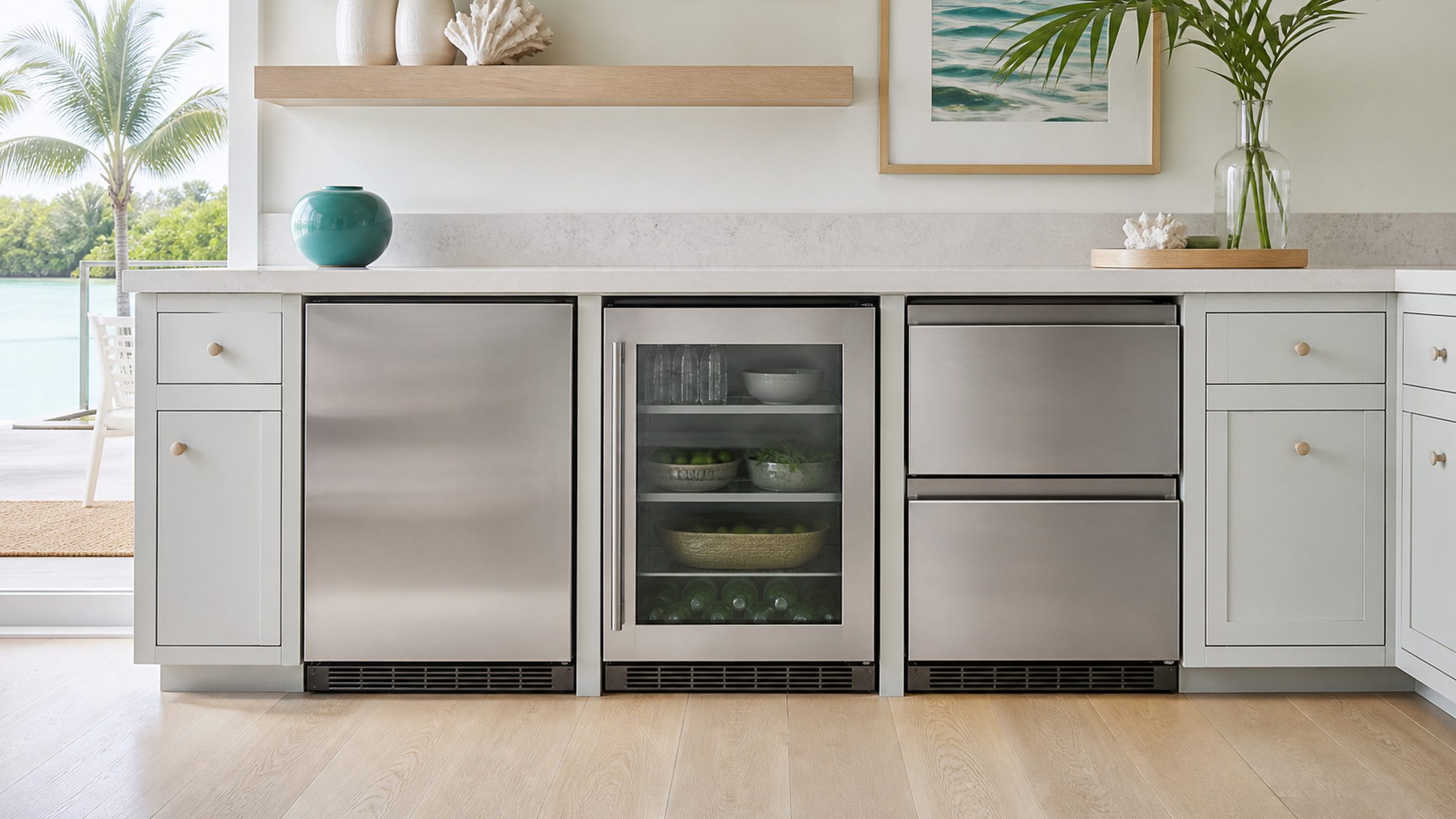
A long run of pale kitchen cabinetry seen low and along its length, four built-under stainless appliance fronts flush in the run beneath a single light stone worktop, a turquoise reflection along the polished floor.

The part of the catalog nobody expects

A quarter of it lives outside.

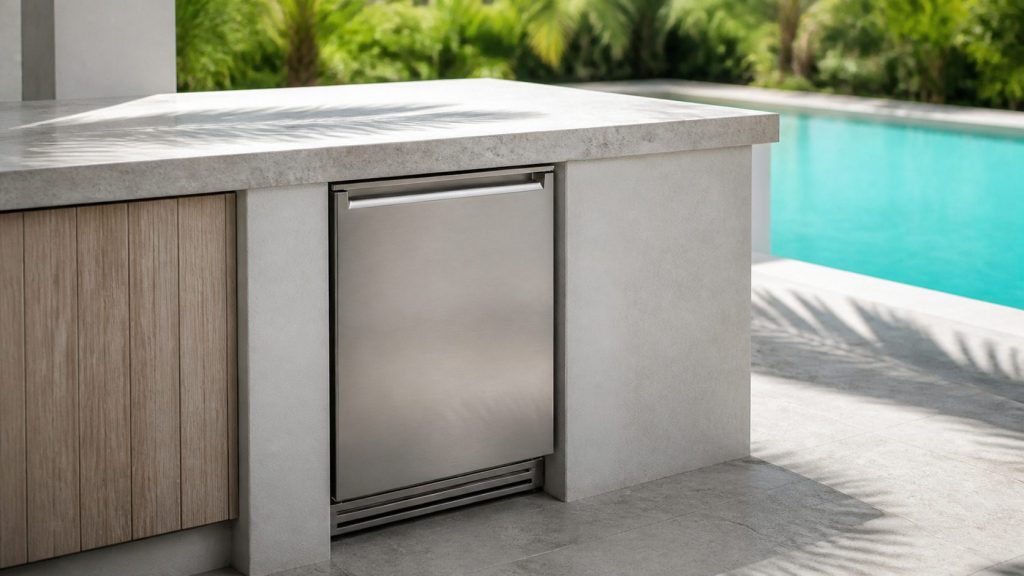
Twenty-six outdoor models and a marine series is an unusual proportion, and it reflects what U-Line is for: undercounter refrigeration built into places other refrigeration does not go. Summer kitchens, terraces, pool bars, boats. In South Florida that is most of the reason these appliances are bought.

Out there the load is not heat, which the appliances are designed for. It is salt: it holds moisture against metal, takes a condenser’s ability to shed heat away gradually rather than suddenly, and corrodes the fixings around a repair so that a straightforward job becomes twice the work. An outdoor unit wants a shorter service interval than any manual assumes.

Outdoor and marine unit service
An outdoor kitchen counter on a shaded terrace beside a swimming pool, a stainless built-under cabinet set into pale rendered masonry beneath a stone top, palm shadow across the surface, bright Florida daylight, turquoise water out of focus behind.

Which one do you have

Three questions that identify it

Read the plate

  • Upper right or the rear wall inside the cabinet.
  • The model number begins UH, UR, UO, UA, UM or U- depending on the range.
  • The third digit is usually the collection: 1 Class, 3, 4 or 5.

Look at the door

  • Solid, glass, or panel-ready carrying your own cabinet front.
  • One door, two doors, or drawers.
  • Reversible hinge on many models, which matters when it is refitted.

Look at what it makes

  • Crescent cubes from a mold: a crescent ice maker.
  • Clear cubes from moving water: a clear ice machine.
  • Soft chewable pellets: a nugget machine, and the auger is the machine.

The work

Every job we do on them

Twenty-four repair jobs, each with a starting figure and the reasons that move it.

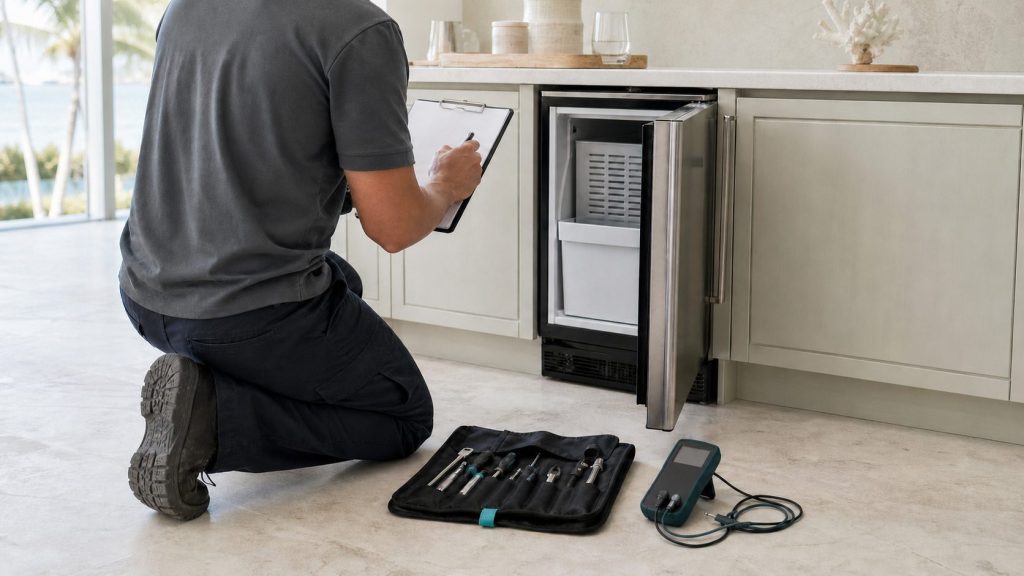
  • A technician kneeling at a run of pale cabinetry with the door of a built-under stainless cabinet open beside him, writing on a clipboard, a multimeter and an open tool roll on the floor, face turned away and out of frame.
    from $95

    Diagnostic visit

    We find out what is actually wrong before anybody quotes a part. On a U-Line that starts with a question most visits skip: is the appliance reporting a problem, or is it in a mode somebody enabled by accident? A unit that lights up and will not cool is showroom mode as often as it is a sealed system, and the two are not the same conversation. The fee is credited toward the work when you go ahead.

    • Modes ruled out before any part is named
    • The error log read, not guessed at
    • Credited toward the repair
    What this involves
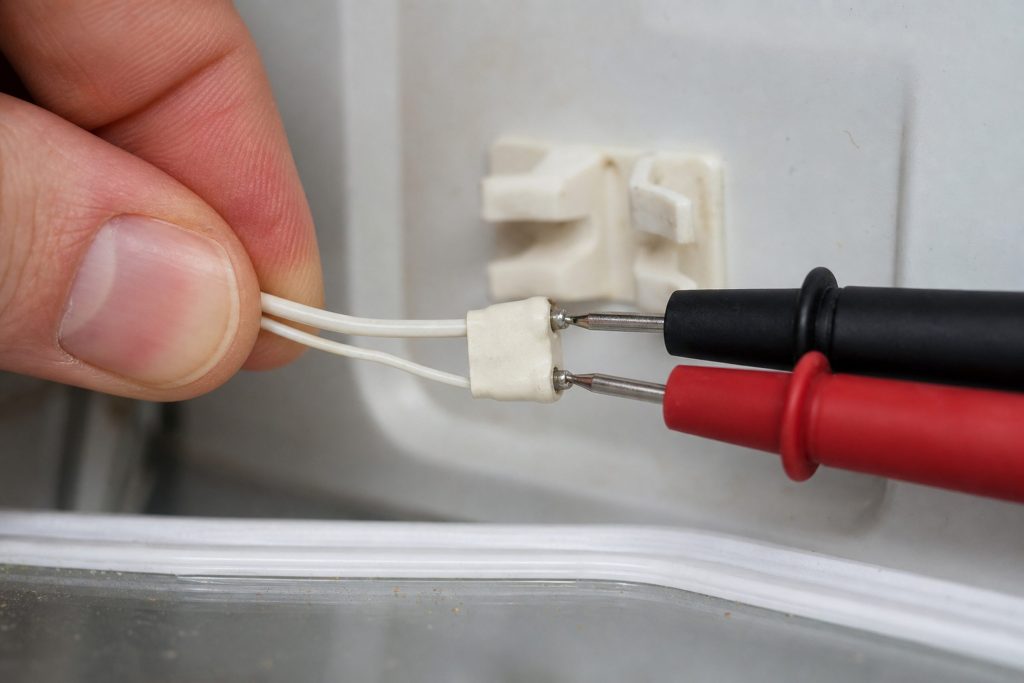
  • A small thermistor unclipped from its bracket on an interior refrigerator wall and drawn out on its two-wire lead into the cabinet, held between finger and thumb, with a pair of meter probes touching its terminals from the other side of the frame
    from $165

    Thermistor and temperature sensor replacement

    The most likely single failure on a U-Line, and the one the appliance is designed not to mention. When a zone sensor fails the unit does not stop — the maker's own backup keeps it cooling on a fixed cycle to protect what is inside, and it otherwise behaves normally. So the complaint that arrives is never "the sensor has failed". It is "it runs all the time and still is not cold enough".

    • The failure behind most "not cold enough" calls
    • Measured against the maker's own figure, not swapped on sight
    • Connections cleaned and re-greased, which is half the repair
    What this involves
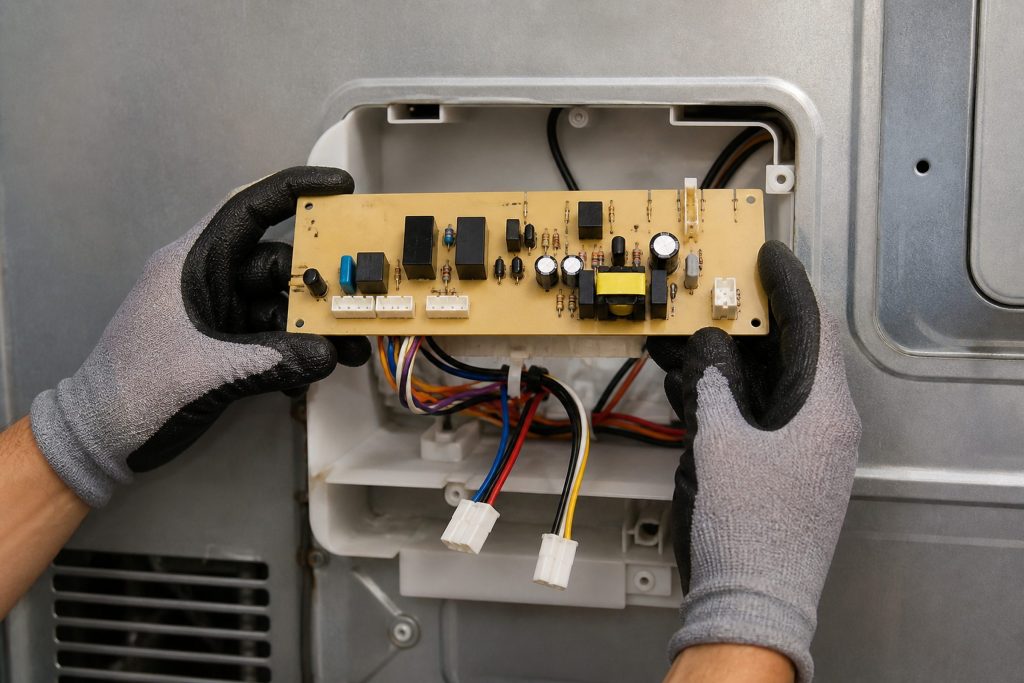
  • A bare electronic control board held level in two gloved hands over its open housing on the back of a refrigerator, relays and capacitors upward, two disconnected wiring plugs dangling below it
    from $245

    Control board and display repair

    The part people reach for first and the one the maker itself says is rarely the cause. Its own manual calls the main control very robust and asks for the board to be fully diagnosed before it is removed — and then prints the flow chart to do it with. We follow that chart, because the alternative is an expensive part fitted to a problem it does not fix.

    • Diagnosed the maker's way before it is condemned
    • A blank display is checked as a mode first
    • A new board is programmed to your model, or nothing works right
    What this involves
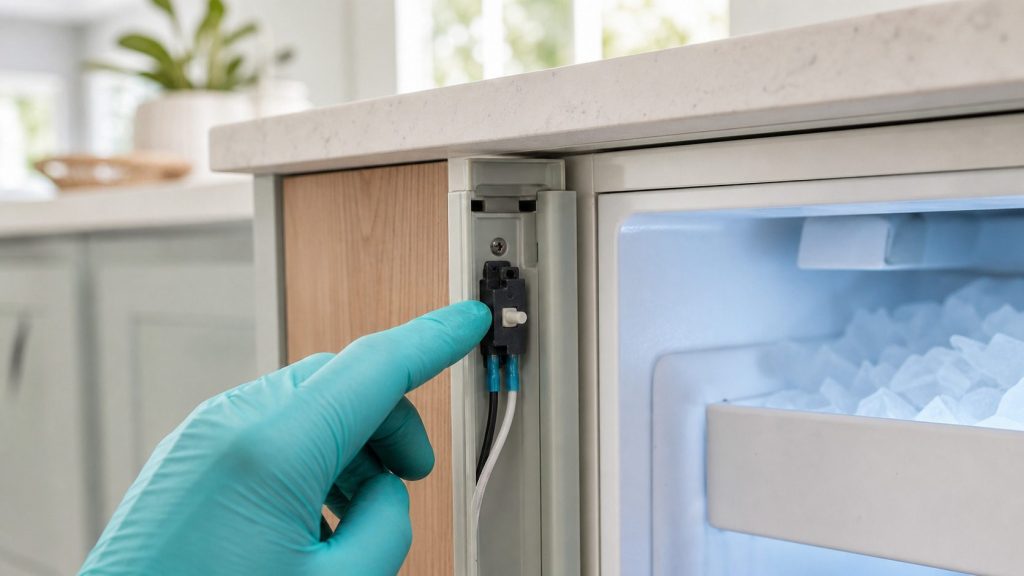
  • A gloved fingertip pressing the small plunger door switch in the frame of an open undercounter appliance, the switch body and its two wires clearly visible in the moulding, cold interior light behind.
    from $135

    Door switch and door alert repair

    The unit beeps every minute and shows a door icon, and the door is shut. On this make the door is the one error that reaches the display and makes a sound, which means it is also the one people live with for weeks. It is a switch and a magnet, and the maker's own power flow chart ends on replacing it.

    • Plunger switches on solid doors, reed and magnet on glass
    • The alert traced to the switch or to the door, not both
    • Alignment checked against the cabinetry either side
    What this involves
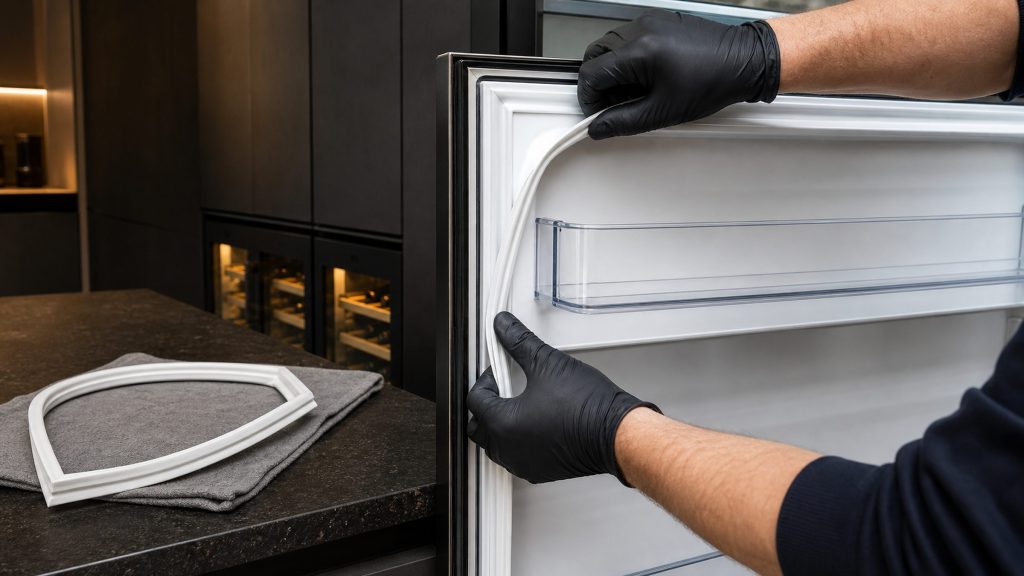
  • A technician's hands in nitrile gloves fitting a new white magnetic door gasket into the channel around a refrigerator door, the old seal lying on a folded cloth on the dark stone worktop beside it, near-black cabinetry behind, warm amber light
    from $155

    Door seal replacement

    The cheapest part on the appliance that costs you temperature, and the first thing worth looking at behind condensation on a wine cooler door. A seal that has taken a set no longer touches the cabinet along its whole run, and the gap is usually somewhere nobody looks — the hinge side, low down, behind the door front.

    • Checked along the whole run, not at the handle
    • Fitted to a door that closes square, or it will fail again
    • Condensation and frost traced to the seal before anything else
    What this involves
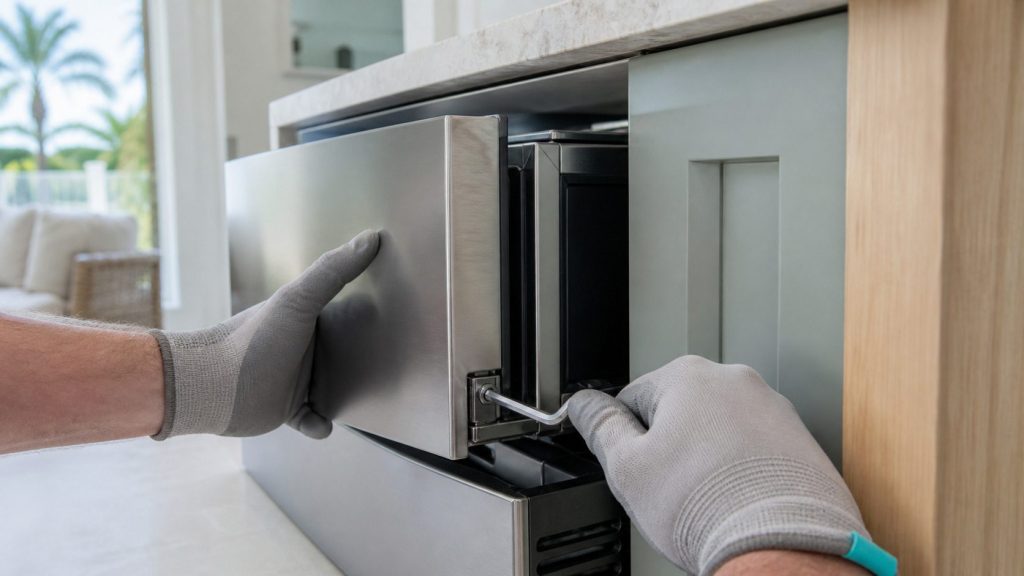
  • A gloved hand turning a hex key in the lower hinge of a built-under stainless door beneath a pale worktop, the door held slightly open with the other hand, close and low.
    from $175

    Door alignment and hinge repair

    Priced apart from the seal on purpose: one is a part and the other is joinery. Nearly every U-Line is built in, and many carry a customer's own cabinet front on an integrated door. Aligning that door against the run either side — so it closes square, sits flush and does not hold itself open a millimeter — is most of the visit and is the part nobody quotes for.

    • Integrated doors aligned against your cabinetry, not just to the appliance
    • Door swing, door stop and adjustment as the maker sets them
    • A door that closes itself instead of resting
    What this involves
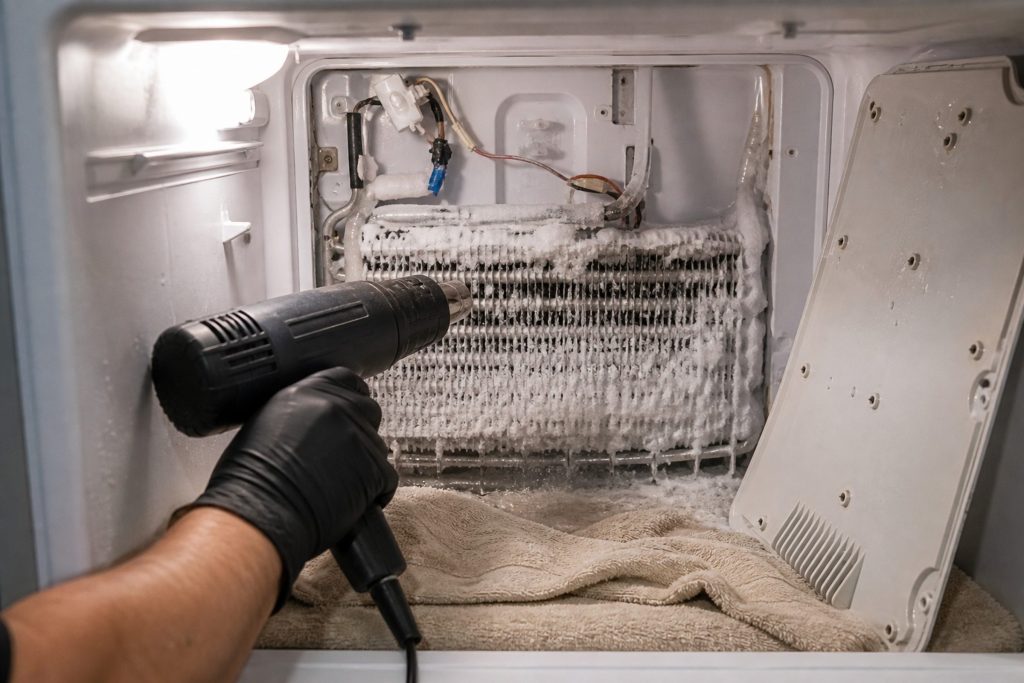
  • A gloved hand holding a heat gun to a frosted evaporator coil behind the rear panel of a freezer compartment
    from $185

    Cooling and defrost repair

    Frost where there should not be frost, or a cabinet that has quietly stopped keeping up. On these controls the defrost interval and duration are settings rather than a mechanical timer — the service menu will show and change both — which shortens the diagnosis considerably and also means a wrongly programmed board can produce this on its own.

    • Defrost interval and duration read off the control
    • Frost told apart from a seal problem before parts
    • The maker's own thresholds, not a rule of thumb
    What this involves
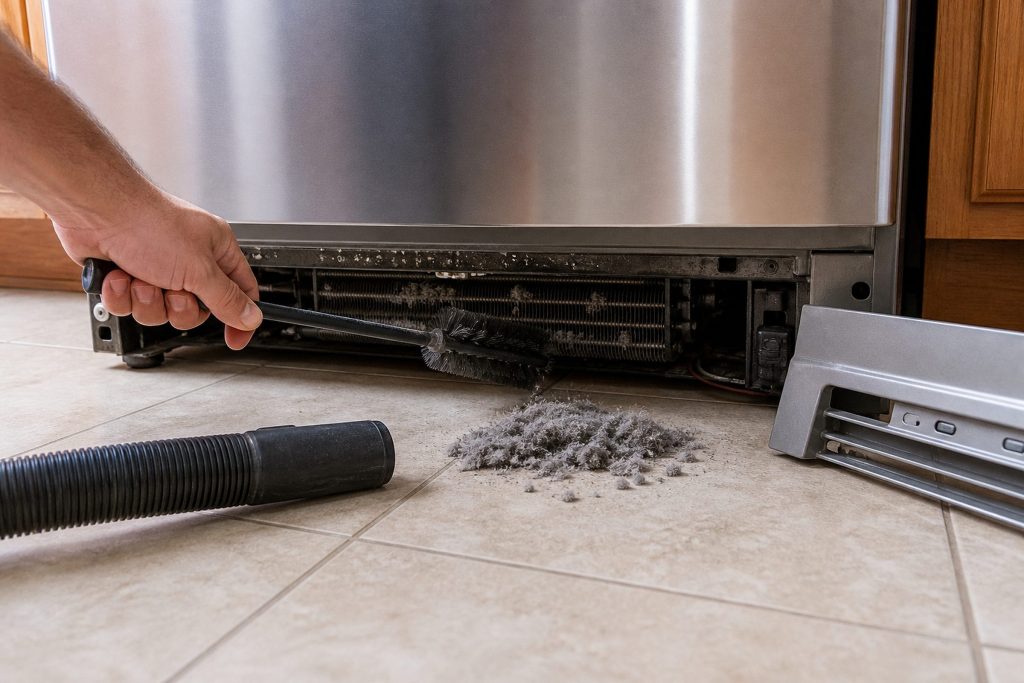
  • A long-handled coil brush being drawn between the condenser fins under the front of a refrigerator with the kickplate removed and propped alongside, a small heap of grey dust drawn out onto the tile and a vacuum hose waiting beside it
    from $145

    Condenser and airflow service

    The maker's own first answer for a unit that is not cold enough is the grille and the condenser, and on an undercounter appliance it is right more often than anywhere else: the condenser sits behind a grille at floor level, in a kitchen, under a counter. It fills with dust and lint, and the unit does not complain — it just runs longer and holds less.

    • The maker's own first check for "not cold enough"
    • Cleaned the way the manual allows, not with a chemical
    • Clearance around the unit checked, not only inside it
    What this involves
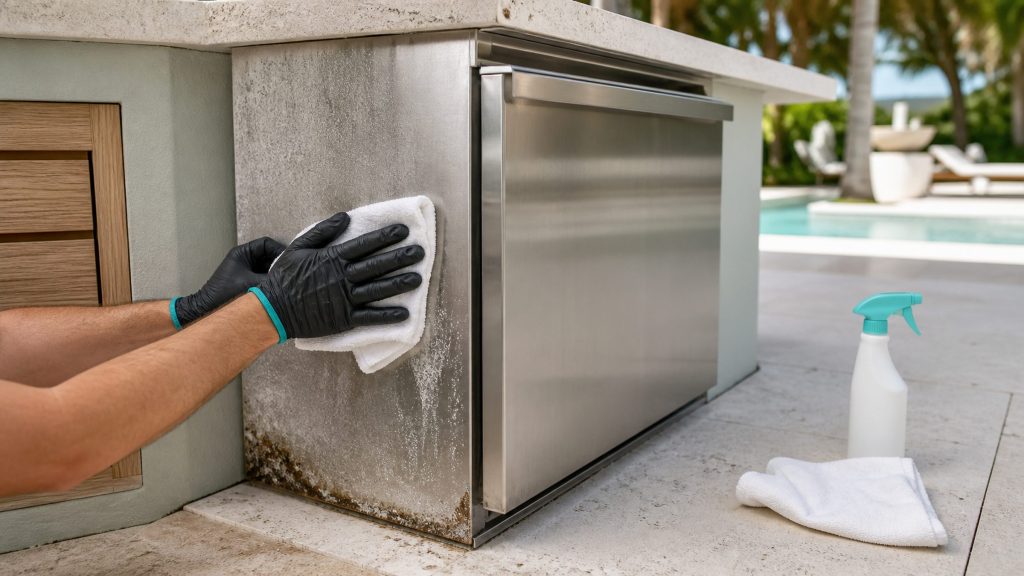
  • A technician's gloved hands wiping white salt bloom from the stainless flank of a built-under refrigerated cabinet on a sunlit poolside terrace, corrosion staining visible along the lower edge, a cloth and a spray bottle on the stone beside them.
    from $195

    Outdoor and marine unit service

    A quarter of this catalog lives outside, and salt air is a different repair rather than a different setting. An outdoor unit's condenser breathes whatever the yard has, its fasteners corrode, and on the Marine models the appliance is on a boat. It is priced above the indoor condenser service because it is more work, and it is scheduled differently because the interval between services is shorter.

    • Salt, humidity and what they do to a condenser
    • Corrosion checked on the fixings, not only on the coil
    • Marine and 230V models included
    What this involves
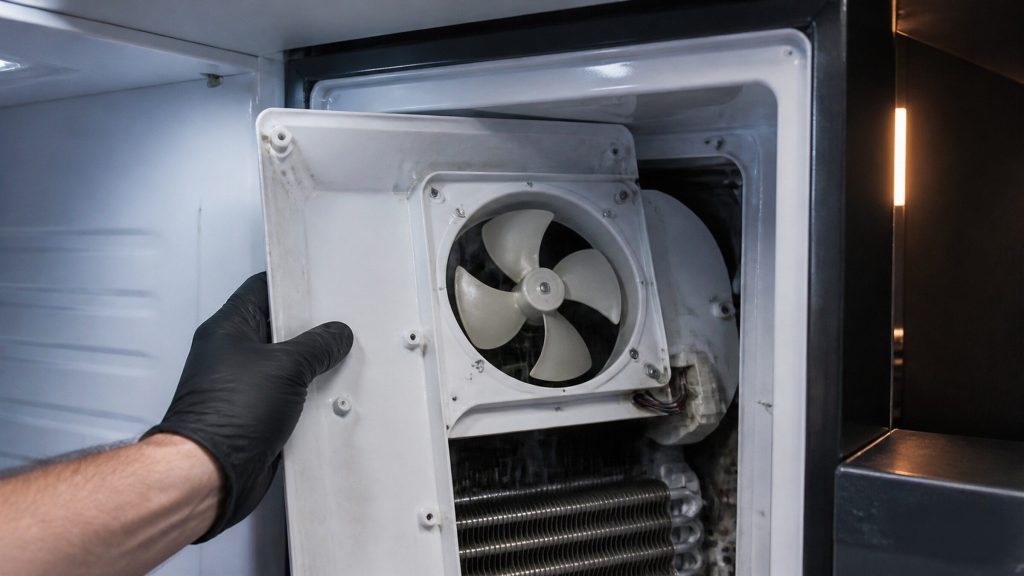
  • A close view of the rear interior panel of a freezer compartment removed to expose the evaporator fan and its blade, a gloved hand steadying the panel
    from $175

    Evaporator fan and running-noise repair

    A U-Line that has become noisy usually has one of two things wrong, and the maker names both: refrigeration tubing touching the cabinet, and a fan blade obstructed by wiring, foam or packaging. Neither is expensive. Both sound alarming through a cabinet door in a quiet room, which is why the call usually comes at night.

    • The two causes the maker names, checked first
    • Normal operating sounds told apart from problems
    • Tubing repositioned rather than replaced where that is the answer
    What this involves
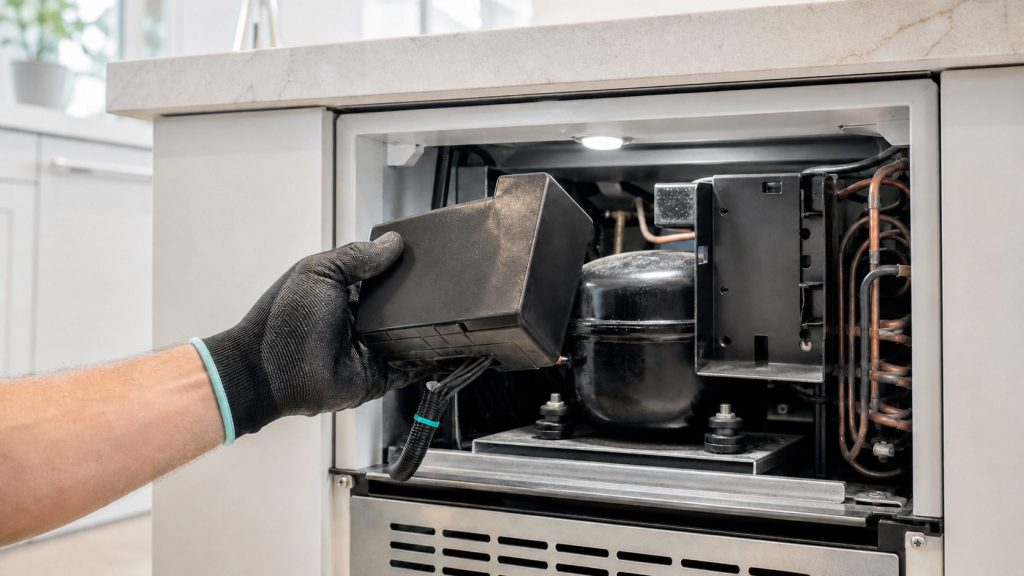
  • A small black inverter box unclipped from its bracket beside a compressor in the machine compartment of an undercounter cabinet, held in a gloved hand on its loom, the condenser tubing behind it, service light across the scene.
    from $395

    Variable-speed compressor and inverter repair

    The 5 Class runs its compressor between 1,400 and 6,300 RPM under an inverter, and the maker's own compressor sheet names that inverter as both the starting device and the overload. So on these units the thing that used to be a relay and a start capacitor is a driver board, and a compressor that will not start is a different diagnosis and a different bill from the same symptom on an older machine.

    • Inverter driver diagnosed before the compressor is condemned
    • Compressor speed read and set from the service menu
    • Priced apart from a conventional start problem, because it is one
    What this involves
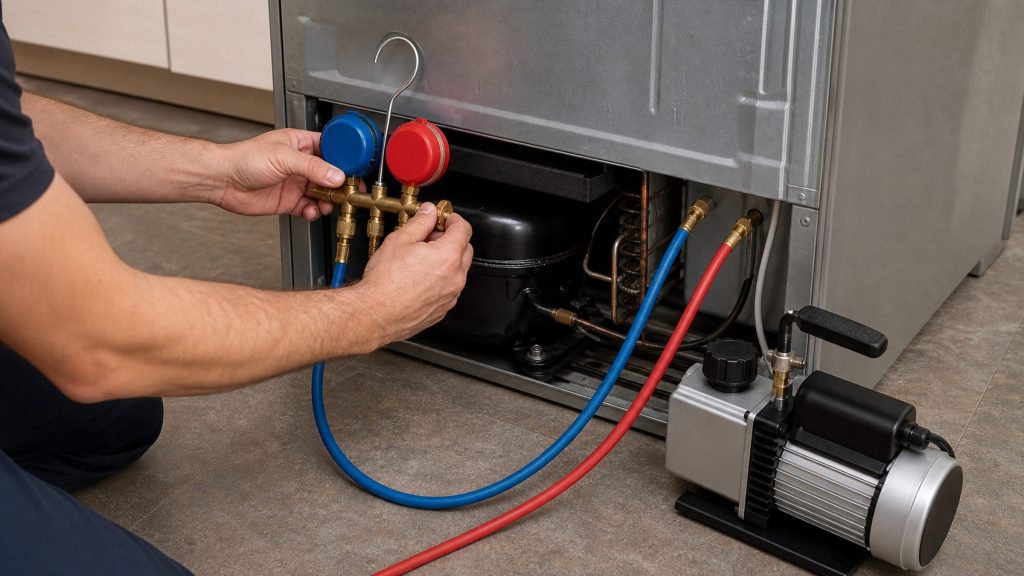
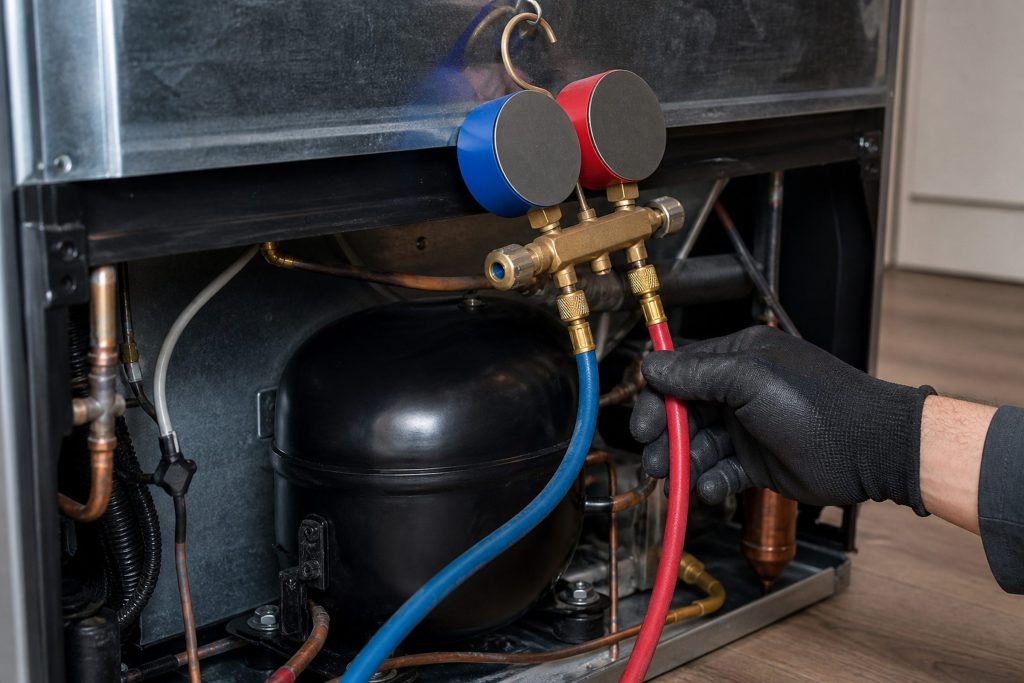
  • Manifold gauges and a vacuum pump connected to the sealed system at the back of an undercounter refrigeration cabinet, the compressor and condenser tubing exposed.
    from $650

    Sealed system repair

    Refrigerant work: leaks, restrictions, an undercharge or a system that has lost its gas altogether. Licensed work with recovery equipment, and on the current U-Line range the refrigerant is R600a, which is flammable — that does not change the price but it does change who may open the system. It is the most expensive thing on this list after a compressor, and the most over-diagnosed.

    • Diagnosed against the maker's own pressure and temperature table
    • Ruled in, not assumed, after the sensors and the airflow
    • An honest answer when the appliance is not worth it
    What this involves
  • Manifold gauges connected to the compressor and lines at the back of a refrigerator
    from $850

    Compressor replacement

    Sealed-system work plus the compressor itself, which is why it sits above the sealed-system figure rather than beside it. It is the biggest repair a U-Line can need, and on the smaller cabinets it is genuinely close to the price of the appliance. We would rather have that conversation before the work than after it.

    • Confirmed by measurement, never by elimination
    • Warranty position checked before anything is quoted
    • The replace-instead arithmetic given plainly
    What this involves
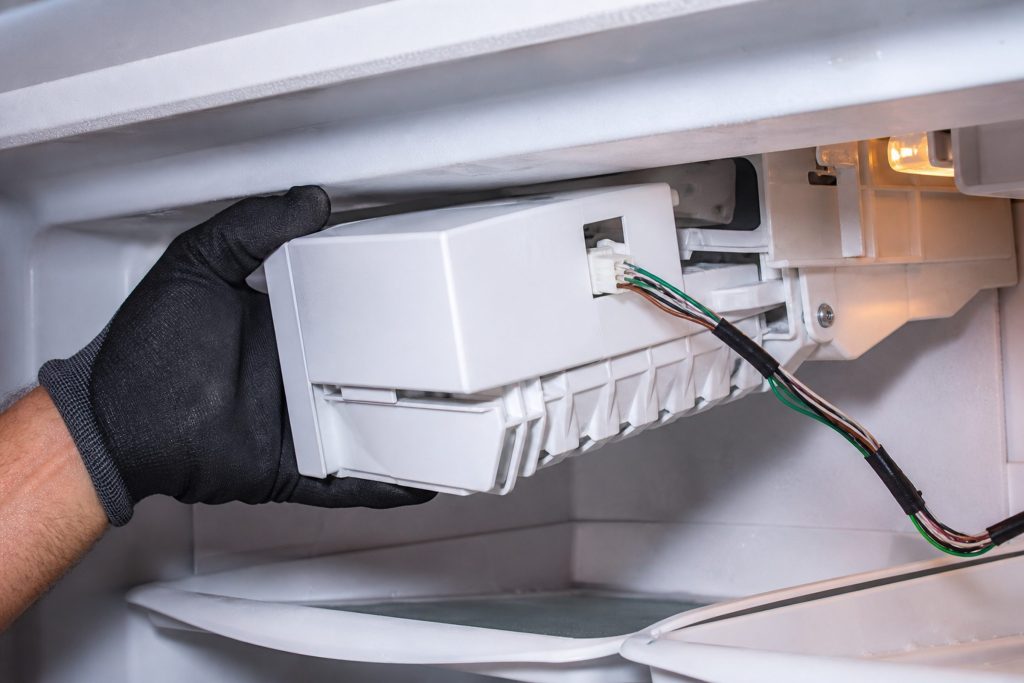
  • Gloved hands drawing an ice maker module out of a freezer compartment with its wiring loom still attached
    from $185

    Ice maker repair

    The crescent machines — U-Line has been making them since 1962 and they are the simplest cold appliance in the range. A fill valve, a mold, a heater to release the ice and a mechanical harvest. When one stops making ice the cause is nearly always water arriving, water leaving, or the harvest sticking, and the three are told apart quickly.

    • Water in, harvest, water out — checked in that order
    • The bin arm and the shut-off, which stop more machines than parts do
    • No service menu on these, so the diagnosis is done by measurement
    What this involves
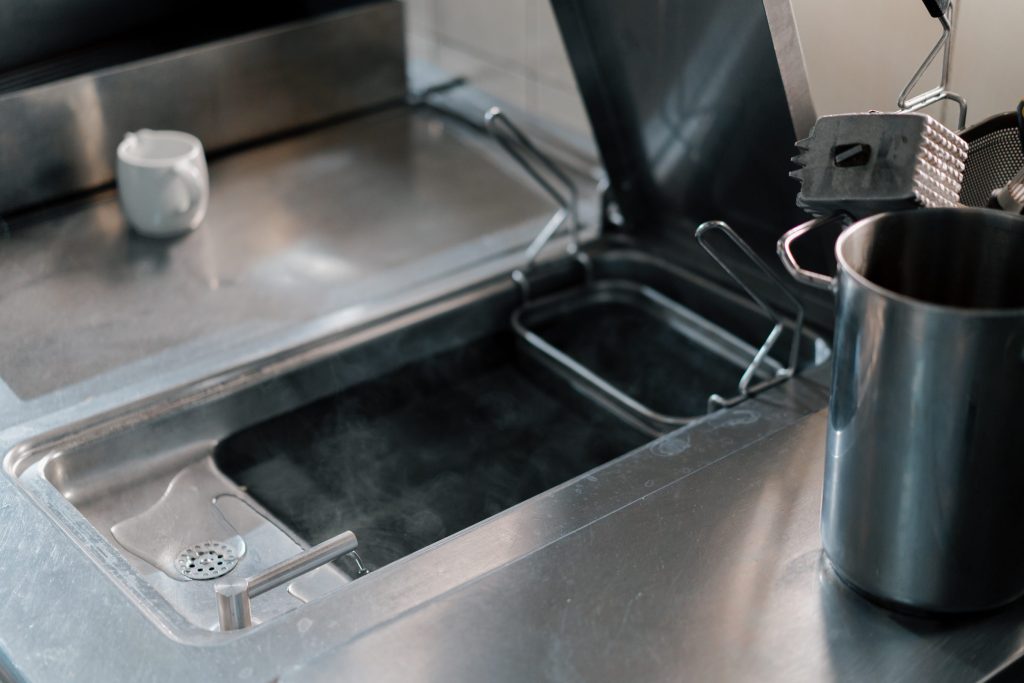
  • The open stainless interior of a professional ice machine with its scoop tray
    from $225

    Clear ice machine repair

    A clear ice machine has more of everything than a crescent maker, and the maker's own relay chart says so: a water dispense valve, a circulation pump, a water inlet valve, a hot gas valve and a condenser fan, each on its own output. Clear ice is made by freezing moving water slowly, so anything that interrupts the movement changes the ice before it stops the machine.

    • The five circuits the maker's own chart names
    • Cloudy, thin or hollow ice read as evidence rather than ignored
    • Water treated as a system, not a supply
    What this involves
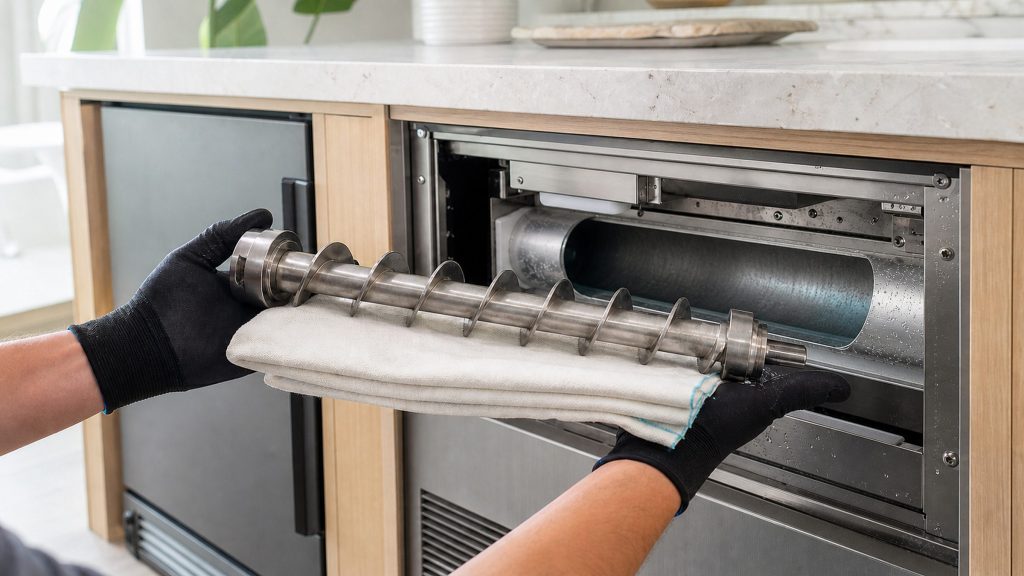
  • A long stainless auger screw drawn out of the freezing cylinder of an ice machine and held level in two gloved hands over a folded cloth, its spiral flight and the cylinder bore both in focus.
    from $285

    Nugget ice machine and auger repair

    The auger is the machine. Nugget ice is made by freezing water on the wall of a cylinder and driving a screw through it, so the auger, its gearbox and its motor are doing continuous work that nothing else in this range does. The maker logs an auger error of its own, and a machine left running against a jammed auger turns a repair into a replacement.

    • Stop-and-diagnose rather than keep-trying
    • Cleaning history treated as part of the diagnosis
    • Gearbox, motor and cylinder assessed together
    What this involves
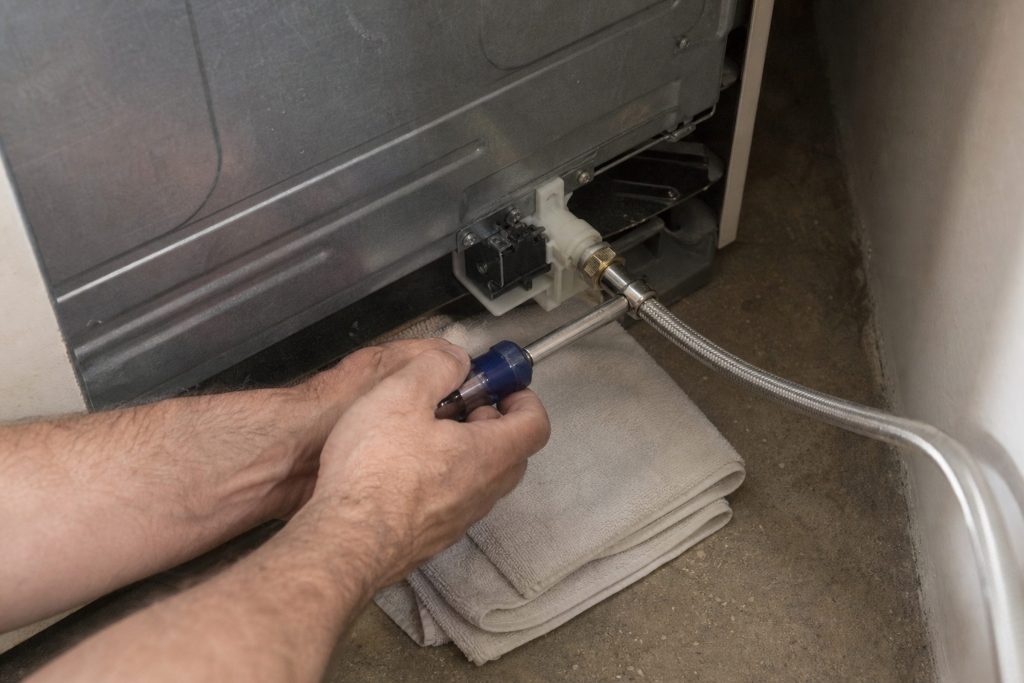
  • Hands with a nut driver working on the water inlet valve on the lower back of a refrigerator that has been pulled out from the wall, the braided supply line arriving from the right and a folded towel under the fitting
    from $155

    Water inlet valve and supply repair

    Everything between the shut-off and the reservoir. The maker's own indicator for it says four words — lights up to indicate low water supply — so the work is finding which link in the chain is short. These machines mind flow rather than pressure, which is why a filter at the end of its life starves one slowly enough that nothing ever looks wrong.

    • Flow measured, not assumed from the tap
    • Filter age treated as a real variable
    • The line checked for the kink a reinstall leaves
    What this involves
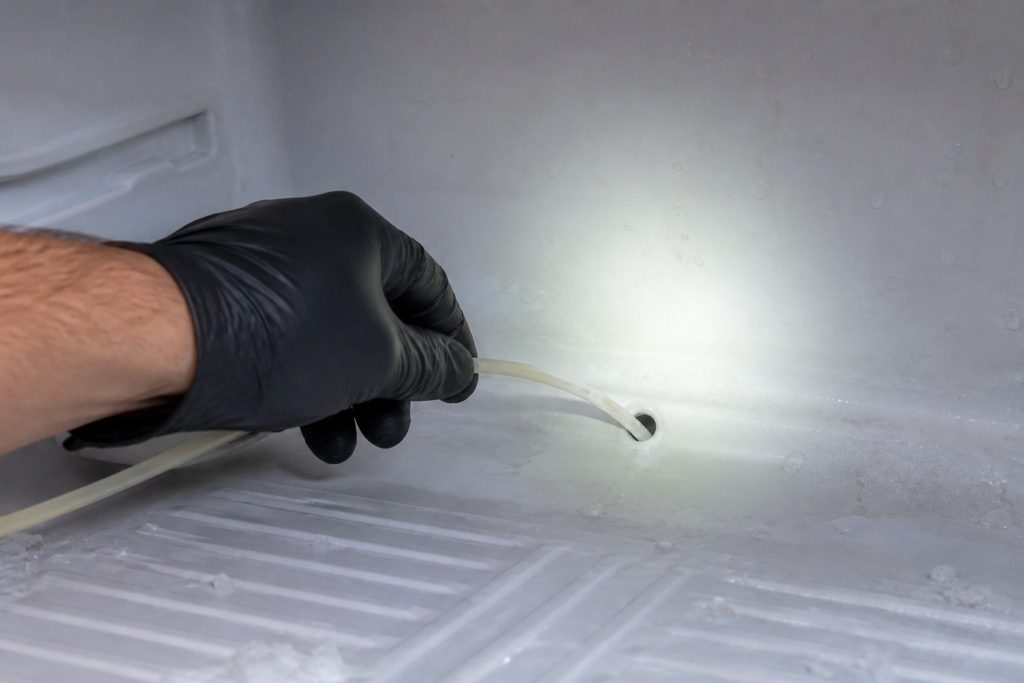
  • A gloved hand clearing the defrost drain at the base of a freezer compartment with a light shining across the frosted floor
    from $185

    Drain pump and drain repair

    Where there is no gravity drain, an ice machine has a pump, and the maker logs a circuit error for it — P1, qualified in the same breath as only if the unit has a drain pump. Half this job is establishing whether yours has one. The other half matters more than it sounds: on a built-in machine a drain problem damages joinery before it makes a puddle.

    • Pump and gravity installations told apart first
    • The hose run checked before the pump is blamed
    • Cabinetry damage looked for, not waited for
    What this involves
  • A scoop resting in crushed ice beside a glass of clear water
    from $165

    Ice machine cleaning and descaling

    The cheapest service on this site and the one that prevents the most expensive. U-Line signals for a cleaning cycle every six cumulative months of ice making and is explicit that only its own ice machine cleaner may be used. In South Florida that six-month interval is optimistic: scale is what ends ice machines here, and it does it quietly.

    • The maker's own cleaner, because the manual says so
    • The full cycle, then a rinse — not a wipe
    • An interval set to your water, not to the calendar
    What this involves
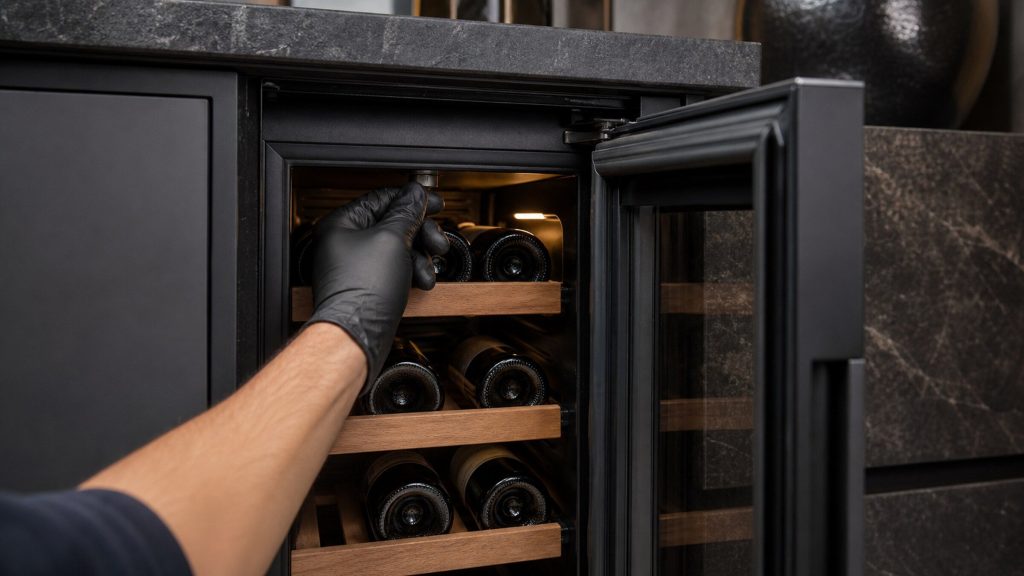
  • The open door of a built-in wine cooler cabinet with wooden shelf runners and bottles on their sides, a gloved hand adjusting a control at the top of the compartment
    from $195

    Wine cooler zone and thermostat repair

    Seventeen of these models are wine and five of them hold two zones independently. One zone drifting is a much smaller job than the phrase "the wine cooler has failed" suggests, and getting that distinction right early is the difference between a sensor and a sealed system. Wine is also the least forgiving thing in this catalog about a few degrees.

    • One zone diagnosed apart from the other
    • Set point proved with a thermometer, not read off the display
    • Vibration and light considered, because on wine they count
    What this involves
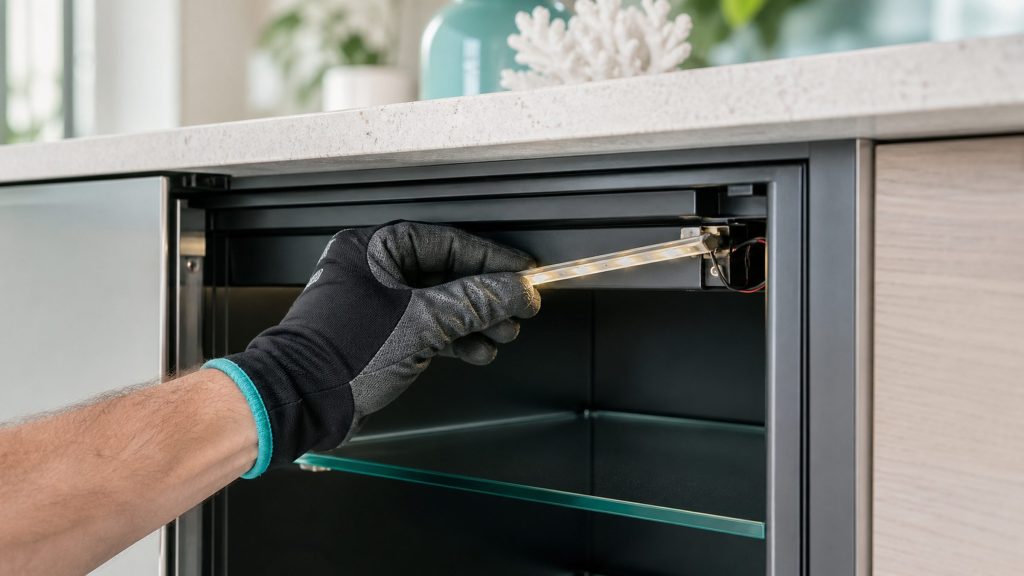
  • A gloved hand easing a small LED strip out of its channel at the top inside corner of a refrigerated cabinet, the strip lit and the rest of the compartment dark, empty glass shelf below.
    from $135

    Interior lighting and BrightShield repair

    LED strips, the actuator bracket the maker names in its own troubleshooting table, and on current models the antimicrobial module. Small parts and awkward access, and one particular trap: a light that will not come on is a Sabbath-mode symptom before it is a lamp, and a light that stays on when the door shuts is usually the bracket rather than the switch.

    • Sabbath mode and the light switch ruled out first
    • The actuator bracket the manual names, adjusted
    • Color and brightness settings checked on current models
    What this involves
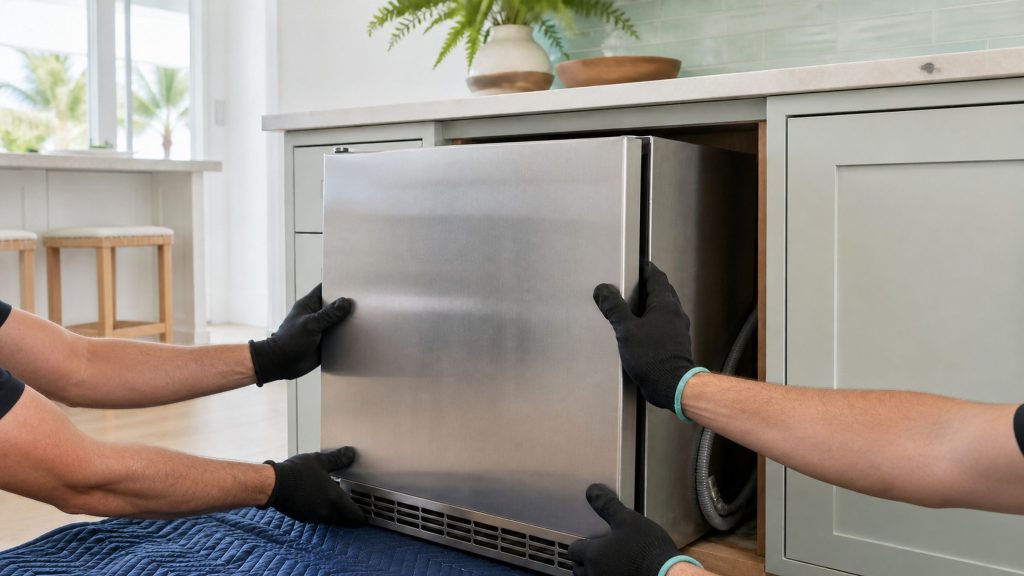
  • Two pairs of gloved hands easing a stainless built-under cabinet forward out of its opening under a pale stone worktop, a moving blanket on the floor beneath it, the bare plywood sides of the opening and the coiled water line visible behind.
    from $195

    Built-in removal and reinstallation

    Its own line on the invoice because it is its own work, and because it is invisible in a quote that does not name it. Nearly every U-Line is under a counter, many are behind a custom panel, and several are in a run with an anti-tip bracket and a fixed water connection. Getting the appliance out without damaging the joinery, and back in aligned, is a real part of most repairs on this make.

    • Quoted openly instead of buried in the repair
    • Anti-tip, grille, water and drain reconnected properly
    • Aligned back into the run, not just pushed back
    What this involves
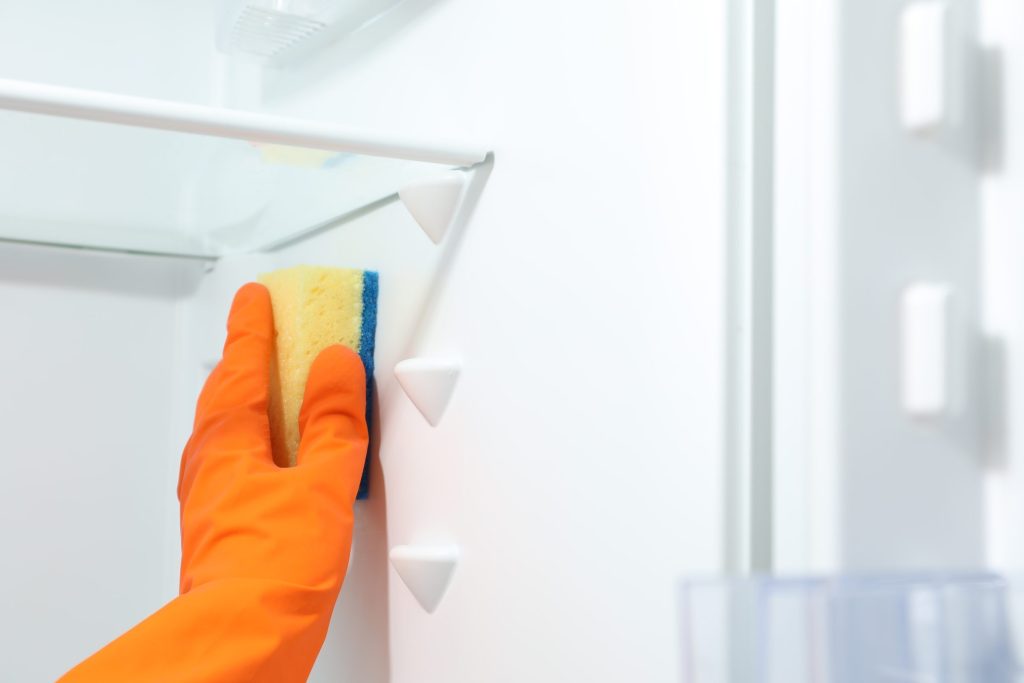
  • A gloved hand wiping down the interior shelf and door fittings of a refrigerator
    from $145

    Appliance maintenance

    The visit that stops the other visits. On this equipment it is a short and specific list, and in this climate it pays for itself: a condenser at floor level in a humid kitchen, a seal that works harder here than anywhere, a drain that must not block, and on an ice machine a cleaning cycle the machine itself has been asking for.

    • Condenser, seals, doors, drain — and the ice cycle where there is one
    • The maker's own intervals, adjusted for South Florida
    • Findings written down, not just fixed
    What this involves
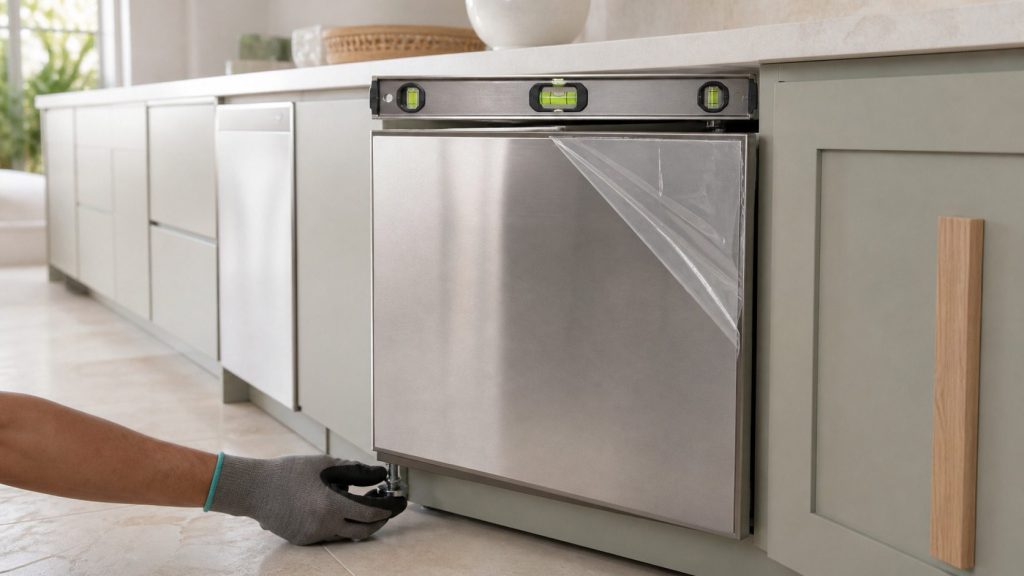
  • A spirit level lying across the top edge of a newly set built-under stainless cabinet in a pale kitchen run, its green bubble centred, a gloved hand on the adjustable foot below, protective film still on part of the door.
    from $295

    Appliance installation

    U-Line publishes a cutout, a clearance, an anti-tip requirement, a door swing procedure and a water hookup, and a unit installed against those specifications behaves for years. One installed without them produces exactly the complaints this site is otherwise about: a door that will not seal, a condenser that cannot breathe, a drain that backs up.

    • Cutout and clearance against the maker's own figures
    • Anti-tip bracket fitted, every time
    • Water and drain done properly on the machines that need them
    What this involves

If yours is not pictured

Seven appliance types, and about seventy-six machines behind them.

The pages above are the kinds of appliance U-Line builds. Behind them are the individual models — 1 Class, 5 Class, Home, Seamless, the 3000 Series, Outdoor, ADA and Marine, including twenty that are no longer made and are still under counters all over South Florida. If you cannot see yours, the model number off the plate will find it.

Before you book

The questions this page is asked

Which appliances does U-Line actually make?

Undercounter refrigeration and ice, and nothing else. Refrigerators and refrigerated drawers, crescent ice makers, clear and nugget ice machines, wine coolers, beverage centers and convertible freezers — in fifteen, eighteen, twenty-four and thirty-six inch widths, indoors, outdoors and marine. No ovens, no dishwashers, no laundry.

What is the difference between a beverage center and a wine cooler?

Temperature and shelving. A beverage center holds cans and bottles at drinking temperature; a wine cooler holds a temperature you chose and manages humidity so a cork stays sealed. The dual-zone cabinets do both at once, which is why they have more temperature sensors than anything else in the range.

What is the difference between an ice maker and an ice machine?

The ice and the machinery. A crescent ice maker freezes water in a mold and releases it with a heater. A clear ice machine freezes moving water slowly for dense transparent cubes. A nugget machine drives an auger through ice on the wall of a cylinder. Three different appliances that all produce ice, and they fail in completely different ways.

My model is out of production. Can you still work on it?

Usually. Twenty of the seventy-six models in the catalog are out of production, some of them since the 2000 Series, and they are exactly the machines that are built into kitchens here. Parts availability is the real question and it is worth establishing before the work rather than during it.

Are you U-Line, or authorized by them?

Neither. We are an independent repair company working on this equipment in South Florida. If your appliance is inside the maker's own warranty we will tell you and point you at them.

In more detail

One maker, seven appliances, one kind of refrigeration

U-Line has built undercounter refrigeration since 1962, and the catalog reads like a company that has only ever done one thing. Everything is cold; almost everything is fifteen, eighteen or twenty-four inches wide; almost everything is designed to disappear under a counter or into a run of cabinetry. The Home and Seamless collections are named for it.

That focus is why the appliances share so much. The same control platform runs a wine cooler and a clear ice machine; the same fifteen error numbers are logged by both; the same sensors, seals and door switches fail in the same ways. It also means the differences that do exist are real ones rather than marketing: an auger is not a mold heater, a drain pump is not a defrost drain, and a dual-zone cabinet genuinely has more to go wrong than a single-zone one.

Two things about the range matter more in South Florida than anywhere. Twenty-six models are outdoor units, and salt air changes both the failures and the service interval. And sixteen make ice, which means they are plumbed in both directions and exposed to water that scales them faster than the maker’s own six-month cleaning signal assumes.

Each page below is about one of the seven, written from the maker’s own manuals and its own catalog rather than from a general appliance template. Where the manual says something surprising — and on this make it says several surprising things — it is quoted rather than paraphrased.
Tell us which one you have.

The model number off the plate and what it is doing. On an ice machine, what the ice looked like before it stopped.

This article is based on:

  • Official manufacturer documentation
  • Internal repair procedures
  • Technician repair history
  • Company quality standards
Call (305) 851-2207