Service
U-Line ice maker repair
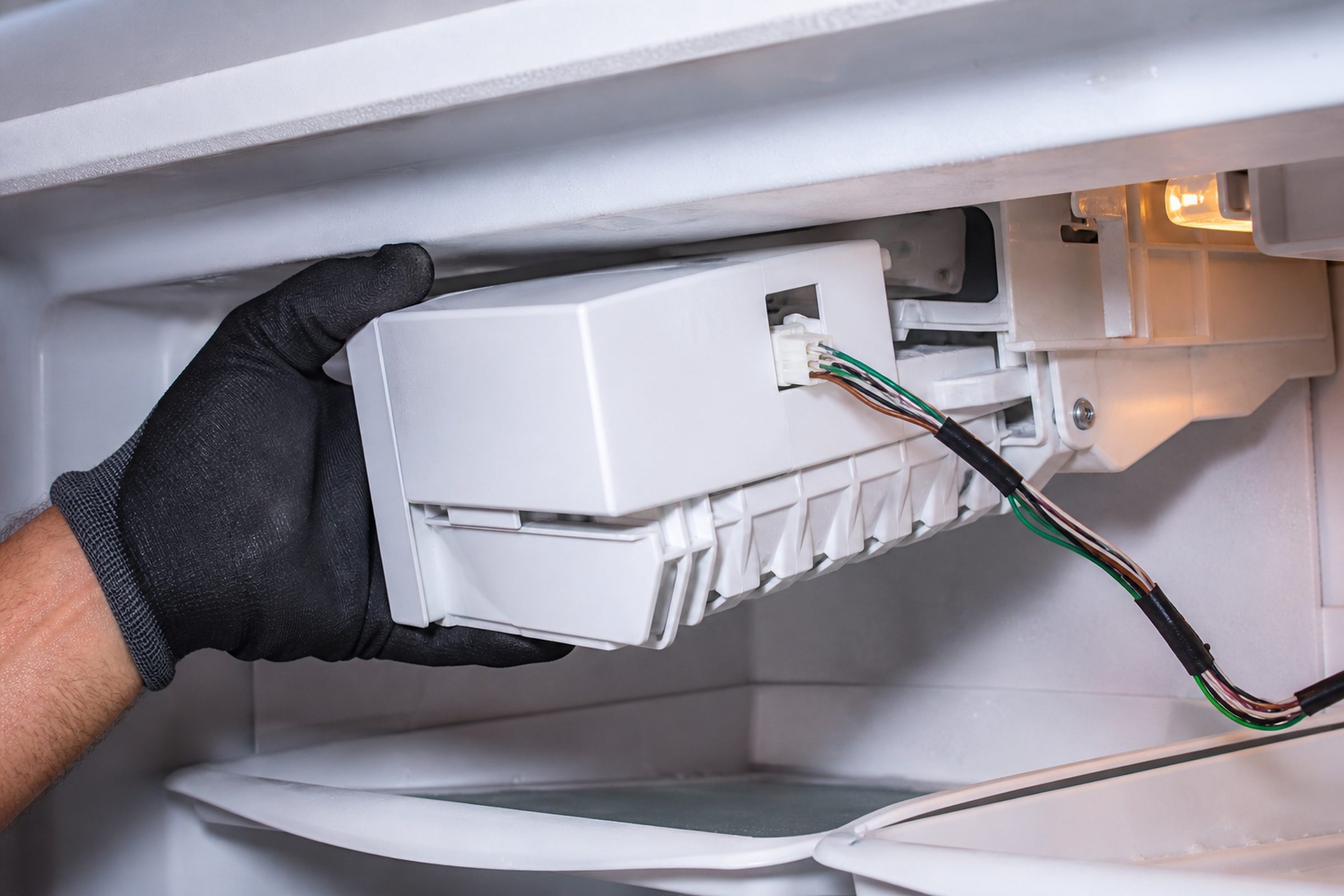
The crescent machines — U-Line has been making them since 1962 and they are the simplest cold appliance in the range. A fill valve, a mold, a heater to release the ice and a mechanical harvest. When one stops making ice the cause is nearly always water arriving, water leaving, or the harvest sticking, and the three are told apart quickly.
- From $95 diagnostic, credited to the repair
- 59 cities and neighborhoods covered
- OEM parts available on order
- In writing the price, before anything is opened
Before you read on
What this job costs and how it is agreed
A starting figure, not a quote. What moves it is the model, how the unit is built in and which part it needs — settled after the on-site diagnostic.
Starts at
from $185
After a diagnostic from $95, which comes off the bill when you go ahead.
or call (305) 851-2207
Diagnostic
From $95, credited to the repair
The price
In writing, before anything is opened
Warranty
On the labor we performed
On the visit
How this visit actually goes
The same order every time, so nothing is opened and nothing is charged before you have seen the figure and said yes.
-
01
Is water arriving at all
The shut-off behind a built-in machine, the filter, the line and the inlet valve. This is the answer more often than everything else combined.
-
02
Is the machine being told to stop
A bin arm resting up, or a fill-limit that has been knocked, will stop a machine that is otherwise perfect. "The arm will not stay down" is one of the most searched things about these units and it is not a metaphor.
-
03
Is the harvest working
The mold heater releases the crescents. A machine that freezes ice and never drops it is a different problem from one that never freezes any.
-
04
And is it actually cold
These share their refrigeration with the rest of the range, so a crescent maker that has gone warm is diagnosed like a refrigerator — sensors, airflow, then the sealed system.
Applies to
The U-Line units we carry this work out on
-
10 models · crescent ice · U-Line's oldest line U-Line ice maker repair in Miami
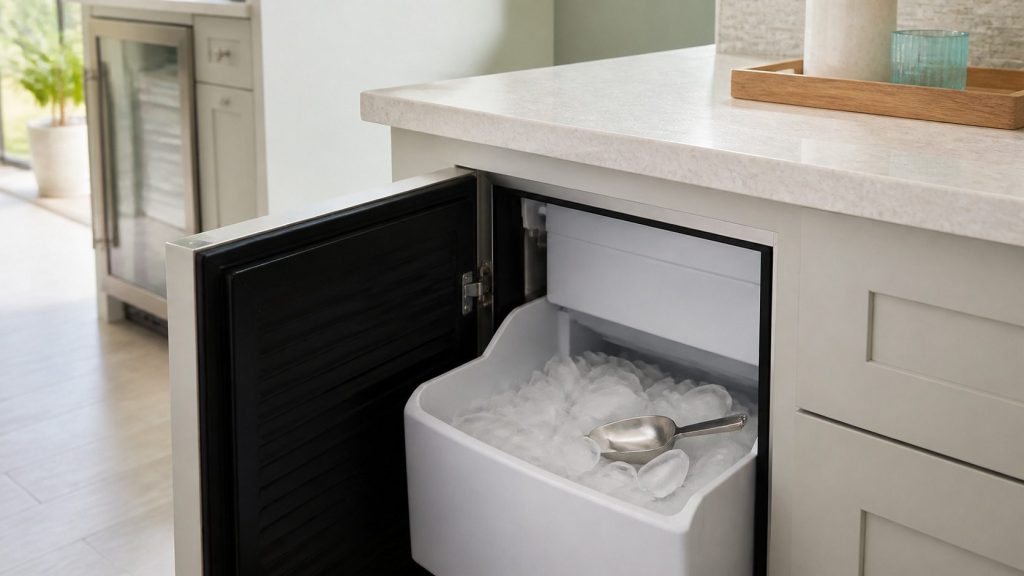
10 crescent ice makers and combination refrigerator/ice makers. U-Line has been building these since 1962 and they are the simplest cold appliance in the range: a fill valve, a mold, a heater to release the ice, and a mechanical arm that stops the machine when the bin is full. When one stops, the cause is nearly always water arriving, water leaving, or the harvest sticking.
- Crescent cubes, mechanical harvest, bin arm
- Water problems outnumber everything else
- No service menu on most of them
In more detail
About U-Line ice maker repair
The simplest cold appliance this maker builds
A crescent maker is a fill valve, a mold, a heater that lets go of the ice and a mechanical harvest, and the brand has been building them since 1962 without adding much. There is no service menu to interrogate and nothing is logged, so the diagnosis is done entirely with a meter and a jug: is water arriving, is the machine being told to stop, is the harvest turning, and is the mold actually reaching a temperature that will release. More of these are stopped by a bin arm resting against a mound of ice, or a shut-off that somebody closed during a renovation, than by any part on the appliance.
This article is based on:
- Official manufacturer documentation
- Internal repair procedures
- Technician repair history
- Company quality standards
Before you book
Questions about U-Line ice maker repair
It makes ice, but only a few cubes a day.
That is usually water rather than cold — a filter near the end of its life, or a supply line with a kink from the last time the unit was pulled out. A machine short of water still makes ice; it just makes less of it every week.
The ice tastes of the freezer. Is that a repair?
Rarely. Crescent ice is porous and it takes on whatever is stored beside it, so a bin that has sat half full for a month tastes of the room. Emptying it and letting the machine refill settles the question before anybody is called out.
Where we do it
Across Miami-Dade, Broward, and Palm Beach
Same terms everywhere we go: an on-site diagnostic first, the price agreed in writing, and the exact figure confirmed once we have seen the unit.
Neighborhoods people ask for by name