Common Problems
A Built-In Door That Will Not Close — Appliance, or Cabinetry?
Separate the three problems first, because they look identical and cost different amounts. A door that springs back or stops short of closing is alignment or an obstruction. A door that closes properly but keeps triggering the door alert is a switch. A door that closes and looks perfect but leaks is a seal — and the way to tell is a sheet of paper closed in the door and pulled out at six or eight points around the perimeter, corners included. Where it slides out freely, the seal is not gripping there. If the paper slides freely along one whole side or across the top, the seal is probably fine and the door is not sitting square. On a U-Line there is a further possibility that does not exist on a freestanding appliance: these units are set into runs of joinery, and a run that has settled over several years can hold a door open by a millimeter without anything about the appliance having changed. Establishing which has moved comes before adjusting anything, because a door aligned to cabinetry that is out of true will be wrong again next year.
The full guide
How do you fix a refrigerator door that won't close? Three problems that arrive as one
They are described identically on the phone and they cost different amounts:
- The door will not close. It springs back, or it stops short of the cabinet.
- The door closes and the appliance keeps complaining. Tone every minute, door icon on the display.
- The door closes, looks perfect, and leaks. Frost inside, condensation on glass, a cabinet that never quite holds.
The paper test separates all three in about a minute, and it is worth doing before anybody is called.
The test
Close the door on a sheet of ordinary paper so half of it is inside, and pull. It should drag.
Do it at six or eight points around each door, and do the corners specifically. Then read the pattern rather than the individual results:
- It drags everywhere except one spot → that is the seal. A section has taken a set, torn, or come out of its channel.
- It slides out freely along one whole side, or across the top → the seal is probably fine and the door is not sitting square, so the rubber is not being pressed onto the cabinet evenly.
- It drags everywhere and the appliance still complains → the seal and the door are both fine and it is the switch.
The extra possibility on a built-in appliance
This one does not exist on a freestanding refrigerator and it catches people out.
A U-Line is set into an opening, leveled into it, and often carries a cabinet front that belongs to your kitchen. Runs of joinery settle. Floors move. A cabinet next to the appliance that has dropped a millimeter over six years will hold a door open, and nothing about the appliance has changed at all.
So before adjusting anything, look along the gap between the door and the cabinetry on each side. An even gap top to bottom means the appliance is square. A gap that tapers means something has moved, and the next question is which.
Adjusting an appliance to match cabinetry that is out of true gets you a door that is wrong again next year and a seal that fails at the same point within a season.
What can be adjusted
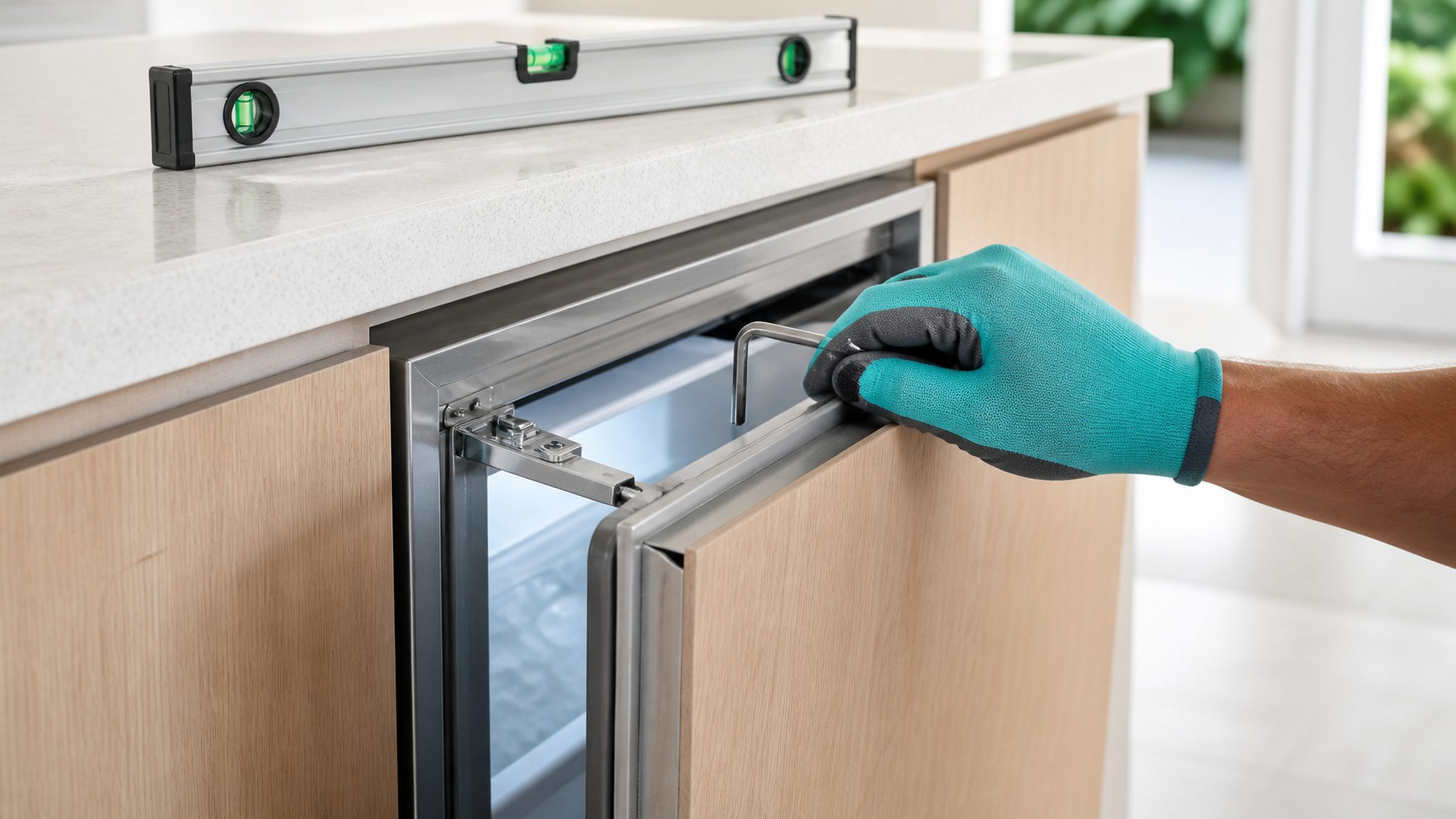
U-Line publishes procedures for door swing, door stop and door adjust, and many models have a reversible hinge. That means the door position is designed to be set rather than accepted, and setting it to specification rather than by eye is what makes it hold.
On an integrated door carrying a custom panel there are two alignments rather than one: the appliance door to the appliance, and the panel to the cabinetry it lives among. They are not the same adjustment and the second is the slower one.
The switch, when it is the switch
If the door is genuinely closed and the appliance is still reporting it open, the part is small and the access is awkward.
- Solid doors use a plunger switch that the door presses in. U-Line's own power-failure flow chart ends on replacing it, which tells you how frequently it is the answer.
- Glass doors use a reed switch and a magnet in the door. Nothing breaks; the magnet drifts out of range and the switch stops seeing it.
The same switch drives the interior light, which is why light problems and door-alert problems tend to arrive together. If both are misbehaving, that is one repair rather than two.
Why this is worth doing rather than living with
A door that needs a push is losing cold all day, every day, and in this climate it is also admitting a great deal of moisture into a small cabinet. That shows up as:
- frost, past the maker's own quarter-inch threshold;
- condensation on the inside of glass, which on a wine cooler reaches the labels;
- a compressor running longer than it should, which is the part of the bill nobody sees.
None of it is urgent this week. All of it is cheaper than the things it eventually causes.
If it turns out to be a repair
What this leads to, and what it costs
Every job on this site is priced the same way: an on-site diagnostic first, the figure agreed in writing before anybody starts.
-
On a built-in appliance this is joinery as much as appliance The door will not close or seal
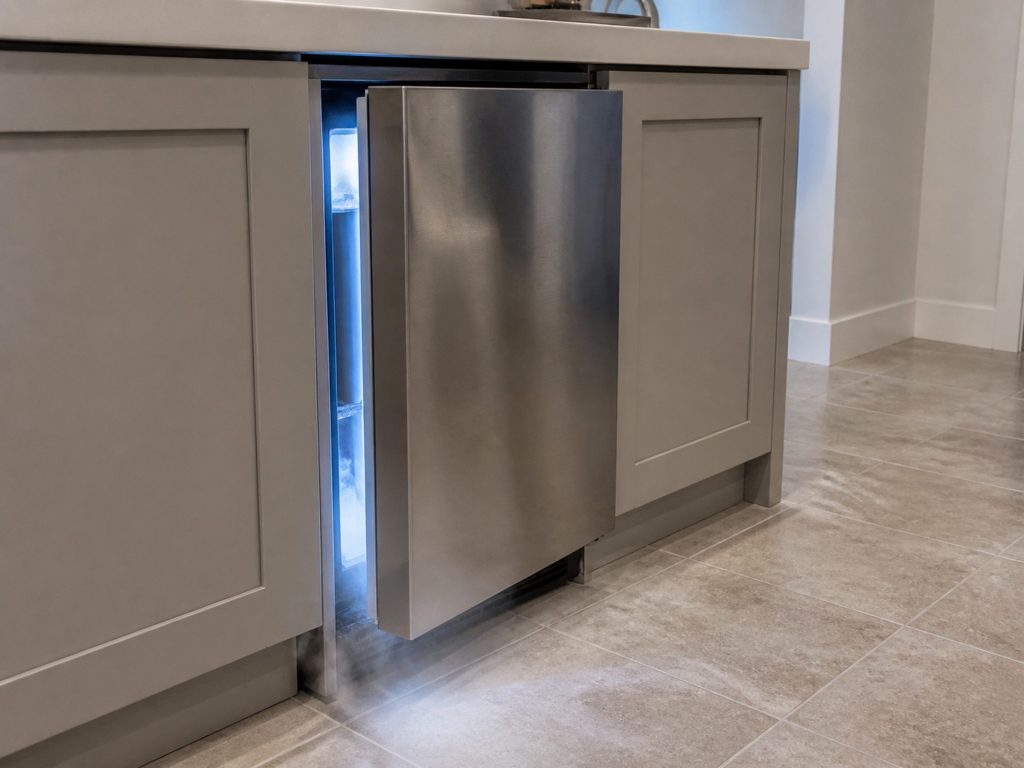
A door that rests instead of closing, springs back, or closes without sealing. On a U-Line these are three different problems with three different bills, and the appliance itself is often the last thing that has moved.
- Springs back rather than closing
- Closes but the alert keeps sounding
- Frost or condensation with the door apparently shut
-
from $175 Door alignment and hinge repair
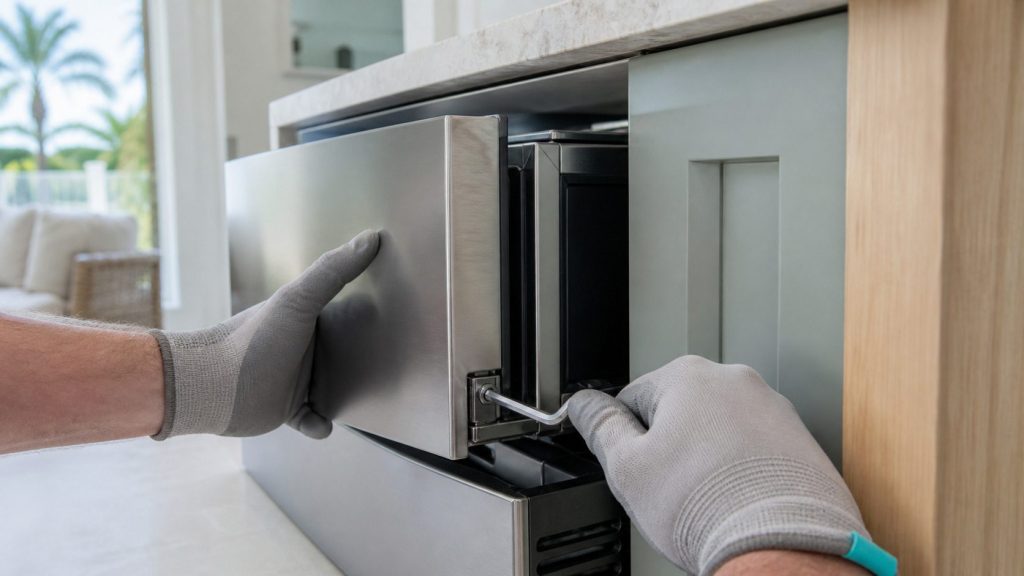
Priced apart from the seal on purpose: one is a part and the other is joinery. Nearly every U-Line is built in, and many carry a customer's own cabinet front on an integrated door. Aligning that door against the run either side — so it closes square, sits flush and does not hold itself open a millimeter — is most of the visit and is the part nobody quotes for.
- Integrated doors aligned against your cabinetry, not just to the appliance
- Door swing, door stop and adjustment as the maker sets them
- A door that closes itself instead of resting
-
from $195 Built-in removal and reinstallation
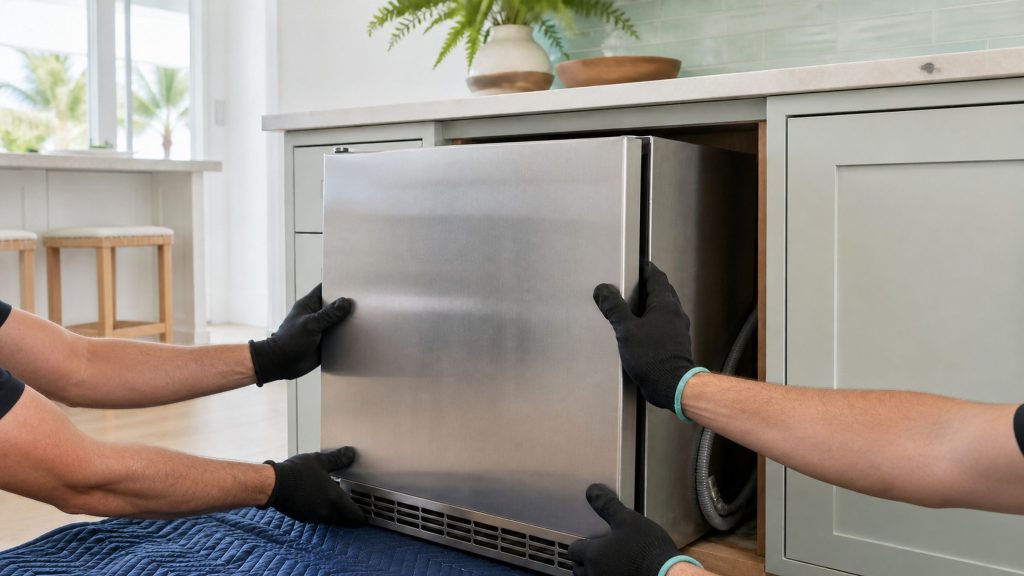
Its own line on the invoice because it is its own work, and because it is invisible in a quote that does not name it. Nearly every U-Line is under a counter, many are behind a custom panel, and several are in a run with an anti-tip bracket and a fixed water connection. Getting the appliance out without damaging the joinery, and back in aligned, is a real part of most repairs on this make.
- Quoted openly instead of buried in the repair
- Anti-tip, grille, water and drain reconnected properly
- Aligned back into the run, not just pushed back
-
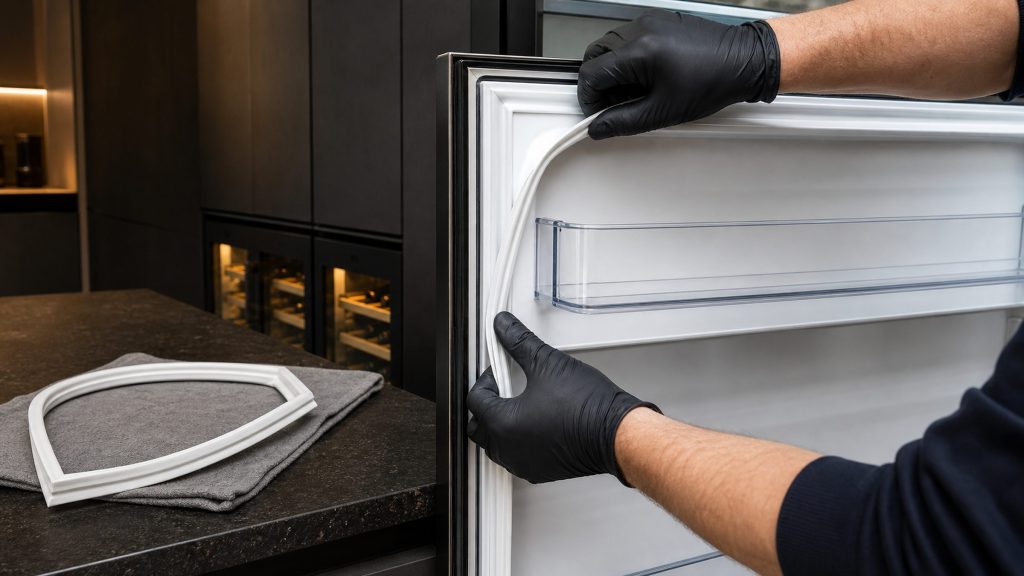
from $155 Door seal replacement
The cheapest part on the appliance that costs you temperature, and the first thing worth looking at behind condensation on a wine cooler door. A seal that has taken a set no longer touches the cabinet along its whole run, and the gap is usually somewhere nobody looks — the hinge side, low down, behind the door front.
- Checked along the whole run, not at the handle
- Fitted to a door that closes square, or it will fail again
- Condensation and frost traced to the seal before anything else
Questions people ask about this
How do you fix a refrigerator door that will not close?
Find out first whether it is being held open, is out of alignment, or is closing without sealing. Empty the door shelves and the front of the cabinet — a bin one position out or a bottle rack is free to fix and is the answer surprisingly often. Then watch it close from open: it should pull itself in over the last inch.
The door closes but the alarm keeps sounding.
That is the switch rather than the door. On solid doors it is a plunger the door presses; on glass doors it is a reed switch and a magnet in the door that can drift out of alignment. U-Line's own power flow chart ends on replacing the plunger switch, which tells you how often it is the answer.
My seal looks perfect and the cabinet frosts anyway.
They usually do look perfect. A seal that has taken a set is not torn or obviously damaged; it has simply stopped springing back into contact with the cabinet. Only the paper test shows it, and it fails at the corners first.
Is it really possible for the kitchen to be the problem?
On a built-in appliance, yes, and it is more common than people expect. Runs of cabinetry settle over years, especially where they meet a floor that has moved. A door that was square when the kitchen was fitted can be held a millimeter open by a neighbor that has shifted, and adjusting the appliance to match will not last.
Can I adjust it myself?
Door swing, door stop and door adjust are published procedures and many models have a reversible hinge, so it is not off-limits. What is worth knowing is that on an integrated door carrying your own cabinet front, the panel has its own weight and its own fixings and is aligned to the cabinetry rather than to the appliance — which is a slower and more careful job than it looks.
Common Problems
More guides like this one
-
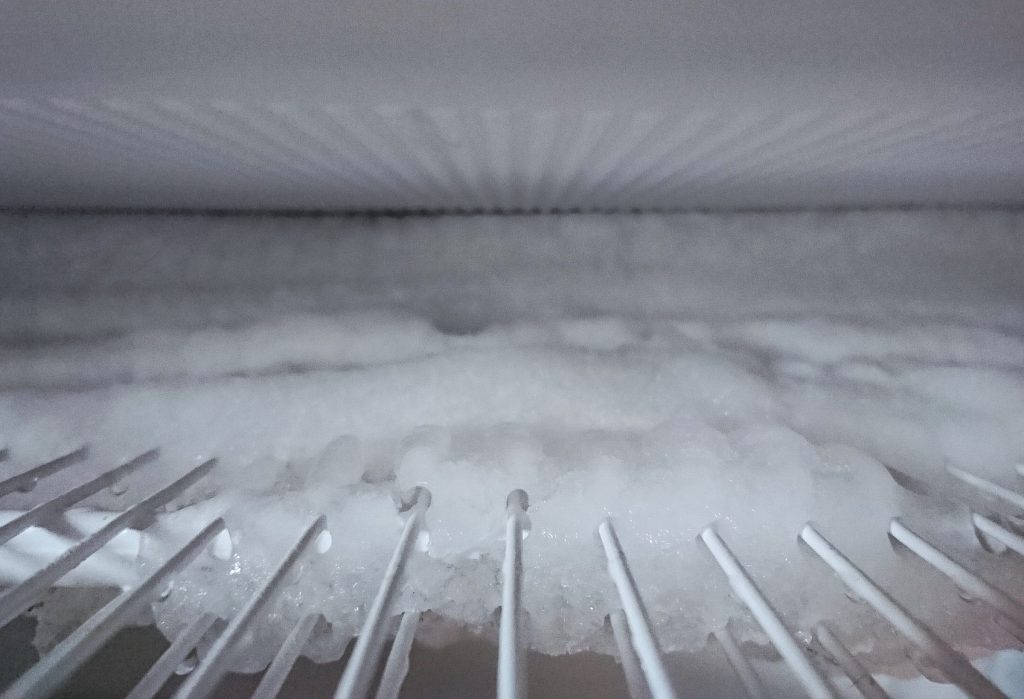
How to Defrost a Freezer Fast Without Damaging It
The method is easy. The part that matters is what comes after: frost is a symptom, and a freezer defrosted without finding out where the moisture came from will do it again.
Read more -
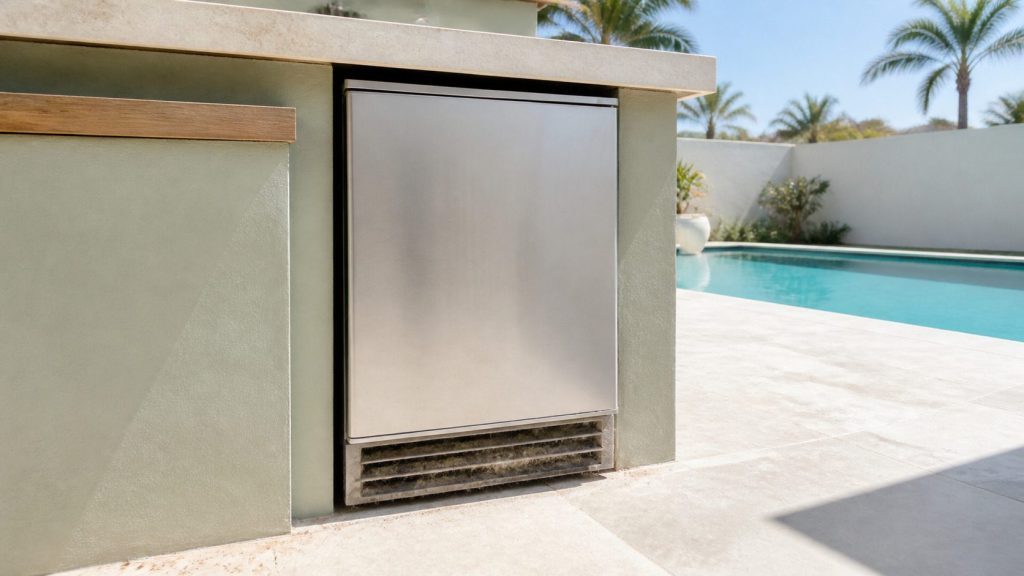
Can You Use a Regular Refrigerator Outdoors? What Outdoor-Rated Means
No, and the reasons are specific rather than a warranty technicality. Twenty-six of U-Line's seventy-six models are built for it and the other fifty are not, which makes the difference easy to see.
Read more -
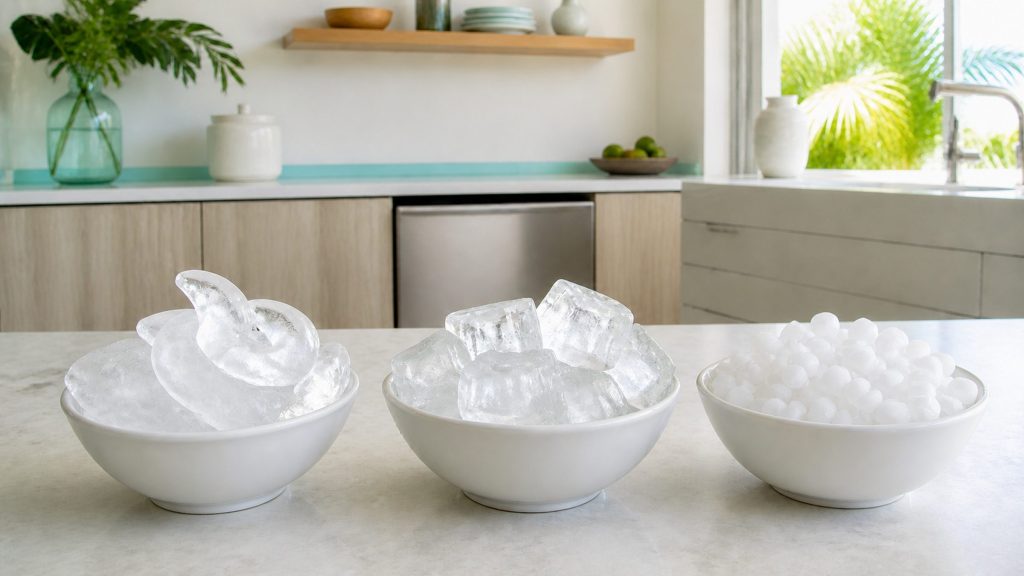
Crescent, Clear and Nugget — Three Machines That All Make Ice
Not a buying guide. Three completely different machines wear the same word, and knowing which you own changes what a noise means and what a stoppage costs.
Read more
Tell us the model number and what it is doing.
This article is based on:
- Official manufacturer documentation
- Internal repair procedures
- Technician repair history
- Company quality standards