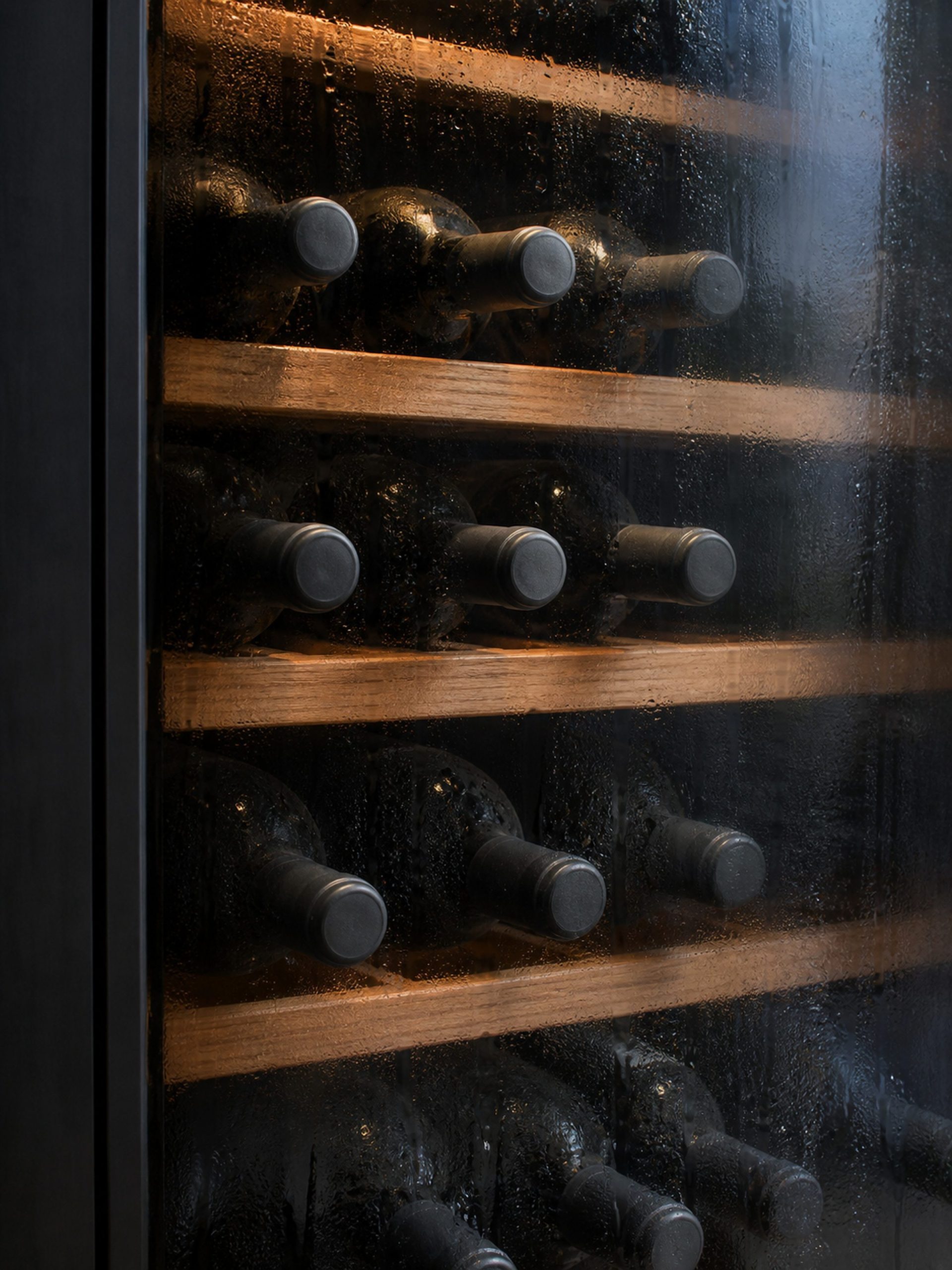
- “One zone warm, the other right”
- “The whole cabinet drifting”
- “Bottles warmer than the display claims”
Symptom
U-Line wine cooler not cooling
The first question on a wine cabinet is not what has failed but how much of it. Five of these models hold two zones independently, and a single zone drifting is a much smaller job than the phrase "the wine cooler has failed" suggests.
- From $95 diagnostic, credited to the repair
- 59 cities and neighborhoods covered
- OEM parts available on order
- In writing the price, before anything is opened
Five ordinary causes
What this usually turns out to be
Cheapest and commonest first, which is also the order we check them in. They sit hundreds of dollars apart, and only the unit settles which one is yours.
-
Showroom mode
Ruled out first because it is free and because it produces exactly this. Degree symbol flashing, display lit, refrigeration off.
Diagnostic visit from $95 -
A zone sensor
A dual-zone cabinet has a sensor per zone and the control logs them separately — the third and fourth thermistors exist precisely for these cabinets.
Wine cooler zone and thermostat repair from $195 -
The door and its seal
Wine cabinets are opened less and judged harder. A marginal seal costs a degree or two permanently, and on wine that matters.
Door seal replacement from $155 -
Condenser and airflow
Same first answer as everywhere else on this make, and it is right often enough to be worth checking before anything is opened.
Condenser and airflow service from $145 -
The sealed system
Last. On a cabinet worth several thousand dollars this repair is usually still worth doing, which is a different conversation from the one on a small beverage center.
Sealed system repair from $650
In five minutes
Before you call anybody
None of it needs tools, and all of it makes the visit shorter.
-
01
Check the degree symbol
Flashing rather than steady is showroom mode, and the refrigeration is off deliberately.
-
02
Measure both zones separately
A bottle of water and a thermometer in each. One zone out and both zones out are different repairs.
-
03
Look at the inside of the glass
Misting on the inside of a glass door is a seal question, and it is the cheapest thing on this list.
-
04
Clear the grille
A wine cabinet under a counter in a Miami kitchen is doing continuous work and cannot do it through a blocked grille.
How it shows up
What people describe when they call
A shortcut
Narrow it down before anybody arrives
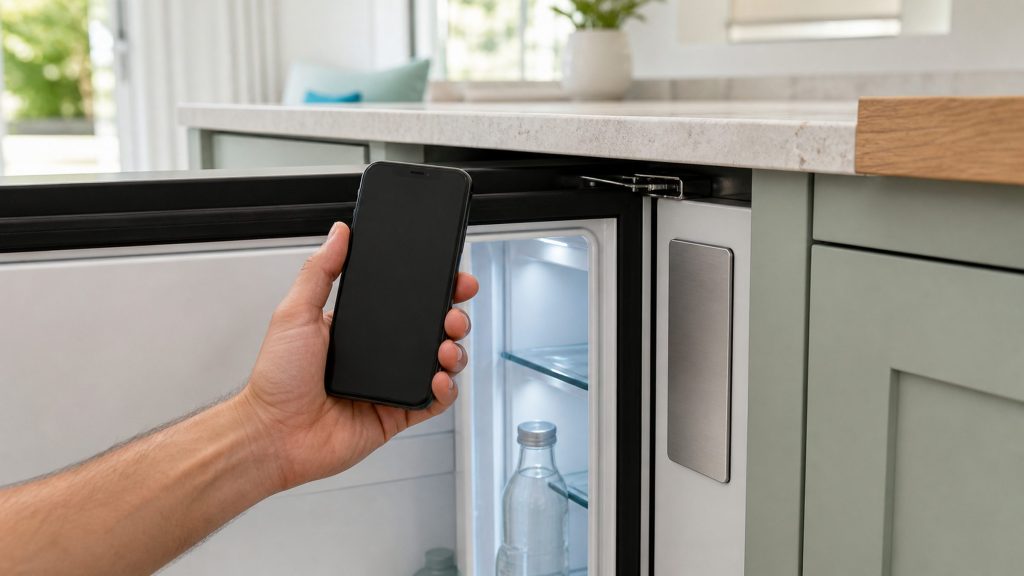
A description of the behaviour leaves a few possible causes. A code names the subsystem before anybody opens anything, which is why it is worth photographing before it clears.
If the display is showing something
Photograph it before it clears — codes do not wait. Search the full code list
In more detail
About U-Line wine cooler not cooling
Measure the bottles, not the display
Put a thermometer in a bottle of water inside the cabinet, close the door and leave it twenty-four hours. It is the maker's own method, and on this appliance it settles more than the display can: the display shows what the control believes, and the control is reading a sensor that may be the whole problem.
Ask how much of the cabinet is wrong
Five of U-Line's seventeen wine models hold two zones independently, each with its own sensor and its own set point. A single zone drifting is a much smaller job than the phrase the call usually arrives as, and establishing which it is takes a thermometer and a day rather than a technician and an hour.
Wine is less forgiving than food
A refrigerator that runs two degrees warm is a nuisance. A wine cabinet that runs five degrees warm for a season is doing something you cannot undo, which is why this page is less relaxed about small drifts than the refrigerator one, and why the measurement matters more than the display.
This article is based on:
- Official manufacturer documentation
- Internal repair procedures
- Technician repair history
- Company quality standards
Before you book
Questions about U-Line wine cooler not cooling
The top shelf is warmer than the bottom.
In a single-zone cabinet a gradient is normal and is usually deliberate — it is why reds go high and whites go low. A gradient that has grown, or that has appeared where there was not one, is a different matter.
It is humming louder than it used to.
Worth mentioning on a wine cabinet specifically. More vibration usually means the refrigeration is working harder, which is the same story as this page from the other end.
Where we do it
Across Miami-Dade, Broward, and Palm Beach
Same terms everywhere we go: an on-site diagnostic first, the price agreed in writing, and the exact figure confirmed once we have seen the unit.
Neighborhoods people ask for by name