Common Problems
Crescent, Clear and Nugget — Three Machines That All Make Ice
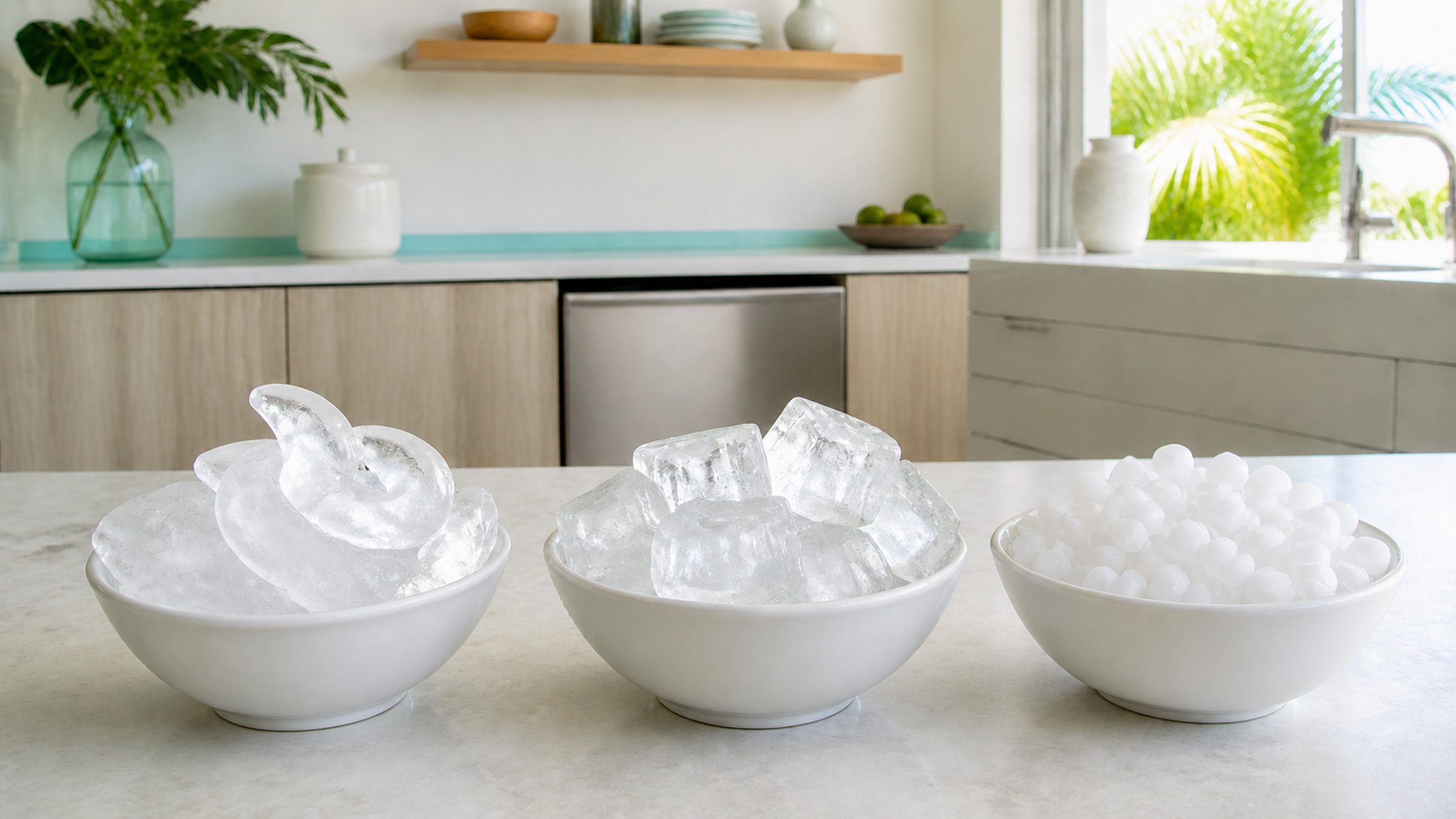
A crescent ice maker freezes water in a mold and releases the cubes with a heater — a fill valve, a mold, a heater and a mechanical bin arm, and that is nearly the whole machine. A clear ice machine freezes moving water slowly so no air is trapped, which needs a water dispense valve, a circulation pump and a hot gas valve to release the sheet; all three are on U-Line's own relay chart for those boards. A nugget machine freezes a thin layer on the wall of a cylinder and drives an auger through it, producing soft chewable pellets, and the auger, its gearbox and the cylinder are doing continuous mechanical work nothing else in the range does. They fail accordingly. A crescent maker almost always stops because of water or the bin arm. A clear ice machine tells you with the ice first — cloudy, thin or hollow means the water movement or the harvest timing has changed. And a nugget machine's characteristic failure is the auger, which is why it is the one appliance on this site where a grinding noise means switch it off rather than book a visit.
The full guide
U line nugget ice machine: why the distinction is worth having
Buying advice is not the point of this page — these decisions have usually been made by the time anybody calls us. What matters is that the three machines fail in completely different ways, and treating them as three sizes of one appliance is how people end up with the wrong diagnosis and occasionally with a destroyed gearbox.
Crescent: a mold and a heater
The oldest thing U-Line makes. The company has been building crescent ice makers since 1962 and the design has the virtue of its age.
Water fills a mold. The mold freezes. A heater warms it just enough to release the ice, a mechanism sweeps the crescents into the bin, and a wire arm rides on top of the ice — when the arm is pushed up, the machine has been told the bin is full and it stops.
How it fails: water, water, and the bin arm. A closed shut-off valve, a filter at the end of its life, an inlet valve that has stopped opening, or an arm resting up because ice has built behind the bin. Almost nothing in a crescent maker is mechanically stressed, and almost nothing in it is expensive.
Its ice is opaque, because the water is frozen still and the air dissolved in it has nowhere to go.
Clear: moving water, and five circuits
Clear ice is frozen slowly from water that is kept moving, which lets dissolved air escape rather than being trapped. That is why it is transparent and why it melts more slowly — it is denser and there are fewer imperfections for a drink to work on.
Getting there takes real machinery. U-Line's own relay chart for these boards names a water dispense valve, a circulation pump, a water inlet valve, a hot gas valve and a condenser fan — five circuits a crescent maker does not have. The hot gas valve is the harvest: it warms the plate briefly so the sheet of ice releases.
How it fails: it tells you with the ice first. Cloudy ice means the water is no longer moving as it should. Thin or hollow cubes mean the freeze cycle is being cut short or the harvest is early. A machine that freezes a sheet and never releases it is pointing at the hot gas valve rather than at the refrigeration.
That early warning is worth acting on — it is the cheapest moment there is.
Nugget: an auger, and a gearbox behind it
Nugget ice — the soft chewable pellets — is made by freezing a thin layer of ice on the inside wall of a cylinder and driving a screw through it, which breaks the layer up and compacts it into pellets as it pushes them out.
That means a motor, a gearbox and an auger running against a cylinder wall, continuously, for as long as the machine is making ice. Nothing else in U-Line's catalog does sustained mechanical work like that.
How it fails: the drive train. Wet nugget, then slushy nugget, then a stop is the classic sequence. U-Line logs an auger error of its own — 13 on the display — and the maker's cleaning signal exists largely because of what scale does in this machine specifically.
And it is the one appliance on this site where the first instruction is to switch it off. A motor pushing against a seized auger destroys the gearbox behind it while you decide what to do, and the difference between acting on the noise and waiting a week is measured in hundreds of dollars.
What all three share
Water in, water out. Every one of them has an inlet, and most installations have a drain — and where there is no gravity drain there is a pump, which U-Line logs its own error for.
Scale. This is the common ending in South Florida, and each machine dies of it differently: production drops on a crescent maker, the ice changes on a clear machine, the auger seizes on a nugget. The maker signals for a cleaning cycle after six cumulative months of ice making and keeps signaling until it gets one, and on this water six months is optimistic.
And the same refrigeration. Underneath, all three are U-Line cold: the same sensors, the same control platform, the same fifteen logged numbers, the same modes. A machine that has gone warm rather than stopped is diagnosed like a refrigerator.
The practical version
If you are describing a problem to somebody over the phone, saying which of the three you have is worth more than any other single detail — more than the model number, more than the symptom. It decides which parts travel and, on a nugget machine, whether the first thing we say is "switch it off".
If it turns out to be a repair
What this leads to, and what it costs
Every job on this site is priced the same way: an on-site diagnostic first, the figure agreed in writing before anybody starts.
-
6 models · clear ice, craft ice and nugget Ice machines
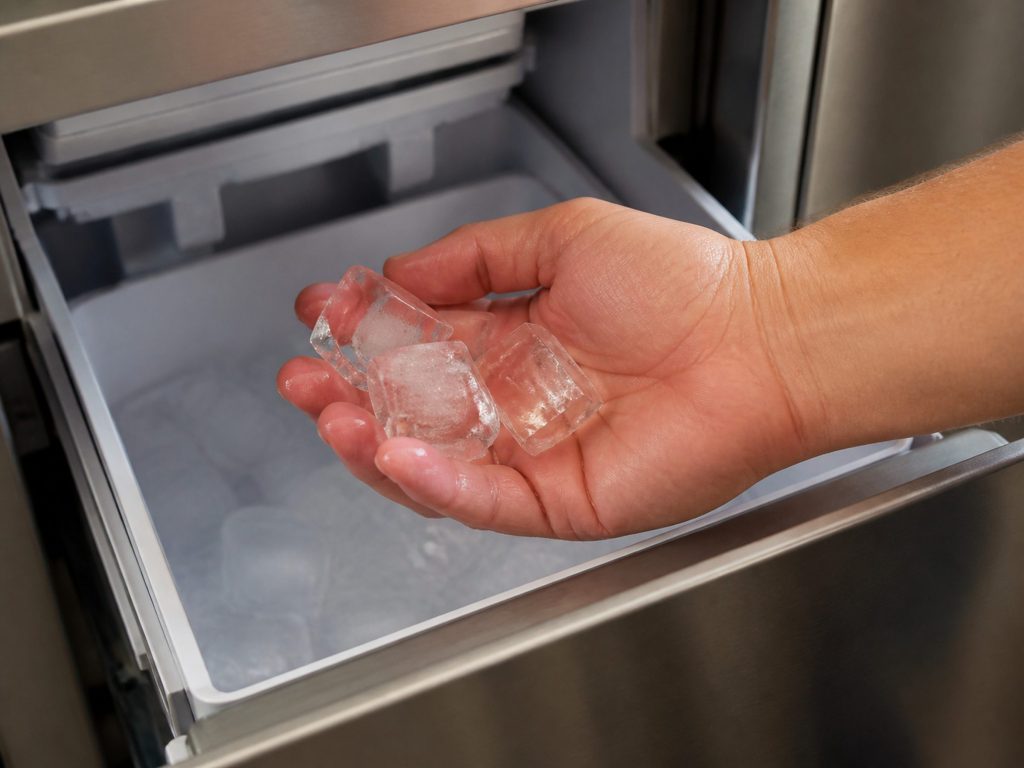
6 ice machines — clear ice, craft clear ice and nugget — and they are a different appliance from a crescent ice maker. Clear ice is made by freezing moving water slowly; nugget ice is made by driving a screw through ice on the wall of a cylinder. Both have a water circuit, a harvest and, on most installations, a drain. Anything that interrupts the water changes the ice before it stops the machine.
- Clear, craft and nugget — three different machines
- The ice itself is evidence before anything fails
- Scale is what ends them in this climate
-
10 models · crescent ice · U-Line's oldest line Ice makers
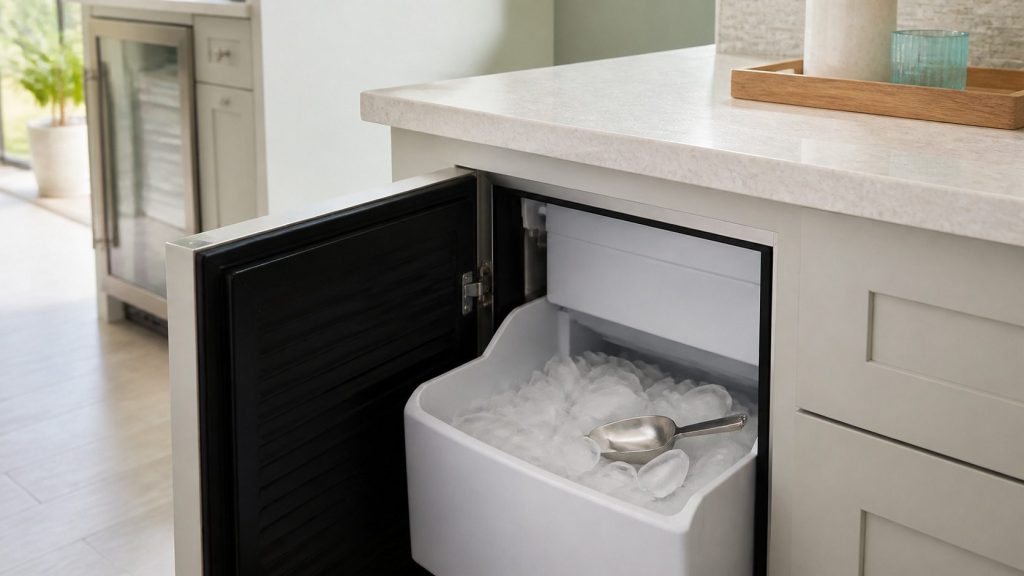
10 crescent ice makers and combination refrigerator/ice makers. U-Line has been building these since 1962 and they are the simplest cold appliance in the range: a fill valve, a mold, a heater to release the ice, and a mechanical arm that stops the machine when the bin is full. When one stops, the cause is nearly always water arriving, water leaving, or the harvest sticking.
- Crescent cubes, mechanical harvest, bin arm
- Water problems outnumber everything else
- No service menu on most of them
-
Ice where the machine did not intend it The ice maker is freezing up
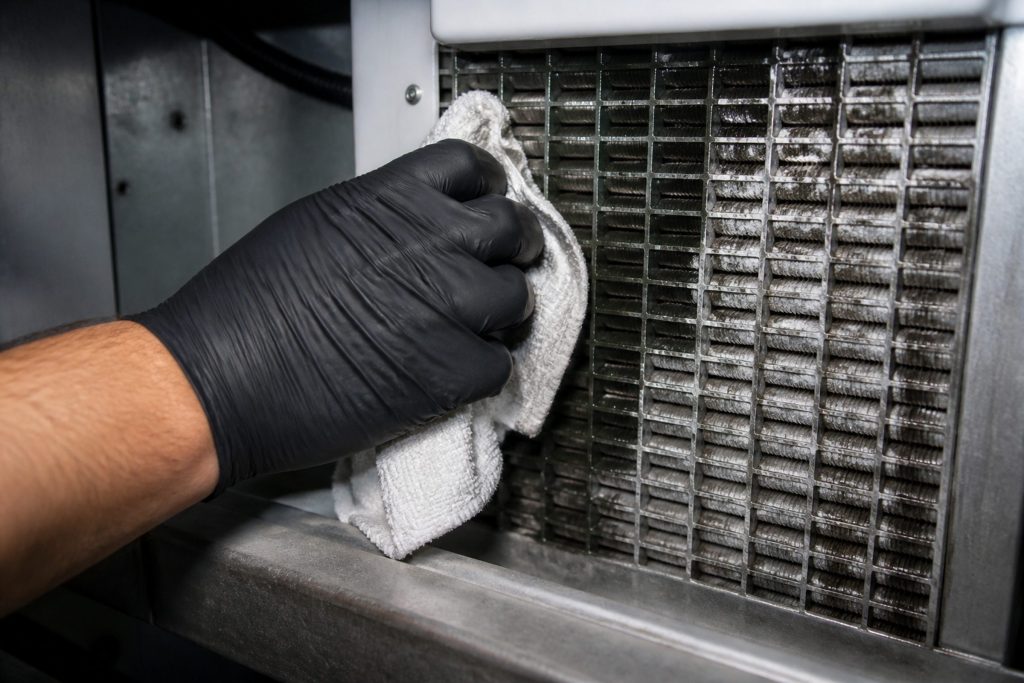
A block instead of cubes, ice bridging the mold, a bin frozen into one lump, or an evaporator growing a coat. Different machines fail this way for different reasons, and the shape of the ice is the clue.
- A solid block instead of cubes
- Ice bridging across the mold
- Frost building where there was none
-
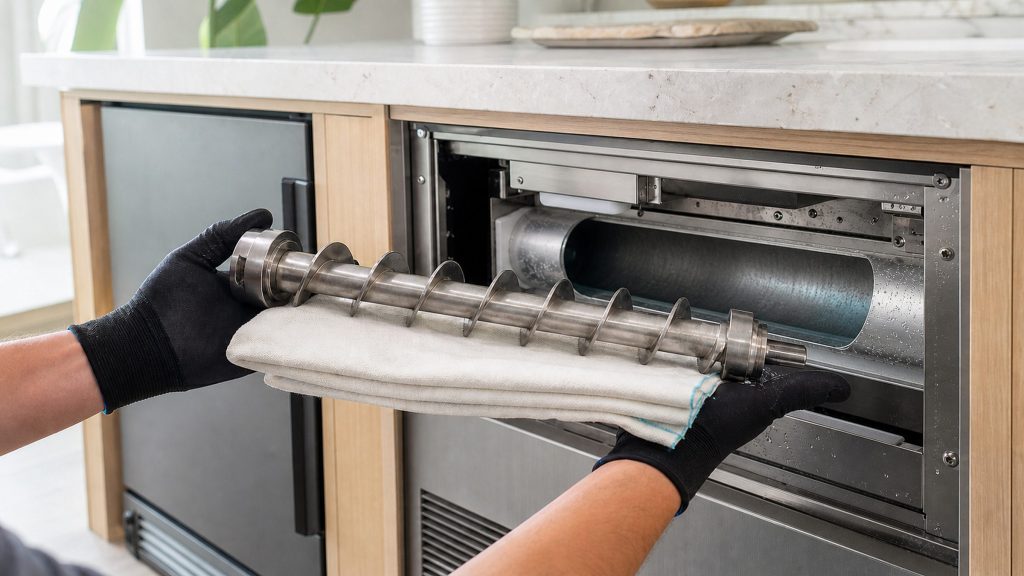
from $285 Nugget ice machine and auger repair
The auger is the machine. Nugget ice is made by freezing water on the wall of a cylinder and driving a screw through it, so the auger, its gearbox and its motor are doing continuous work that nothing else in this range does. The maker logs an auger error of its own, and a machine left running against a jammed auger turns a repair into a replacement.
- Stop-and-diagnose rather than keep-trying
- Cleaning history treated as part of the diagnosis
- Gearbox, motor and cylinder assessed together
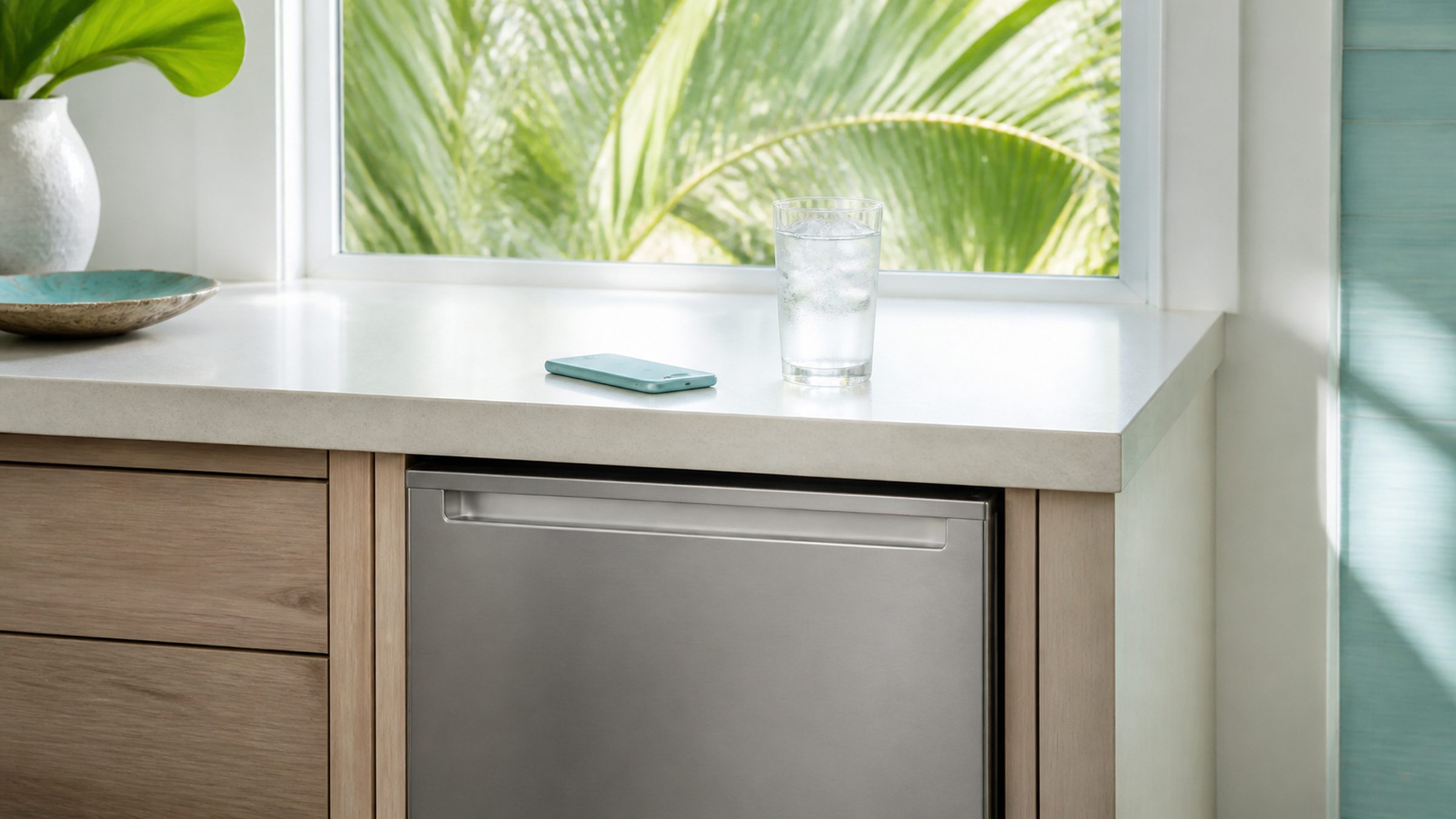
Questions people ask about this
What is the difference between crescent and clear ice?
How it is frozen. Crescent ice is frozen in a mold, so air dissolved in the water stays in the cube and it comes out white and opaque. Clear ice is frozen from water that is kept moving, which lets the air escape, so it forms dense and transparent and melts more slowly. Two different machines rather than two settings.
What is nugget ice actually?
Soft, chewable pellets, made by freezing a thin layer of ice on the inside of a cylinder and pushing an auger through it to break and compact it. It is the reason nugget machines have a mechanical drive train and the other two do not — and the reason they need cleaning most.
Which one is most reliable?
The crescent maker, by a distance, because there is so little in it. What stops it is nearly always the water supply or a bin arm that has been knocked, and both are cheap. The trade is that it makes less ice and it is not clear ice.
Do they all need the same cleaning?
All three need descaling and all three suffer badly without it, but the consequences differ. On a crescent maker scale slows production. On a clear ice machine it changes the ice and blocks the circulation. On a nugget machine it gets between the auger and the cylinder wall, which is an abrasive in a bearing surface and is the expensive ending.
Can I tell which I have without the model number?
By the ice. Half-moons are a crescent maker. Dense clear cubes are a clear ice machine. Soft pellets are nugget. If you want to be certain, the model number is on the plate on the upper right or rear wall inside.
Common Problems
More guides like this one
-
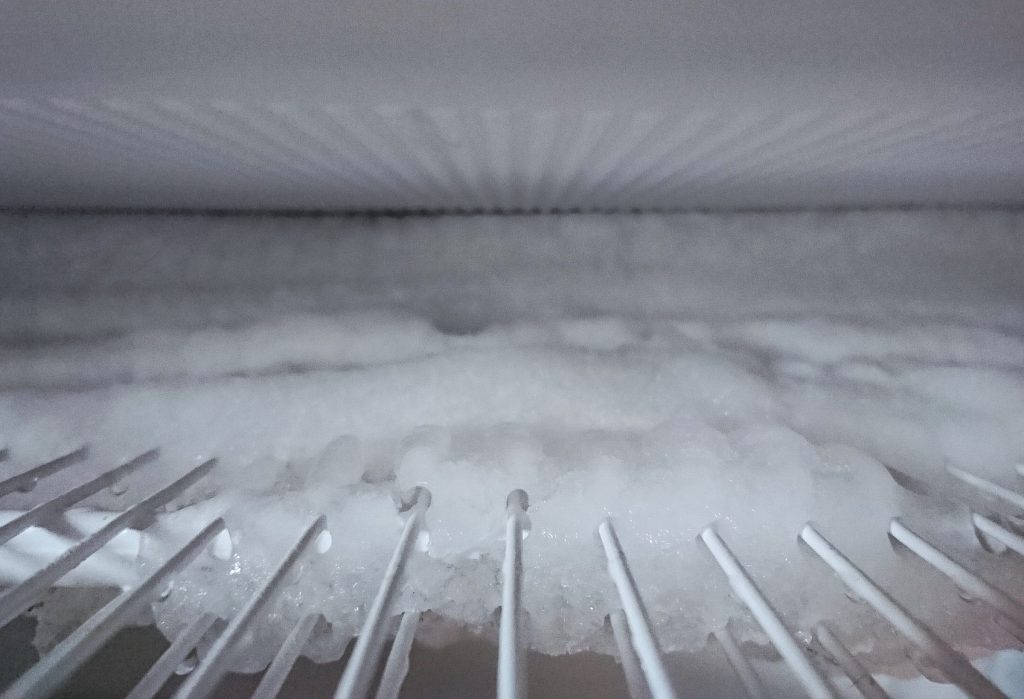
How to Defrost a Freezer Fast Without Damaging It
The method is easy. The part that matters is what comes after: frost is a symptom, and a freezer defrosted without finding out where the moisture came from will do it again.
Read more -
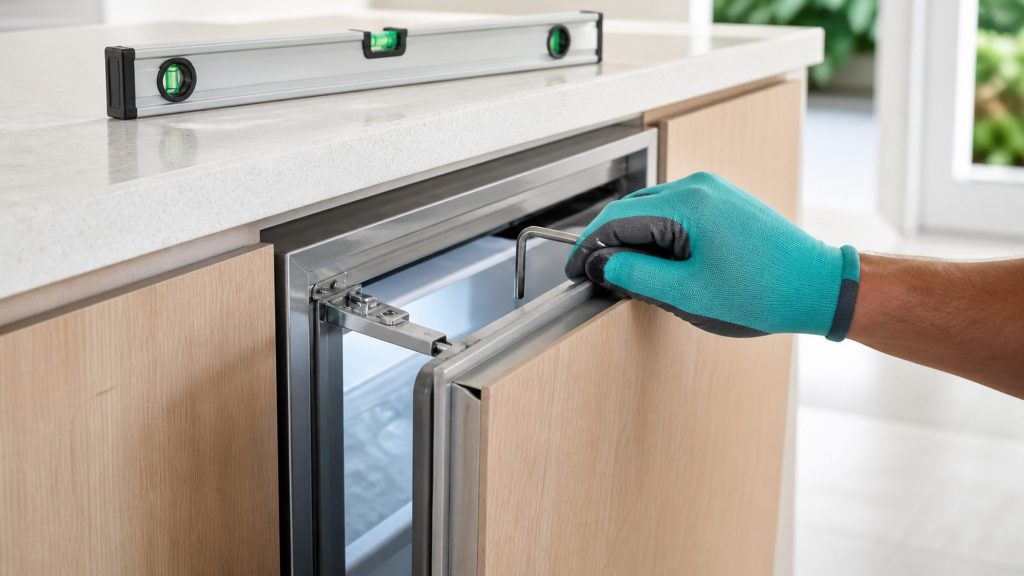
A Built-In Door That Will Not Close — Appliance, or Cabinetry?
On a built-in appliance this question has an extra answer nobody expects: the kitchen may have moved rather than the appliance. Three problems look like one, and a sheet of paper separates them.
Read more -
Can You Use a Regular Refrigerator Outdoors? What Outdoor-Rated Means
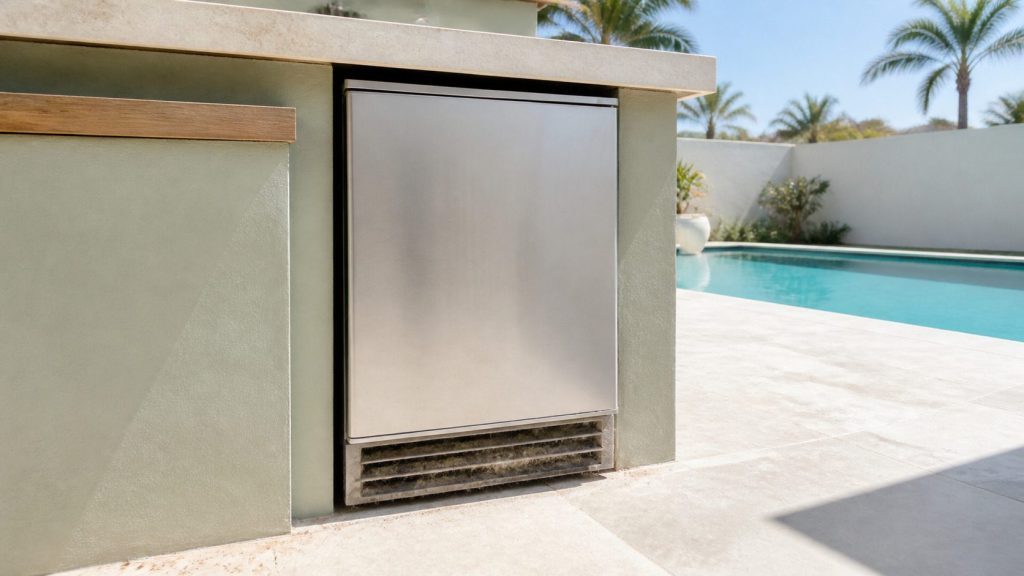
No, and the reasons are specific rather than a warranty technicality. Twenty-six of U-Line's seventy-six models are built for it and the other fifty are not, which makes the difference easy to see.
Read more
Tell us the model number and what it is doing.
This article is based on:
- Official manufacturer documentation
- Internal repair procedures
- Technician repair history
- Company quality standards