Common Problems
How to Defrost a Freezer Fast Without Damaging It
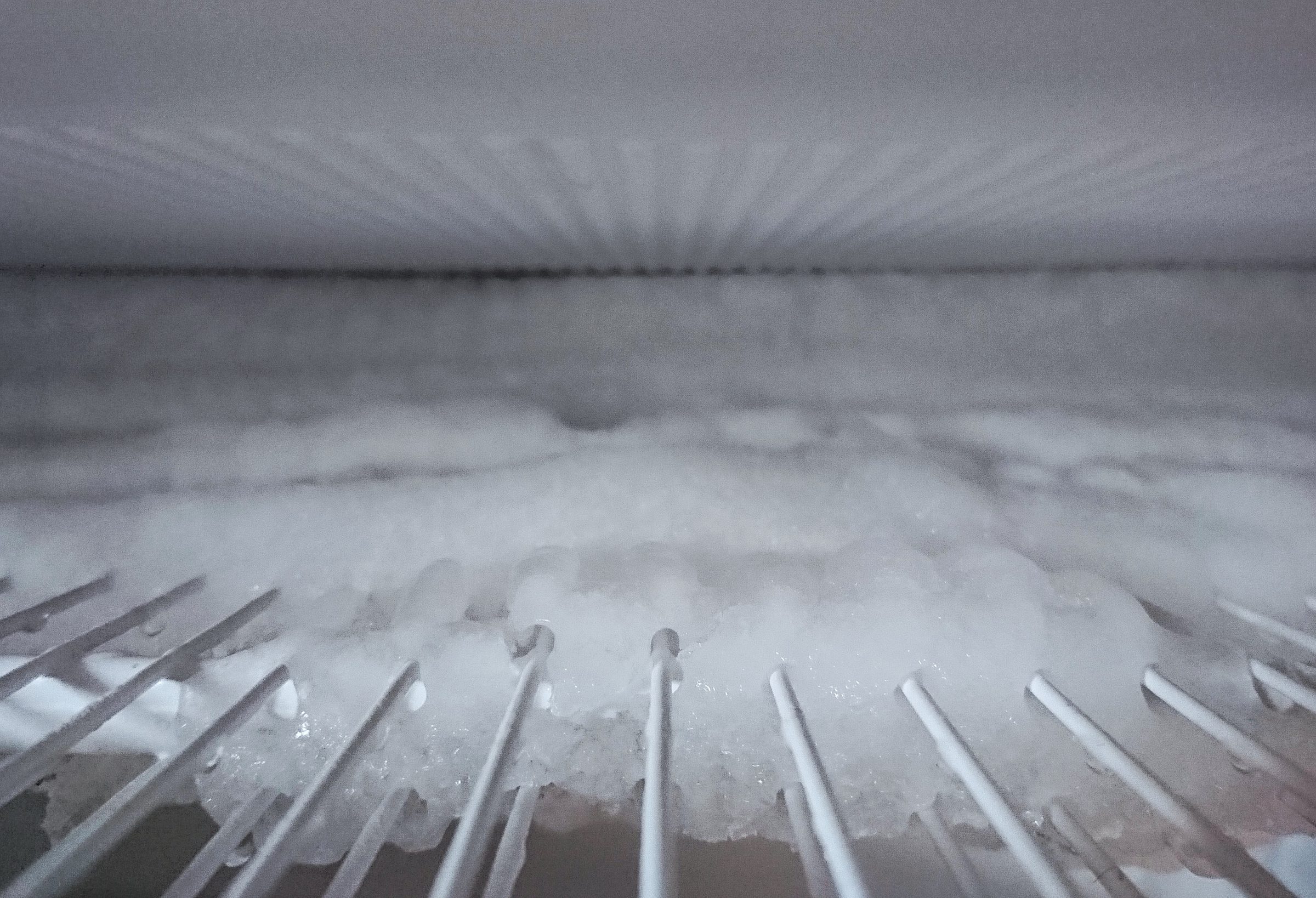
Empty it, switch it off at the breaker, leave the door open, and put towels down — that is the whole safe method, and warm air moving through the cabinet is what makes it fast. A bowl of hot water inside with the door shut for ten minutes at a time speeds it up considerably and is safe. What is not safe is anything that applies heat or force directly: a hairdryer aimed at the plastic, a heat gun, boiling water poured onto the evaporator, or a knife or screwdriver used to lever ice off. The liner is plastic and the evaporator behind it carries refrigerant, and a puncture turns a free afternoon into a sealed-system repair on an appliance that may not be worth one. Then the important part. U-Line publishes a threshold — frost on the evaporator plate vents is normal and melts during each off cycle, and a quarter of an inch of build-up or more is not — so if you are defrosting a cabinet manually, something is putting more moisture in than the appliance can take out, and it is nearly always the door.
The full guide
Best way to defrost a freezer fast: the method, and it is short
Empty it. On an undercounter cabinet that is not much, and it will not be long.
Switch it off at the breaker, not at the appliance's own control. A built-in unit's plug is behind it.
Open the door and put towels down. All the ice in there is about to become water, and on a built-in appliance it must not go into the carcase.
Speed it up with hot water rather than heat. A bowl or two of hot water standing inside with the door closed for ten minutes at a time works remarkably well — warm humid air reaches everything at once, which no directed heat source does. Repeat until the ice releases.
Let it release itself. If a slab will not come away, it needs more time. Nothing rigid goes anywhere near an evaporator.
Dry it out properly before it goes back on, and dry the door seal too.
An undercounter cabinet is usually an hour or two rather than the half-day a full-size freezer takes.
What not to do, and why
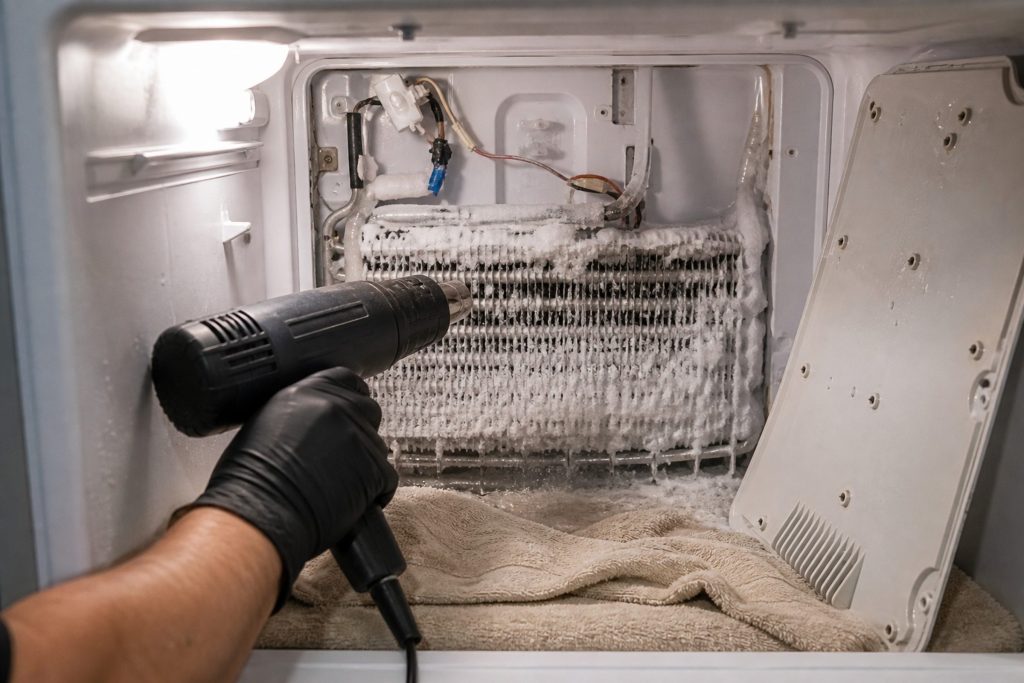
A hairdryer. The most repeated advice online, and the least suited to a modern cabinet. The liner is plastic and it deforms at temperatures well below what a hairdryer produces at close range; the deformation is permanent, and once the liner has warped the ice has a new place to form.
A heat gun. All of the above, faster.
Boiling water poured onto the evaporator. Thermal shock on aluminum tubing, and no better than hot water in a bowl.
A knife, a screwdriver, an ice pick. This is the one that costs real money. Ice bonds to the evaporator surface, and levering at it puts force straight into a tube carrying refrigerant. A puncture is a sealed-system repair, which is the most expensive thing one of these can need and is set out with its starting figure on its own cost page.
Then the part that actually matters
Manual defrosting is a stopgap. If a cabinet has iced up enough to need it, the real question is where the water came from.
U-Line publishes the threshold, which is unusually helpful:
> Frost on the evaporator plate vents is normal and will melt during each off cycle. If there is excessive build-up of 1/4" (6 mm) or more, manually defrost the unit.
So a light coat that comes and goes is the appliance working. A quarter of an inch or more is a message.
In South Florida the message is nearly always the door. Every opening admits air carrying a great deal of water, and all of that water ends up on the coldest surface in the cabinet. On a freezer it compounds: frost builds at the door line, the frost then holds the door open a fraction more, which lets in more air.
Before you refill it:
- Paper-test the seal at six or eight points around the door, corners included.
- Look at whether the door closes itself over the last inch, or stops short.
- Check nothing inside is holding it — a bin one position out, a basket, a package.
- On a convertible cabinet, confirm which mode it is in. U-Line's freezers run as refrigerators too, and a cabinet asked to do the wrong job is a separate story.
If the seal is good, the door is square, and it still frosts within weeks, that is the defrost circuit or its settings — and the interval and duration are parameters in the service menu rather than a mechanical timer, which shortens that diagnosis considerably.
And the one thing manual defrosting is genuinely good for
Getting a cabinet working again this afternoon. A blocked evaporator cannot move air, and a freezer that has frosted solid has effectively stopped. Clearing it buys back weeks — enough time to get the door dealt with properly rather than in a hurry.
If it turns out to be a repair
What this leads to, and what it costs
Every job on this site is priced the same way: an on-site diagnostic first, the figure agreed in writing before anybody starts.
-
Some of it is normal, and the maker gives the threshold Frost building up inside
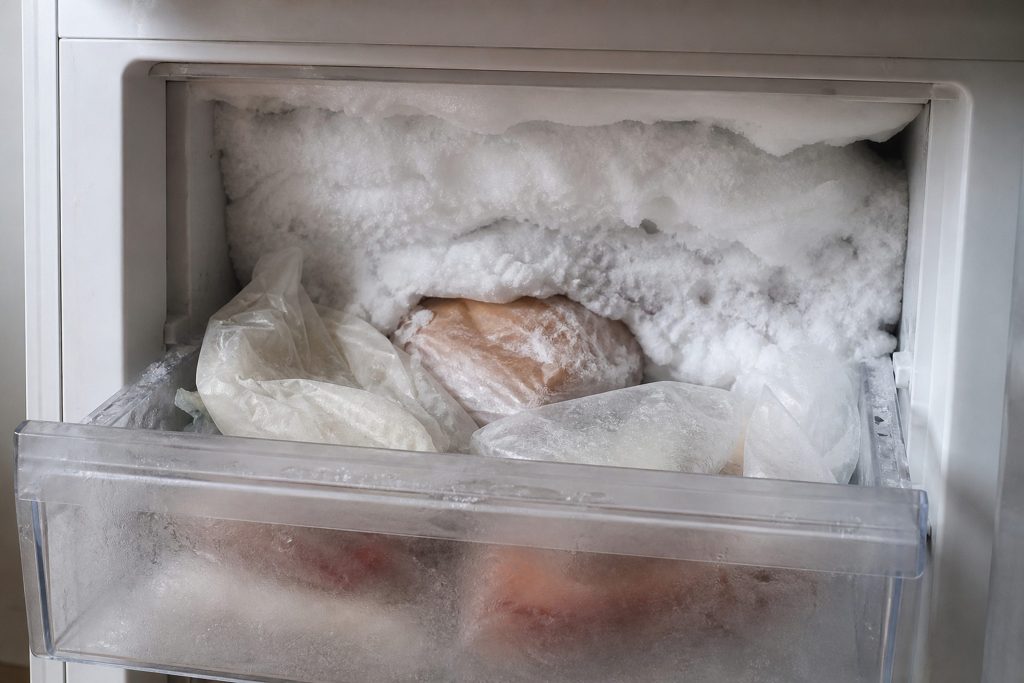
Frost on the evaporator plate vents is normal on these units and melts during each off cycle — the manual says so. What is not normal is a quarter of an inch or more, and in a humid kitchen the difference between the two arrives faster than the manual assumes.
- Ice on the back wall
- Frost that never melts away
- A quarter inch or more of build-up
-
from $185 Cooling and defrost repair
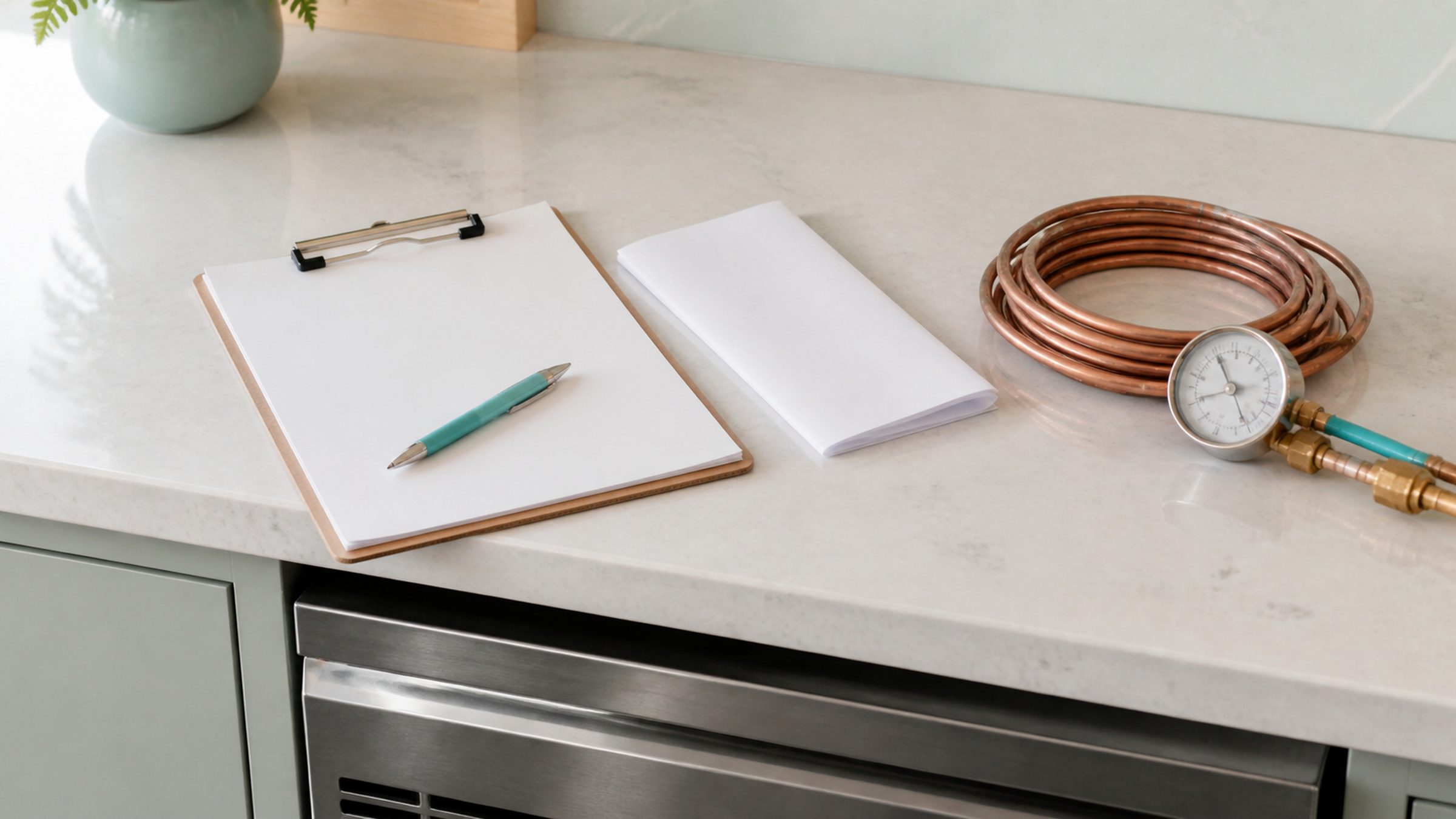
Frost where there should not be frost, or a cabinet that has quietly stopped keeping up. On these controls the defrost interval and duration are settings rather than a mechanical timer — the service menu will show and change both — which shortens the diagnosis considerably and also means a wrongly programmed board can produce this on its own.
- Defrost interval and duration read off the control
- Frost told apart from a seal problem before parts
- The maker's own thresholds, not a rule of thumb
-
from $155 Door seal replacement
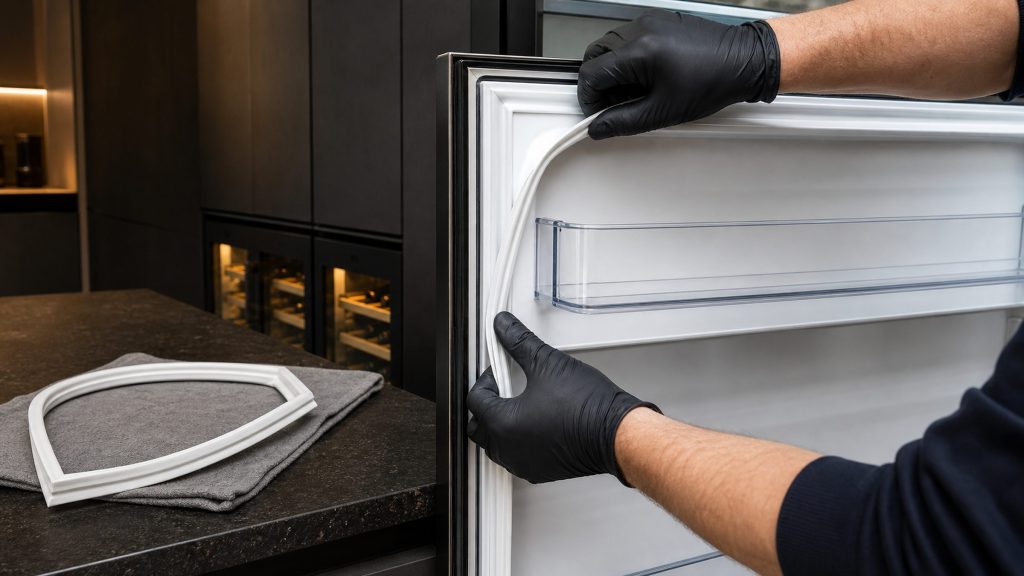
The cheapest part on the appliance that costs you temperature, and the first thing worth looking at behind condensation on a wine cooler door. A seal that has taken a set no longer touches the cabinet along its whole run, and the gap is usually somewhere nobody looks — the hinge side, low down, behind the door front.
- Checked along the whole run, not at the handle
- Fitted to a door that closes square, or it will fail again
- Condensation and frost traced to the seal before anything else
-
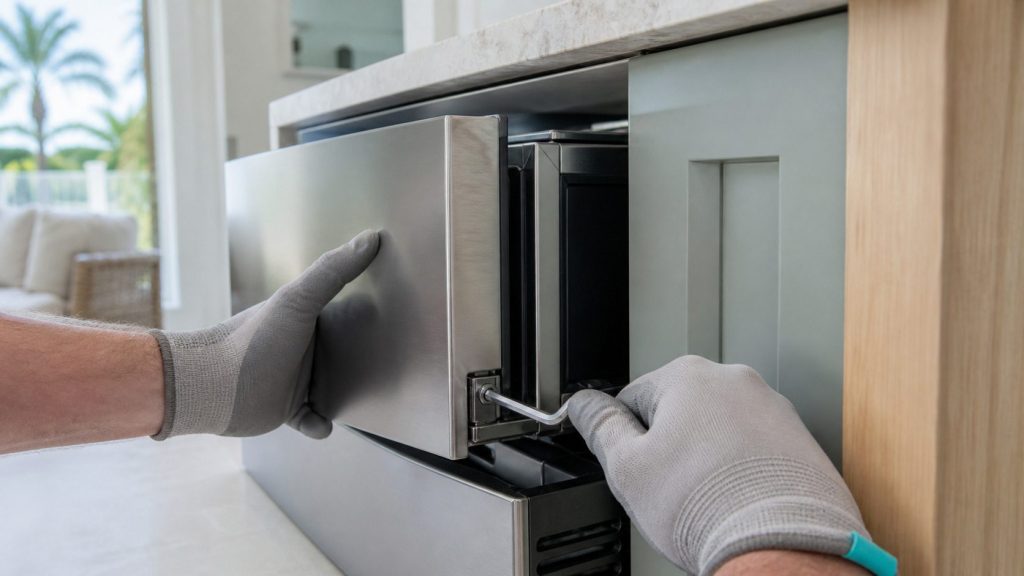
from $175 Door alignment and hinge repair
Priced apart from the seal on purpose: one is a part and the other is joinery. Nearly every U-Line is built in, and many carry a customer's own cabinet front on an integrated door. Aligning that door against the run either side — so it closes square, sits flush and does not hold itself open a millimeter — is most of the visit and is the part nobody quotes for.
- Integrated doors aligned against your cabinetry, not just to the appliance
- Door swing, door stop and adjustment as the maker sets them
- A door that closes itself instead of resting
Questions people ask about this
What is the fastest way to defrost a freezer?
Empty it, switch it off, open the door, and put a bowl or two of hot water inside with the door closed for ten minutes at a time. Warm humid air does the work far faster than an open door alone, and neither method risks anything. Expect an hour or two on an undercounter cabinet rather than the half-day a full-size freezer takes.
Can I use a hairdryer?
It is the most common advice online and it is a bad idea on a modern cabinet. The liner is plastic and it deforms with far less heat than people expect, and behind it is an evaporator carrying refrigerant. A deformed liner is permanent and a punctured evaporator is a sealed-system repair.
Can I chip the ice off?
No, and this is the one that does real damage. Anything rigid pushed into ice that is bonded to an evaporator can go through the tube behind it. If ice will not come away with warm air, it needs more time rather than more force.
How much frost is too much?
U-Line gives the number: frost on the evaporator plate vents is normal and melts during each off cycle, and a build-up of a quarter of an inch or more is not. Having a published figure turns an argument about whether there is 'a lot of ice' into a measurement.
It frosted up again within weeks.
Then the defrosting was treating the symptom. Something is putting more moisture into the cabinet than the defrost cycle can remove, and in this climate the door is nearly always the answer — a seal that has stopped gripping, a door held slightly open, or simply a very busy cabinet in a humid kitchen.
Common Problems
More guides like this one
-
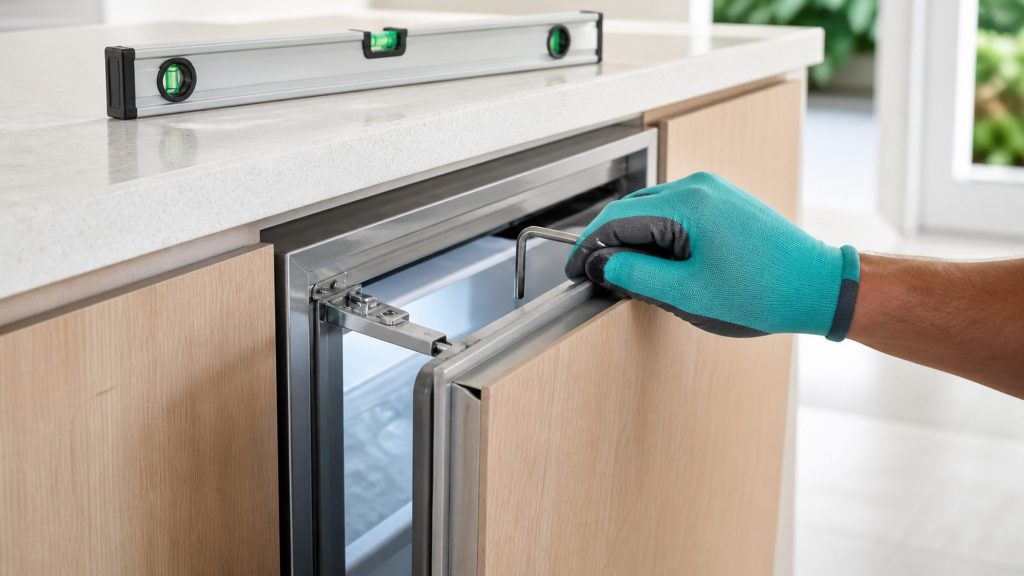
A Built-In Door That Will Not Close — Appliance, or Cabinetry?
On a built-in appliance this question has an extra answer nobody expects: the kitchen may have moved rather than the appliance. Three problems look like one, and a sheet of paper separates them.
Read more -
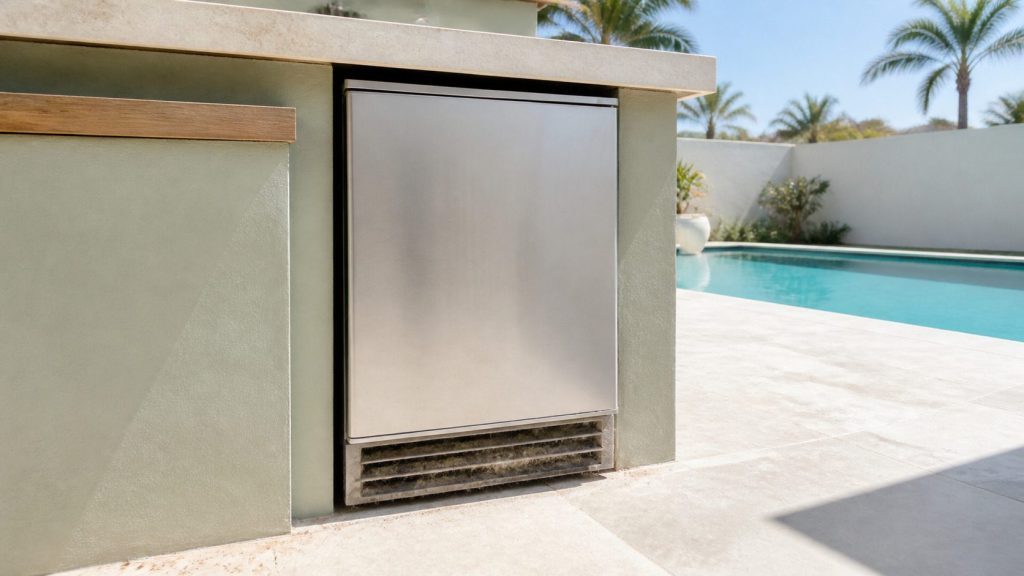
Can You Use a Regular Refrigerator Outdoors? What Outdoor-Rated Means
No, and the reasons are specific rather than a warranty technicality. Twenty-six of U-Line's seventy-six models are built for it and the other fifty are not, which makes the difference easy to see.
Read more -
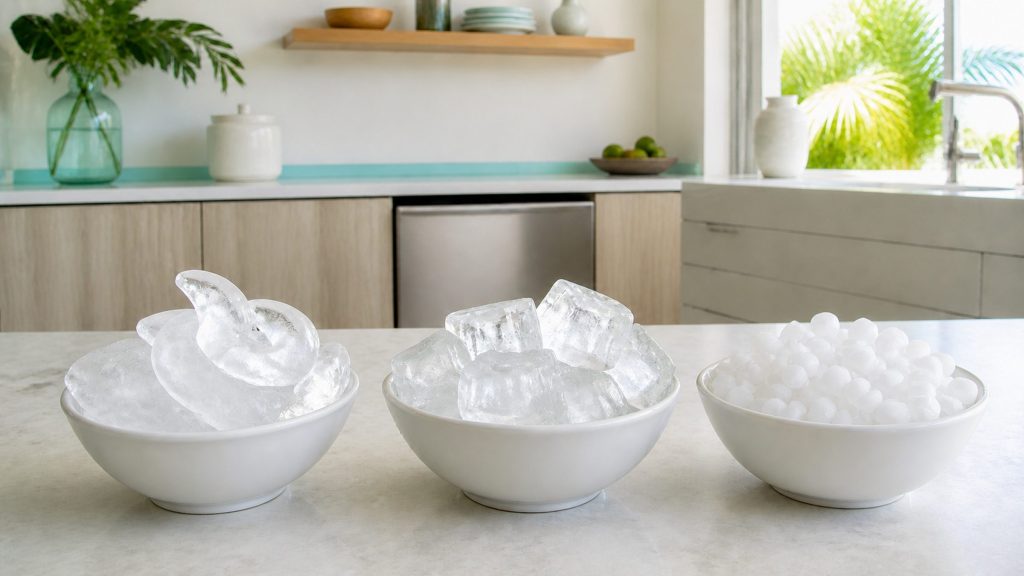
Crescent, Clear and Nugget — Three Machines That All Make Ice
Not a buying guide. Three completely different machines wear the same word, and knowing which you own changes what a noise means and what a stoppage costs.
Read more
Tell us the model number and what it is doing.
This article is based on:
- Official manufacturer documentation
- Internal repair procedures
- Technician repair history
- Company quality standards