Troubleshooting
How to Fix a Noisy Refrigerator — Starting With the Two Causes the Maker Names
U-Line names two causes in its own troubleshooting table and both are free: refrigeration tubing touching the cabinet, which is carefully repositioned, and a fan blade obstructed by wiring, foam insulation or packaging material, which is removed. Before either, work out whether you have a noise or the noise — the manual also publishes what these appliances are supposed to sound like, including a compressor hum, refrigerant that sounds like boiling liquid moving through the evaporator, air moving through the condenser, and water dripping into the drain pan during defrost. A built-in appliance amplifies all of it: hard floors, tiled walls and a run of cabinetry reflect appliance noise, and a unit resting on three of its four feet passes vibration straight into the joinery. If none of that is the answer, the usual real part is an evaporator or condenser fan motor bearing, which gets louder over months and is worst just after the unit starts. On a nugget ice machine, a grinding or laboring noise is different from all of the above and means switch it off.
The full guide
How to fix a noisy refrigerator: two causes, and the maker names both
U-Line's own extended troubleshooting table has a row headed Noisy, and it gives two potential causes and nothing else:
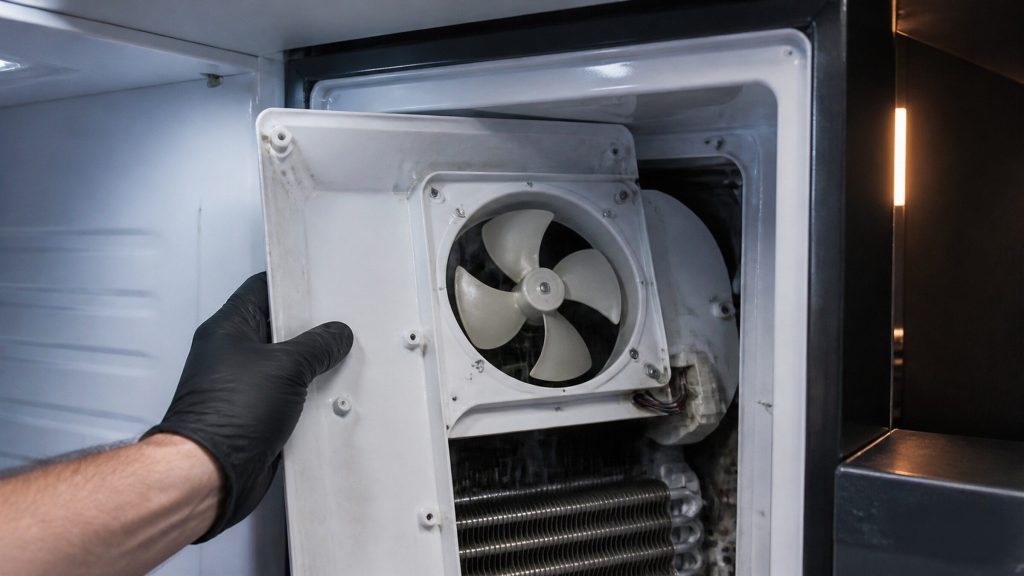
> Refrigeration tubing touching cabinet → Carefully reposition tubing. > Fan blade obstruction (wiring, foam insulation, packaging material) → Remove obstruction.
Neither is a part and neither is expensive. Between them they account for a good share of what arrives on this page, particularly on units that have been moved, serviced, or installed in the last year — packaging material inside a machine compartment is not a rare thing to find.
But first: is it a noise, or the noise?
The same manual publishes what these appliances are supposed to sound like, which is more candid than most makers manage. In its words, with the note that your model may not have every component:
- The compressor makes a hum or pulsing sound while it runs.
- The evaporator — refrigerant flowing through it may sound like boiling liquid.
- The condenser fan — air moving through the condenser may be heard.
- The automatic defrost drain pan — water may be heard dripping or running into it during the defrost cycle.
That last one strands people regularly. A dripping or trickling noise from a cabinet on a warm afternoon is the machine draining meltwater exactly as designed, and it happens on a schedule the household has no reason to know about.
The room gets a vote
The manual makes a point that is unusual for a manufacturer and useful in a Miami kitchen:
> Normal operating sounds may be more noticeable because of the unit's environment. Hard surfaces such as cabinets, wood, vinyl or tiled floors and paneled walls have a tendency to reflect normal appliance operating noises.
An undercounter appliance is surrounded on three sides by cabinetry and stands on a tiled floor. It is, acoustically, in a box designed to project it. Nothing about the machine has to change for it to become a complaint — the room can do it on its own, and a re-floored kitchen or a removed rug is a real and common cause.
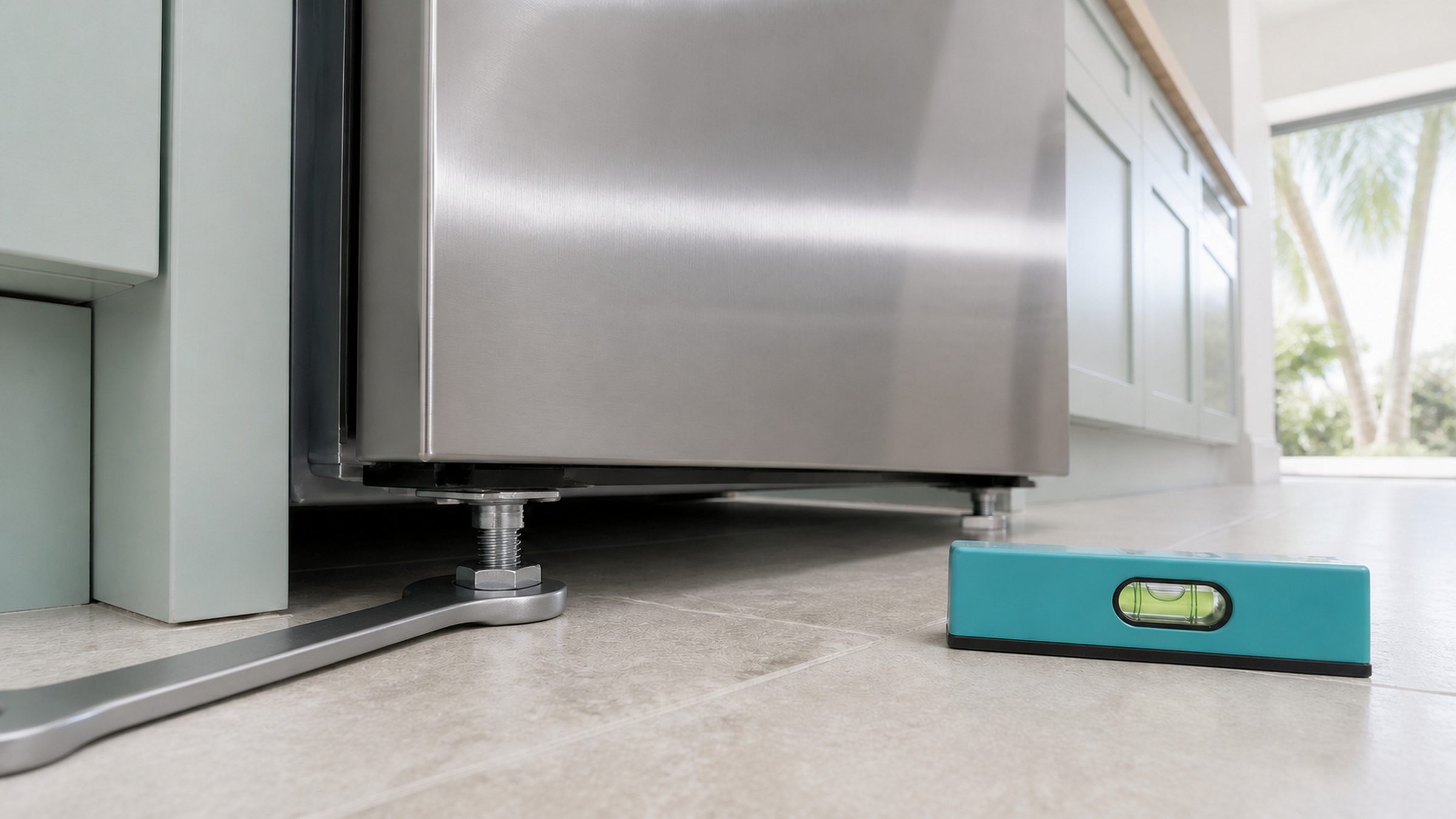
And leveling matters more here than on a freestanding appliance. A unit resting on three of its four feet transmits vibration into the carcase it is fitted to, and the carcase is a much larger sounding board than the appliance.
The noises that are a part
A fan motor bearing. Gets louder over months, is worst in the first minute after a start, and often changes pitch as the unit warms. Both the evaporator fan inside the cabinet and the condenser fan behind the grille do this; the second is far easier to reach.
A compressor mount. Older cabinets, and it usually presents as a low knock at start and stop rather than as a continuous noise.
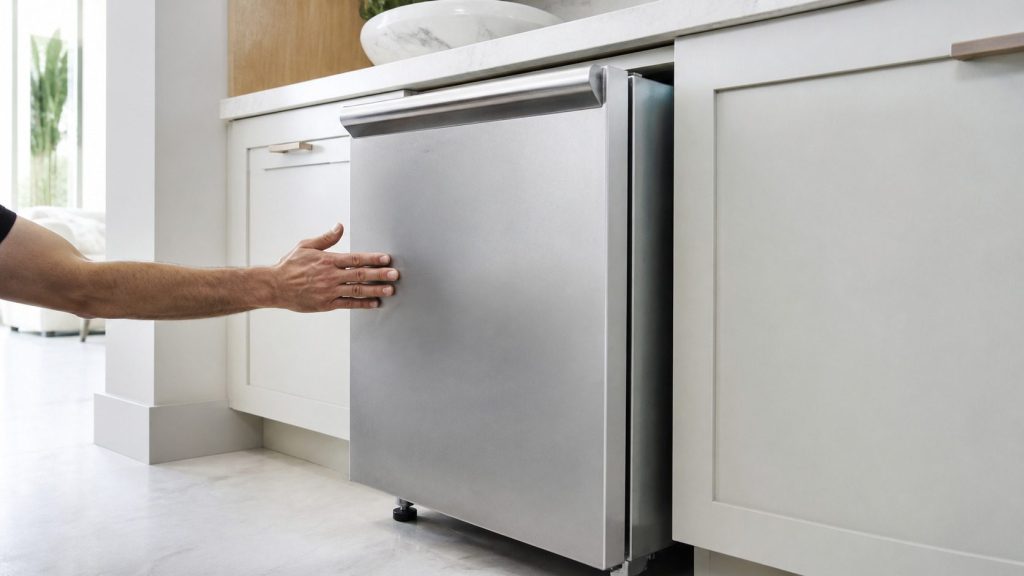
Something rattling. A grille that is not seated, a drain pan sitting loose, a shelf, a bin. Press gently on suspect parts while the unit runs; if the noise changes, you have found it.
The one noise that means stop
On a nugget ice machine, a grinding or laboring sound is not on any of the lists above. Nugget ice is made by driving an auger — a screw — through ice forming on the wall of a cylinder, with a gearbox behind it.
A motor pushing against a seized auger is destroying that gearbox while you decide what to do about it. Switch the machine off and leave it off. It is the only appliance on this site where the first instruction is to stop using it, and the difference between acting on the noise and waiting a week is measured in hundreds of dollars.
What to have ready if you call
When it is loudest, what it sounds like in ordinary words — hum, buzz, rattle, grinding, dripping — whether it is new or has been growing, and what changed in the room. A noise that started the week a floor went down and a noise that has been growing since spring are different appointments, and describing which one you have is worth more than any technical vocabulary.
If it turns out to be a repair
What this leads to, and what it costs
Every job on this site is priced the same way: an on-site diagnostic first, the figure agreed in writing before anybody starts.
-
The maker names two causes, and lists what is normal Loud or unusual noise
U-Line publishes a list of what its appliances are supposed to sound like — a compressor hum, refrigerant that sounds like boiling liquid, air through the condenser, water dripping into the drain pan during defrost — and a two-line list of what makes them noisy. Between them, most of these calls are settled.
- A new noise that was not there before
- Loudest just after it starts
- A rattle rather than a hum
-
from $175 Evaporator fan and running-noise repair
A U-Line that has become noisy usually has one of two things wrong, and the maker names both: refrigeration tubing touching the cabinet, and a fan blade obstructed by wiring, foam or packaging. Neither is expensive. Both sound alarming through a cabinet door in a quiet room, which is why the call usually comes at night.
- The two causes the maker names, checked first
- Normal operating sounds told apart from problems
- Tubing repositioned rather than replaced where that is the answer
-
from $145 Condenser and airflow service
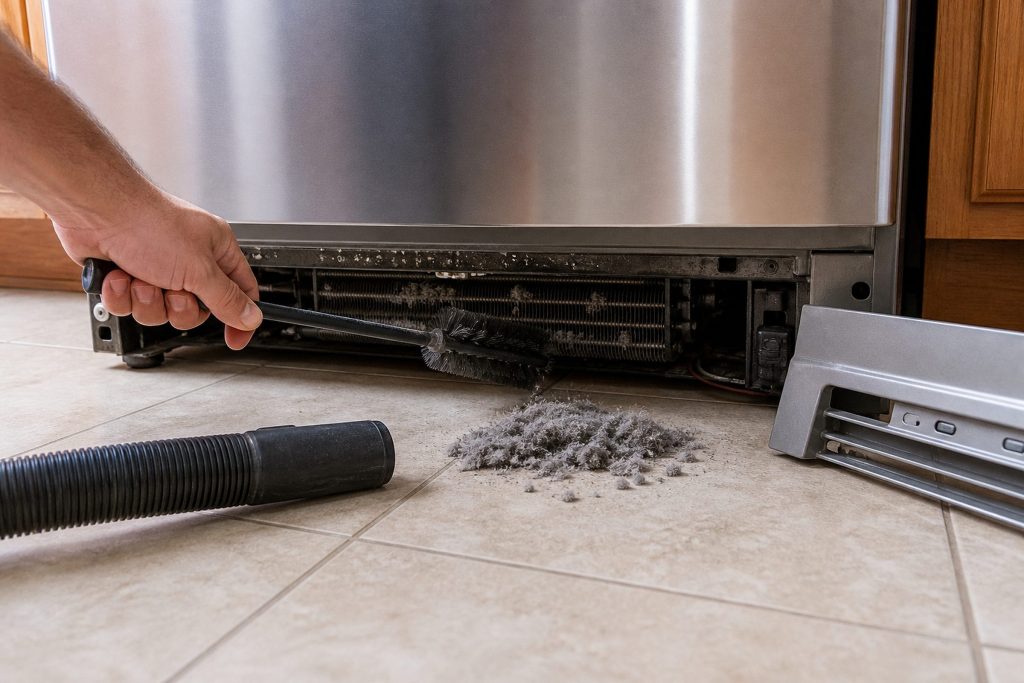
The maker's own first answer for a unit that is not cold enough is the grille and the condenser, and on an undercounter appliance it is right more often than anywhere else: the condenser sits behind a grille at floor level, in a kitchen, under a counter. It fills with dust and lint, and the unit does not complain — it just runs longer and holds less.
- The maker's own first check for "not cold enough"
- Cleaned the way the manual allows, not with a chemical
- Clearance around the unit checked, not only inside it
-
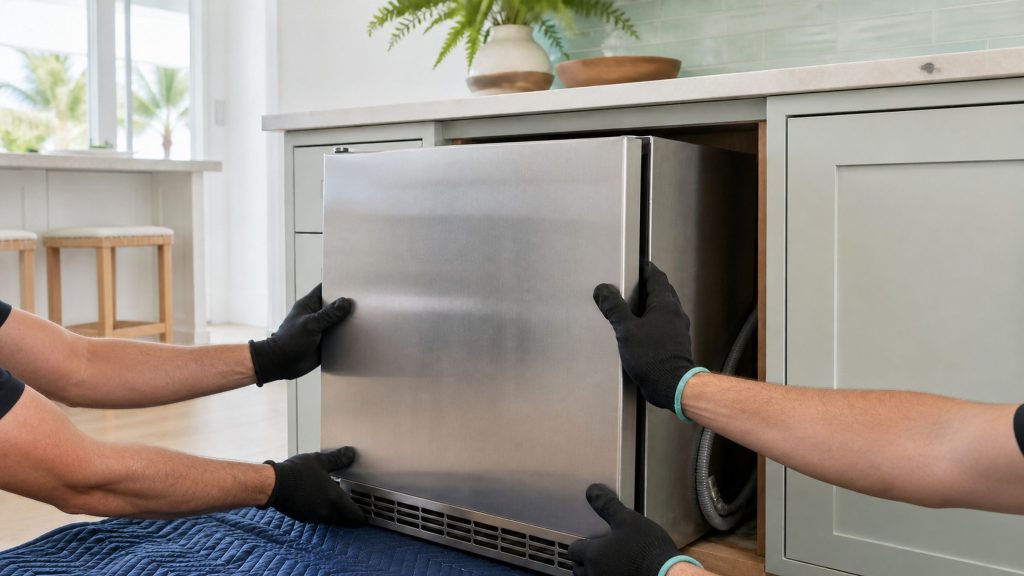
from $195 Built-in removal and reinstallation
Its own line on the invoice because it is its own work, and because it is invisible in a quote that does not name it. Nearly every U-Line is under a counter, many are behind a custom panel, and several are in a run with an anti-tip bracket and a fixed water connection. Getting the appliance out without damaging the joinery, and back in aligned, is a real part of most repairs on this make.
- Quoted openly instead of buried in the repair
- Anti-tip, grille, water and drain reconnected properly
- Aligned back into the run, not just pushed back
Questions people ask about this
What noises are normal on a refrigerator?
U-Line publishes the list: the compressor hums or pulses; refrigerant flowing through the evaporator can sound like boiling liquid; air moving through the condenser is audible; and during defrost, water can be heard dripping or running into the drain pan. Its own manual adds that your model may not have all of those components.
It got louder after we redid the kitchen.
Then look at the room before the appliance. The manual says plainly that hard surfaces — cabinets, wood, vinyl, tiled floors, paneled walls — reflect normal operating noise. A new floor genuinely can turn an appliance nobody noticed into one nobody can ignore.
It is loudest right after it starts.
That pattern usually points at a fan motor bearing, which is a real part and a straightforward replacement. It can also be tubing that has been resting against the cabinet and only rattles at certain speeds — worth checking first because it costs nothing.
My unit buzzes rather than hums.
A buzz is usually something vibrating against something else rather than the compressor itself: a panel, a grille that is not seated, a drain pan, or tubing. Press gently on suspect parts while it runs and listen for the noise to change — that identifies it faster than anything.
Is a noisy compressor dangerous?
Noisy on its own, no. A compressor that is getting louder and cycling on and off more often than it used to is worth a look, because a compressor cutting out on its own overload is telling you about heat rejection rather than about noise — which usually means the condenser.
Troubleshooting
More guides like this one
-
Your U-Line Is Keeping an Error Log You Cannot See
Every U-Line manual says the same sentence: all errors are logged in memory, and only the door error is displayed. The numbers are real. You just are not being shown them.
Read more -
The Light Works, the Display Works, and Nothing Is Cold
On most refrigerators this points at the compressor. On a U-Line, check the degree symbol first — there is a setting that runs the display and the light and switches the cooling off entirely.
Read more -
How to Reset a U-Line — and Why There Is No Reset Button
There is no reset button on a U-Line. What exists is a power cycle, two modes people mistake for a failure, and a service menu — and one of those choices destroys the only evidence the appliance kept.
Read more
Tell us the model number and what it is doing.
This article is based on:
- Official manufacturer documentation
- Internal repair procedures
- Technician repair history
- Company quality standards