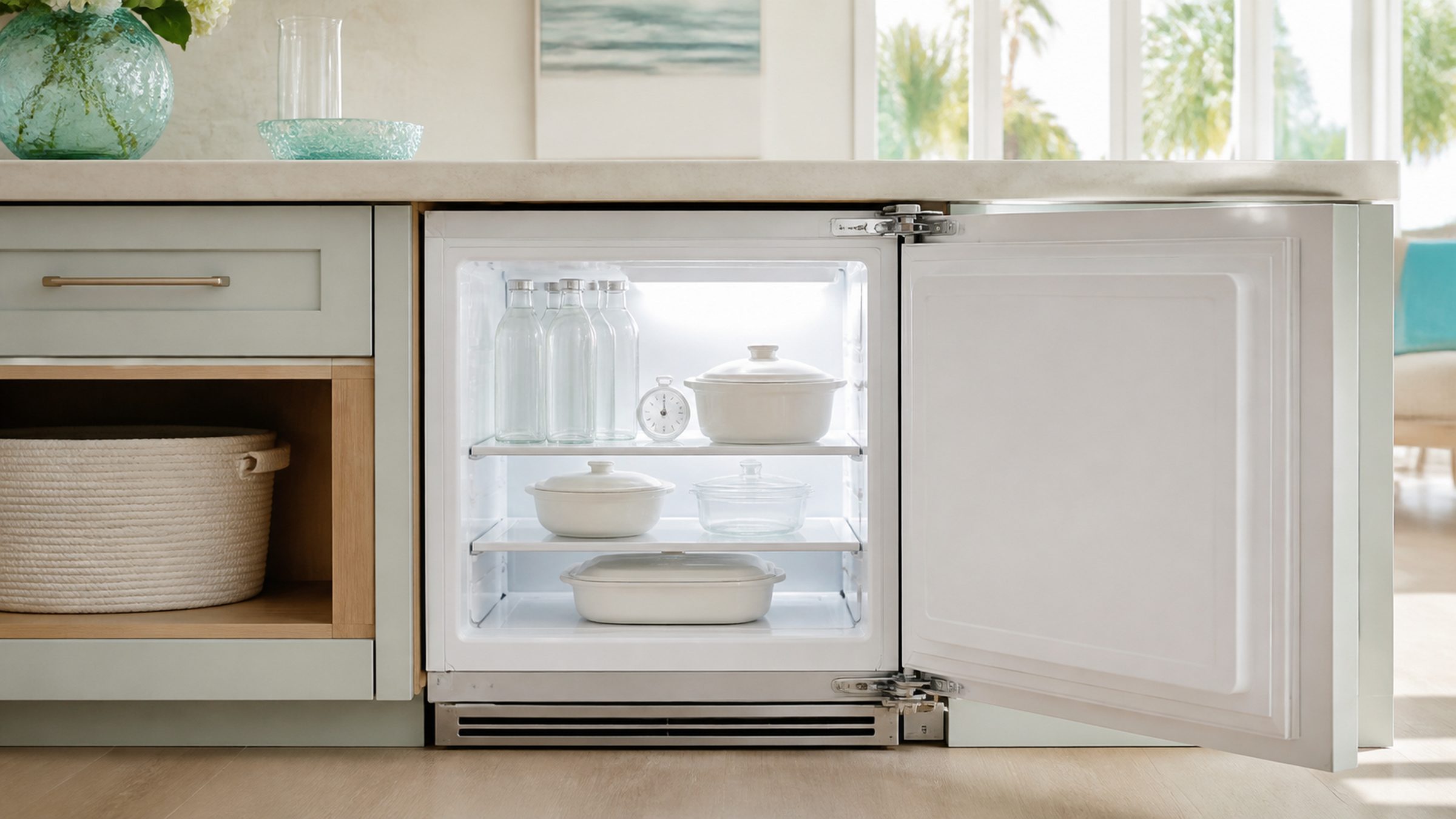
Troubleshooting
The Light Works, the Display Works, and Nothing Is Cold
Look at the degree symbol on the display before you do anything else. If it is flashing rather than steady, the unit is in showroom mode — a demonstration setting that keeps the display lit and the interior light working while switching the compressor, the fans and the rest of the refrigeration off completely. The maker describes it in exactly those terms, and it is cleared by holding the light key and the power key together for five seconds. If the symbol is steady, work down in order of cost: is the grille blocked and the condenser clean, is the door sealing, is the cabinet in a mode, and is the cabinet cycling in a fixed rhythm that ignores the load. Only after those does a sealed-system diagnosis make sense — it is the most expensive answer and the most over-diagnosed, and on this make the appliance's own backup mode hides a cheap sensor failure behind exactly this symptom.
The full guide
Fridge not cold but light working: the cheapest answer first, because it is free
A refrigerator that lights up and will not get cold sounds like a compressor. On this make, look at one thing before you accept that.
Is the degree symbol on the display flashing, or steady?
If it is flashing, the appliance is in showroom mode and there is nothing wrong with it. U-Line's own description of the mode:
> The ºF / ºC symbol will flash. Display will be lit and interior light will function. Unit will not cool.
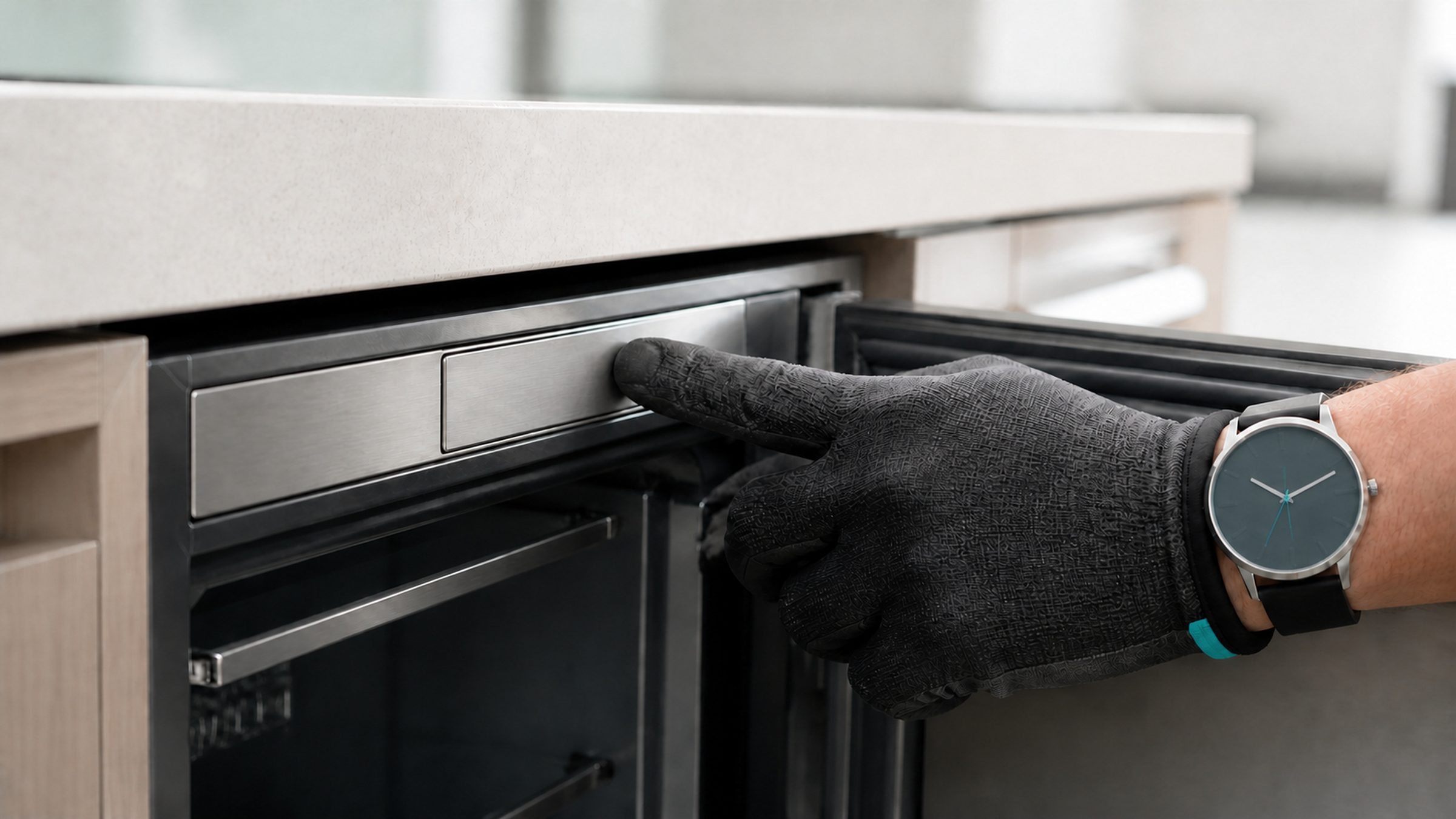
It exists so a dealer can put a machine on a floor and let people open it without running the refrigeration for months. It is entered by holding the light key and the power key together for five seconds, and left the same way. Which means it is also entered by somebody wiping the panel down with a cloth.
Floor models get sold. Units arrive in this mode. It reads exactly like a dead sealed system and it costs nothing to rule out.
Then, in order of what it costs
The grille and the condenser. U-Line's own troubleshooting table names them first for a unit that is not cold enough — nothing blocking the front grille, and a coil that is clean. On an undercounter appliance the condenser is at floor level in a kitchen, which is the worst place in the house to put one. Clean it with a soft brush or a vacuum; the manual is explicit that no cleaner of any type goes on it.
The door. Close a slip of paper in it and pull, at six or eight points around the perimeter, corners included. Where the paper comes out with no resistance the seal is not gripping, and it is very often nowhere near where the complaint is.
A mode, again. Sabbath mode is the mirror image of showroom mode: display and lights dark, everything else running. Worth knowing about because a household that has just cleared showroom mode sometimes enables this one by accident on the way past.
The cycle rhythm. Sit with it for an hour and write down when the compressor starts and stops. If it runs ten minutes and rests forty, over and over, whatever the cabinet is doing — that is not a thermostat. That is U-Line's backup mode after a sensor failure — a sensor repair wearing the costume of a sealed-system one, and those are two different orders of money.
What "not cooling" and "not cold enough" are hiding
These two complaints arrive as the same call and they are different problems.
Not cooling at all — the cabinet is at room temperature, nothing has changed in hours, and the compressor either never runs or runs and does nothing. Once the modes are out, this is a real diagnosis: power, control, compressor start components, or the sealed system.
Not cold enough — the cabinet is cold but not at its set point, and never has been since something changed. On a U-Line this is usually a sensor, and the appliance is designed not to say so. The maker's own words: if a zone thermistor fails, the unit continues to cool in a backup mode to preserve the integrity of the contents, and otherwise operates normally.
Telling them apart costs a bottle of water, a thermometer and a day.
When it really is the sealed system
It happens, and it is worth doing properly rather than by feel. U-Line publishes a diagnosis chart for exactly this — suction pressure, suction line temperature, compressor discharge, condenser, capillary tube, evaporator and wattage, across six system conditions from normal to no gas at all. A technician reads against that table.
Two things worth knowing before that conversation. The current range runs R600a, a hydrocarbon refrigerant that is flammable — it does not change the price but it changes who may open the system. And a sealed system is sealed: it does not consume refrigerant, so a system that is low is a system that is leaking, and topping it up without finding the leak is money spent twice.
The short version
Degree symbol first. Grille and condenser second. Door third. Cycle rhythm fourth. Sealed system last, and by measurement rather than by elimination.
Three of those four cost nothing, and on this appliance the first one is right often enough to be worth ten seconds of anybody's evening.
If it turns out to be a repair
What this leads to, and what it costs
Every job on this site is priced the same way: an on-site diagnostic first, the figure agreed in writing before anybody starts.
-
Not cooling but still running
The most common call on this make and the one with the cheapest answer hiding inside it. Before anything is opened, two modes have to be ruled out — one of them lights the display, works the light and deliberately stops the refrigeration.
- Running, lit, and warm inside
- Started after a move or a delivery
- Everything looks normal except the temperature
-
U-Line: The display works, the light works, and the unit will not cool
U-Line — an indicator rather than a code. This is a mode, not a failure, and it is the most expensive misdiagnosis on this make.
What the machine is telling you -
U-Line: It runs, it shows nothing, and it never gets cold enough
U-Line — an indicator rather than a code. This is the most important thing on this page and the appliance will not tell you about it.
What the machine is telling you -
Diagnostic visit
We find out what is actually wrong before anybody quotes a part. On a U-Line that starts with a question most visits skip: is the appliance reporting a problem, or is it in a mode somebody enabled by accident? A unit that lights up and will not cool is showroom mode as often as it is a sealed system, and the two are not the same conversation. The fee is credited toward the work when you go ahead.
- Modes ruled out before any part is named
- The error log read, not guessed at
- Credited toward the repair
Questions people ask about this
Why is my fridge light on but not cooling?
The light and the refrigeration are on different circuits, so a working light only tells you the appliance has power. On a U-Line there is a further step: showroom mode deliberately runs the display and the light while stopping the cooling, so a lit, responsive, warm cabinet is a documented state rather than a mystery.
What is showroom mode?
A setting so a dealer can display a working-looking unit on a shop floor without running the refrigeration. In U-Line's own words the degree symbol flashes, the display stays lit, the interior light functions, and the unit will not cool. It is entered and left by holding the light key and the power key together for five seconds.
Would a power cut have caused this?
It can. The 2000 Series manual's own answer for a display that works while the unit does not cool is to check showroom mode and then to interrupt power to the unit momentarily. A control that latched during a brownout is a real thing and a power cycle is the test for it.
It is a new unit and it has never cooled.
Then showroom mode is more likely rather than less. Floor models get sold, and a unit that came from a showroom often arrives in the mode it was displayed in. Check the degree symbol before anybody is called out.
How do I know when it really is the sealed system?
By elimination and by measurement, in that order, and it is genuinely the last thing on the list. U-Line publishes a chart of pressures and temperatures for a normal system, an overcharge, an undercharge, a partial restriction, a complete restriction and no gas at all — a diagnosis is taken against that rather than against a hunch.
Troubleshooting
More guides like this one
-
Your U-Line Is Keeping an Error Log You Cannot See
Every U-Line manual says the same sentence: all errors are logged in memory, and only the door error is displayed. The numbers are real. You just are not being shown them.
Read more -
How to Reset a U-Line — and Why There Is No Reset Button
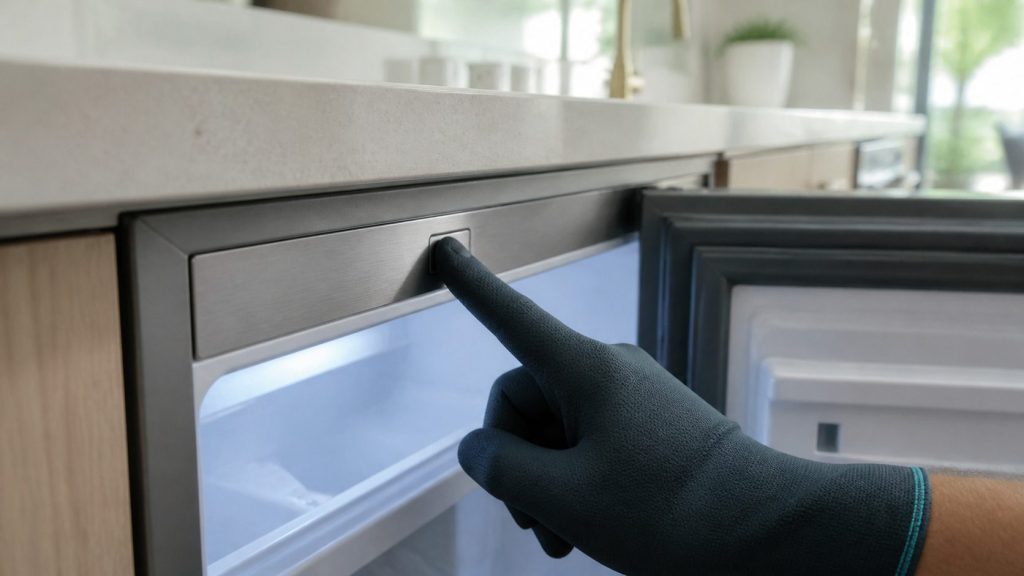
There is no reset button on a U-Line. What exists is a power cycle, two modes people mistake for a failure, and a service menu — and one of those choices destroys the only evidence the appliance kept.
Read more -
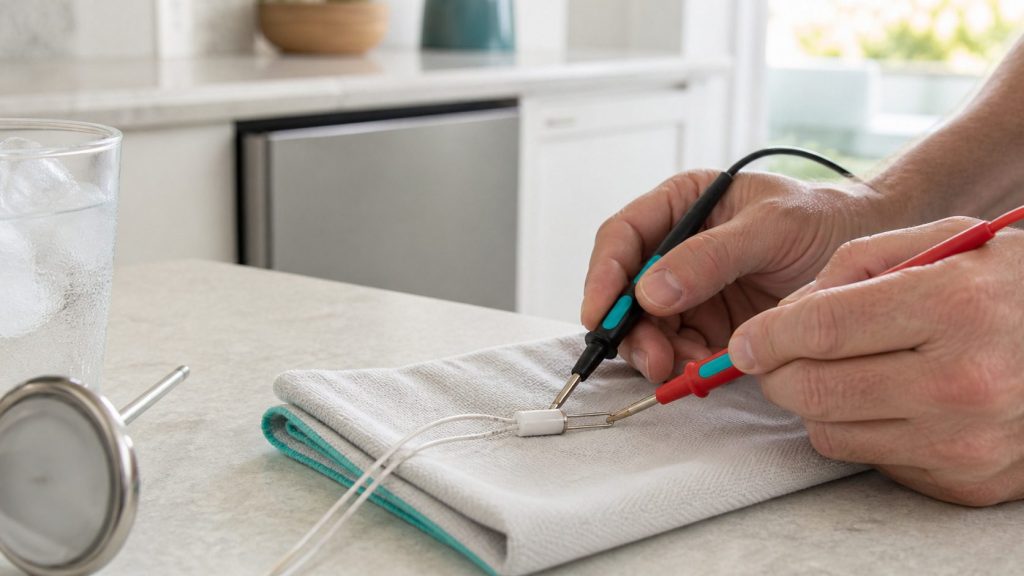
How to Test a Refrigerator Thermistor — With the Maker’s Own Number
U-Line publishes the figure: about 16.1k ohms in an ice-water bath, within five percent. That turns a guess into a measurement, and on this make it is the first thing worth measuring.
Read more
Tell us the model number and what it is doing.
This article is based on:
- Official manufacturer documentation
- Internal repair procedures
- Technician repair history
- Company quality standards