Maintenance & Prevention
How Often an Ice Machine Needs Descaling in South Florida
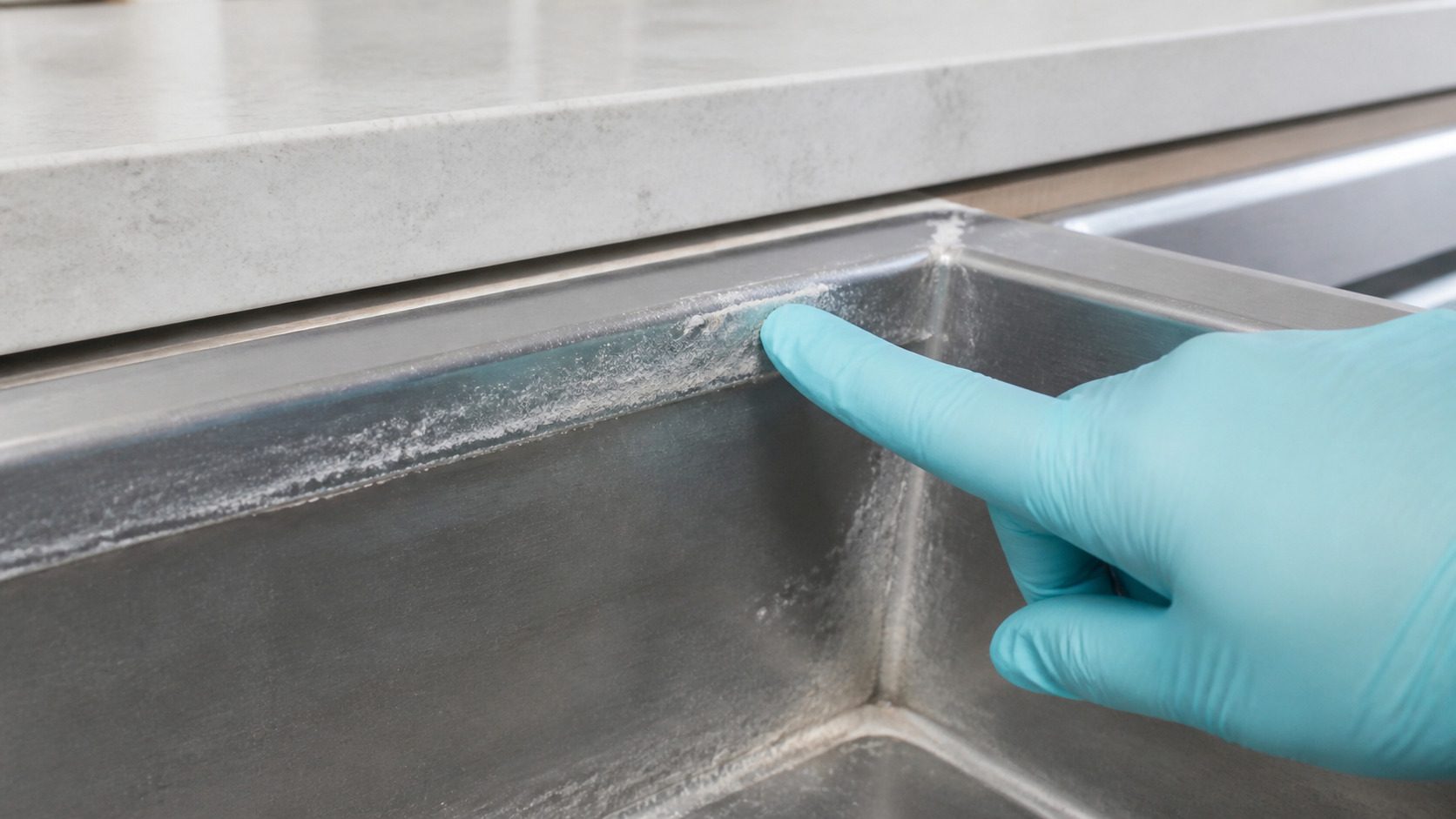
U-Line's own interval is six cumulative months of ice making — the machine counts and then signals for a cleaning cycle by flickering three lamps twice each in turn. That figure assumes ordinary water. Across Miami-Dade, Broward and Palm Beach the supply is harder than that, and the practical interval for a machine in daily use is closer to four months, with a filter as well as a schedule where the machine visibly scales between cycles. The reason to take it seriously is that scale does not fail one component at a time: it narrows every water path simultaneously, insulates the surface ice forms on, sits between an auger and the cylinder it runs against, and eventually reaches the drain. A machine descaled on schedule needs cleaning. A machine that has never been descaled needs cleaning, and then usually needs a part.
The full guide
U line ice machine cleaning: the maker's number, and what it assumes
U-Line counts. After six cumulative months of ice making — not six months on the wall calendar, six months of the machine actually running — the control signals for a cleaning cycle by flickering the ice, no water and drain lamps twice each in turn, and it keeps signaling until the cycle is performed.
That is a good design and a fair interval. It assumes water of ordinary hardness.
What comes out of the tap here
South Florida water is drawn largely from limestone aquifers, and limestone is what hardness is made of. Utilities across Miami-Dade, Broward and Palm Beach soften to varying degrees and the number still lands well above what a residential appliance manual has in mind.
For an ice machine that matters more than it does for anything else in a kitchen, because an ice machine is the only appliance in the house whose entire job is to move water through itself continuously and freeze it.
A working figure for daily use here is closer to four months than six — and the better rule is not a number at all, which the next section gets to.
Scale does not fail one thing at a time
This is what makes it worth staying ahead of. Scale arrives everywhere in the water path at once, and each place it lands costs something different.
On the evaporator surface. Scale insulates. Heat that should be leaving the water has to cross a mineral layer first, so ice forms more slowly, comes out thinner, cloudier or hollow, and production drops. This is usually the first thing anybody notices and it is noticed as *"it isn't making as much ice as it used to"*.
In the reservoir and on the level sensing. Everything that measures water in one of these machines is sitting in the water. Scale on a float or a probe makes the machine misjudge how much it has, which shows up as short fills, overfills, or a stop that has no obvious cause. On U-Line's boards, water level high and water level low are logged numbers — 11 and 12 — and on the ice machines they reach the display as bare digits.
Between an auger and its cylinder, on a nugget machine. This is the expensive one. Nugget ice is made by driving a screw through ice forming on a cylinder wall, and scale puts an abrasive into that interface. It increases the load on the motor, wears the surfaces, and ends at the gearbox. An auger error — logged as 13 — is not always a scale story, but scale is the most common way of getting there.
In the drain. Narrowed the same way everything else is, so a machine that has scaled long enough eventually stops draining as well as it stops making ice. On a built-in machine that is a water-in-the-cabinetry problem rather than an appliance one.
Set the interval from what you can see
Better than a calendar:
- The ice has changed. Cloudier, thinner, hollow, or wetter than it was. Clean it.
- Production has dropped without anything else changing. Clean it, then look at the filter.
- The lamps are flickering. That is the machine asking, and it will not stop.
- Visible deposit in the reservoir between cycles. The interval is too long, and this machine wants a filter as well.
The two rules that are not negotiable
Use the maker's own ice machine cleaner. The manual says other cleaners can damage the machine, and on this equipment that is mechanical rather than commercial. A nugget machine circulates whatever you put in past an auger, a freezing cylinder, seals and a pump. Household descalers are formulated for kettles.
Do the reservoir by hand. The automatic cycle circulates; it does not scrub. The film in the reservoir is where a machine's taste problems live and it is the part the cycle cannot reach.
What a filter does and does not do
Worth being clear, because the two get conflated.
A filter takes out particulate and improves taste. Most residential filters do very little about hardness, which passes straight through. So a filter lengthens the descaling interval — less material arriving means slower accumulation — and does not replace it.
Where a filter earns its money on this equipment is the other failure it prevents: a filter at the end of its life does not stop the water, it slows it, and these machines mind flow more than pressure. A machine making steadily less ice each month is describing a filter as often as it is describing scale.
The arithmetic
An ice machine cleaning is the cheapest service on this site. The auger, gearbox and cylinder assembly on a nugget machine is the largest single ice-machine repair there is.
The reliable route from the first to the second is three lamps flickering for a year while somebody means to get round to it.
If it turns out to be a repair
What this leads to, and what it costs
Every job on this site is priced the same way: an on-site diagnostic first, the figure agreed in writing before anybody starts.
-
Ice machine cleaning and descaling
The cheapest service on this site and the one that prevents the most expensive. U-Line signals for a cleaning cycle every six cumulative months of ice making and is explicit that only its own ice machine cleaner may be used. In South Florida that six-month interval is optimistic: scale is what ends ice machines here, and it does it quietly.
- The maker's own cleaner, because the manual says so
- The full cycle, then a rinse — not a wipe
- An interval set to your water, not to the calendar
-
U-Line: Three lamps on the ice machine flicker twice, over and over
U-Line — an indicator rather than a code. The machine is asking to be cleaned.
What the machine is telling you -
Ice maker not making ice
The most searched thing about this make by a wide margin. Almost every cause is on the water side rather than the cold side, and the first three checks cost nothing and are the answer more often than everything else put together.
- Stopped completely
- Making less and less over weeks
- Freezing water but never dropping it
-
Nugget ice machine and auger repair
The auger is the machine. Nugget ice is made by freezing water on the wall of a cylinder and driving a screw through it, so the auger, its gearbox and its motor are doing continuous work that nothing else in this range does. The maker logs an auger error of its own, and a machine left running against a jammed auger turns a repair into a replacement.
- Stop-and-diagnose rather than keep-trying
- Cleaning history treated as part of the diagnosis
- Gearbox, motor and cylinder assessed together

Questions people ask about this
How often should I clean my U-Line ice machine?
The machine tells you at six cumulative months of ice making and keeps telling you until the cycle is run. On South Florida water, a machine in daily use is usually ready before the reminder arrives — four months is a fair working figure, and what should really set the interval is what the ice looks like.
How do I know it is scale rather than something else?
The ice changes before the machine stops. Clear ice going cloudy, hollow or thin, or nugget ice coming out wetter than it used to, are all about water movement and heat transfer — and scale is what changes both. A machine that simply stops overnight is more likely a water supply problem than a scale one.
Will a water filter mean I can skip descaling?
No, and it will lengthen the interval considerably. A filter deals with particulate and improves taste; hardness passes through most residential filters. Treat a filter as a way of making the cleaning cycle last, not as a substitute for it.
Is scale actually damaging, or just untidy?
Damaging, and in a specific way on a nugget machine: it sits between a driven auger and the cylinder wall it runs against, which is an abrasive in a bearing surface. That is how an ignored cleaning signal becomes a gearbox rather than a cleaning cycle.
What if the machine has never been descaled?
Expect more than one cycle, and expect to find something. A machine with three years of deposits usually needs the reservoir cleaned by hand as well, and it is not unusual for a level sensor or an inlet valve to have been affected by the time anybody looks.
Maintenance & Prevention
More guides like this one
-
How to Clean a Refrigerator Drain Line Before It Reaches Your Cabinetry
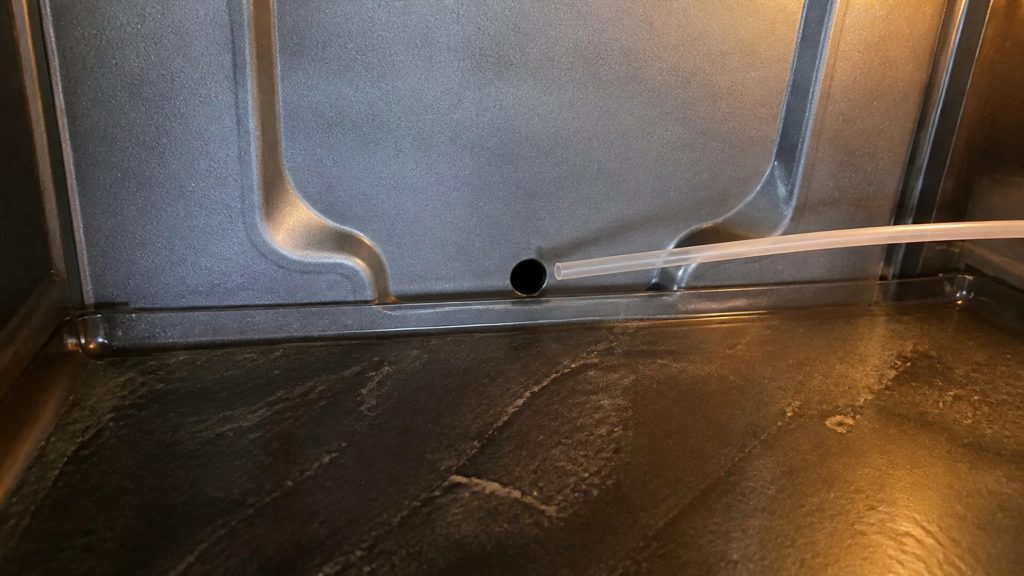
On a built-in appliance a blocked drain does not make a puddle first. It puts water into the carcase and the floor, and by the time anything shows, the joinery has been wet for a while.
Read more -
How to Clean a U-Line Ice Machine, Including the Nugget
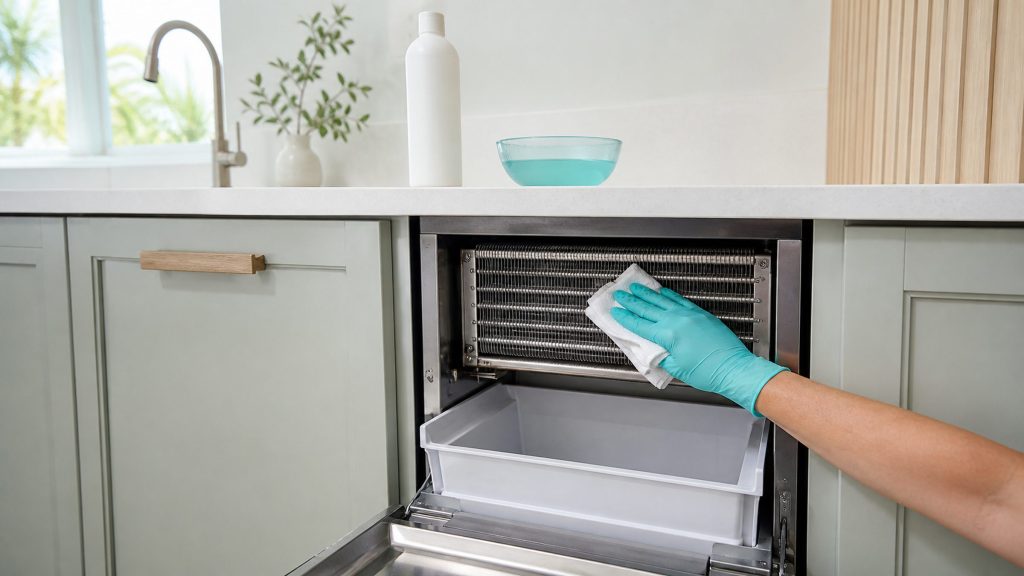
The machine asks for this every six months and keeps asking until it gets it. Here is the actual sequence, and why six months is optimistic on South Florida water.
Read more -
Behind the Grille: Cleaning the Condenser and the Drain Pan
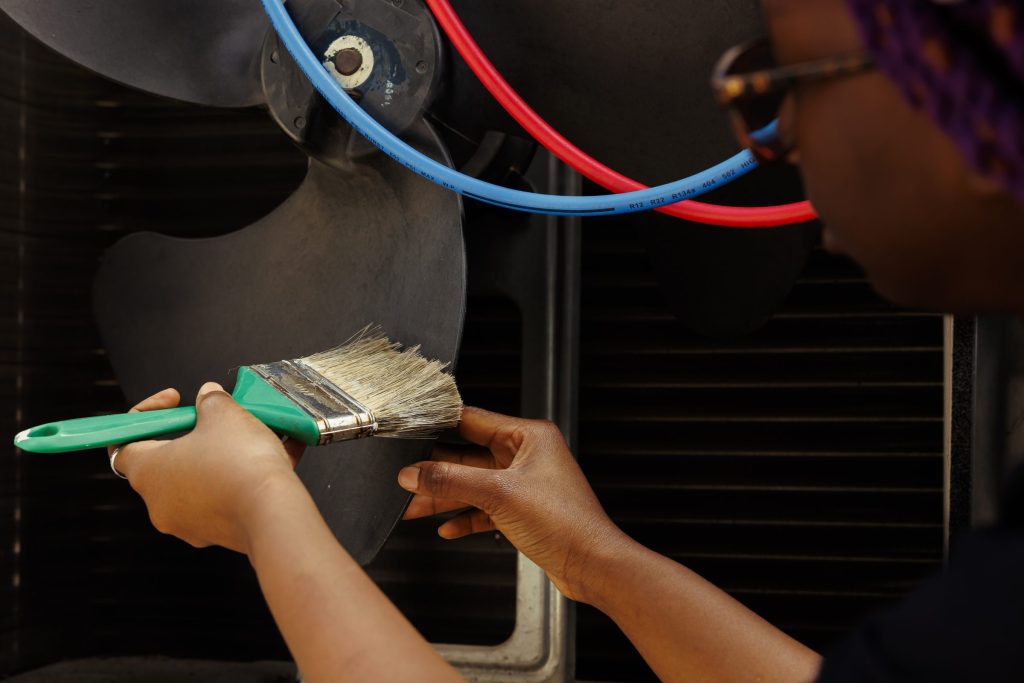
Two things live behind the grille at the bottom of an undercounter unit, and both are worth ten minutes. One is the maker's own first answer for a cabinet that is not cold enough.
Read more
Tell us the model number and what it is doing.
This article is based on:
- Official manufacturer documentation
- Internal repair procedures
- Technician repair history
- Company quality standards