Maintenance & Prevention
How to Clean a Refrigerator Drain Line Before It Reaches Your Cabinetry
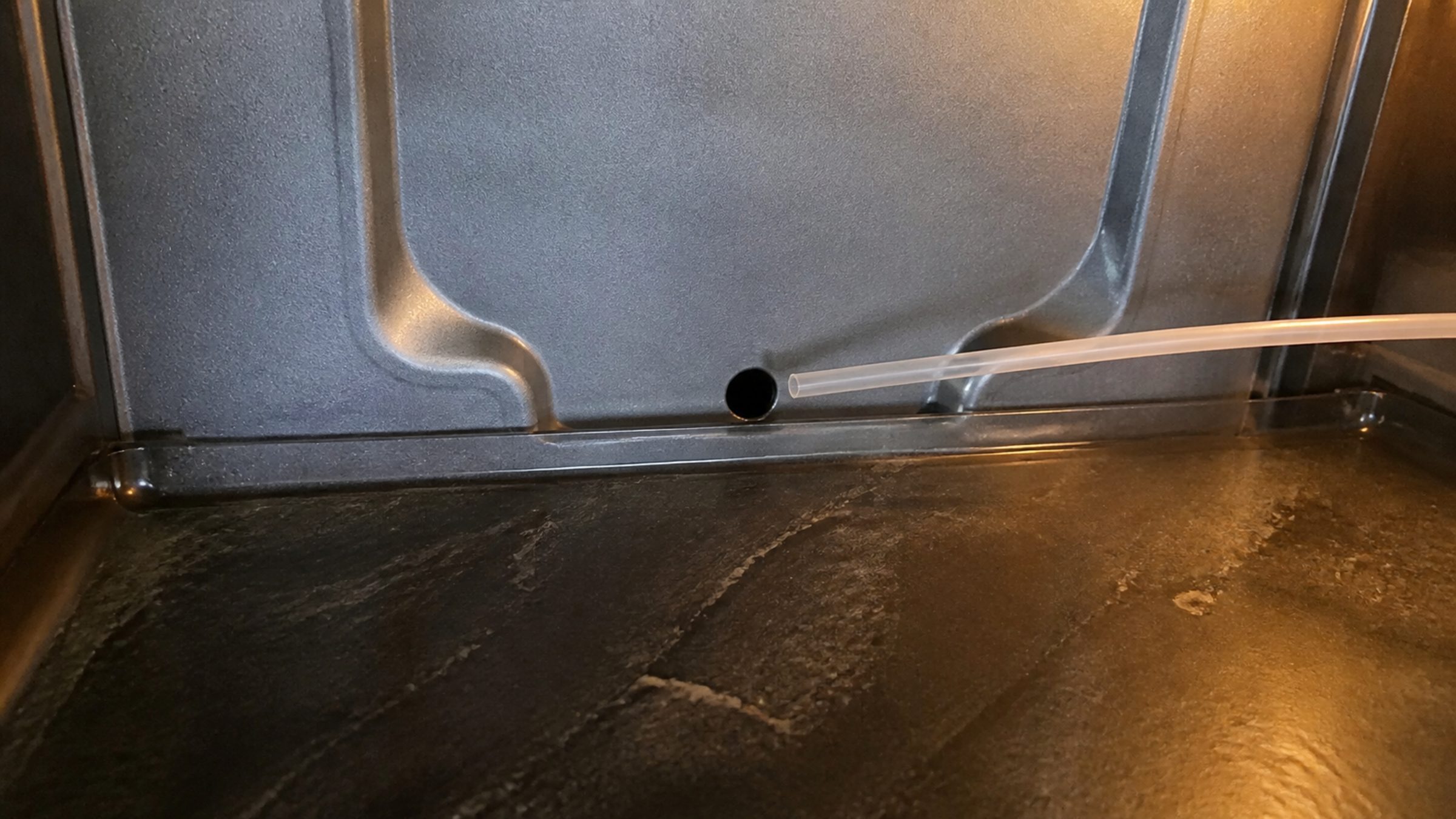
Find the drain hole — on most cold cabinets it is a small opening at the base of the rear wall, below the evaporator — and flush it with warm water using a turkey baster or a syringe. If it is blocked, soften the blockage with warm water first and only then use something soft and flexible to clear it: a length of small-bore tubing, or a pipe cleaner. Do not use anything rigid or sharp; the drain tube is soft and it runs within inches of refrigerant tubing, and a punctured evaporator turns a fifteen-minute job into a sealed-system repair. Follow it through to the drain pan, which sits near the compressor and should be dry-ish rather than full. On an ice machine the drain is a different system entirely — a hose, and on many installations a pump — and the same warning about kinks applies. Then work out why it blocked: on a refrigerator it is defrost water carrying debris, and it recurs on a schedule unless the cabinet is being kept clean.
The full guide
How to clean refrigerator drain line: why this matters more on a built-in appliance
On a freestanding refrigerator, a blocked drain announces itself: water pools inside the cabinet, then runs out onto the floor, and somebody mops it up and calls somebody.
On an undercounter U-Line built into a run of joinery, the water does not go to the floor first. It goes into the carcase, under the base, and into whatever the cabinet is standing on. By the time there is something visible in front of the appliance, the timber has been wet for a while — and the substrate under it for longer.
That changes the urgency rather than the method. A drain problem on a built-in appliance is worth acting on the week you notice it, not the month.
Where the water is supposed to go
Every cold cabinet that defrosts makes water, and all of it is supposed to leave by the same route. Meltwater runs off the evaporator, collects in a channel, goes through a small hole at the base of the rear wall, down a tube, and into a shallow pan near the compressor — where the heat of the compressor evaporates it away.
Three places in that path go wrong, in this order of likelihood:
- The hole blocks with debris carried by the water.
- The tube blocks a little further down, usually with the same material plus biological film.
- The pan overflows, which on a healthy appliance means far more water is arriving than the defrost cycle should be producing — that is a defrost or a door problem rather than a drain one.
Clearing it, without making it expensive
Empty the cabinet and find the hole. Base of the rear wall inside, below the evaporator area, sometimes under a shelf or a small cover.
Flush warm water down it. A turkey baster or a large syringe is the right tool; that is why the search phrase *"clean fridge drain hole with syringe"* exists. Warm rather than hot, and slowly — the point is to soften and float the blockage, not to force it.
If it is properly blocked, soften first and push second. Most blockages move with warm water and patience. If one does not, use something soft and flexible: a short length of small-bore tubing, or a pipe cleaner.
Never anything rigid. This is the one warning on the page that costs real money. The drain tube is soft, and it runs within inches of refrigerant tubing and the evaporator itself. A coat hanger that goes through either turns a fifteen-minute maintenance job into a sealed-system repair, and a sealed-system repair on a small undercounter cabinet is a conversation about whether the appliance is worth keeping.
Then check the pan. It should be damp rather than brimming, and it should not smell. A pan with standing water in it and no smell is doing its job on a humid week; a pan that smells is telling you what has been growing in the tube above it.
The ice machines are a different system
Nothing above applies to a U-Line ice machine's drain, which is not a defrost drain at all. It is a real drain: a hose, a run, and on many installations a drain pump, because the machine is under a counter with nowhere to fall to.
The maker logs a drain pump circuit error of its own — P1 — and qualifies it in the same sentence: *only if unit has drain pump*. So half of a drain diagnosis on an ice machine is establishing which installation you have, and the other half is usually the hose rather than the pump. The manual warns during installation that the hose must not be pulled or bent, and a machine slid out for cleaning and pushed back is exactly how a kink arrives.
Working out why it happened
A drain does not block from nothing. On a refrigerator it blocks because meltwater carried something with it, and it will carry the same something again.
- Spills and crumbs at the back of a shelf are the ordinary answer.
- Sugary spills are the fast answer; they leave a residue that catches everything else.
- A cabinet that defrosts more than it should puts more water through the path more often. If the drain blocks every couple of months rather than every couple of years, the drain is not the problem — the door, the seal or the defrost circuit is.
Put it on the calendar
Twice a year, with the condenser and the door seals. Ten extra minutes on a visit that is happening anyway, and it is one of the very few maintenance jobs on a cold appliance where the failure mode is damage to the room rather than to the machine.
If it turns out to be a repair
What this leads to, and what it costs
Every job on this site is priced the same way: an on-site diagnostic first, the figure agreed in writing before anybody starts.
-
Find it early, because it goes into the joinery Water under the unit
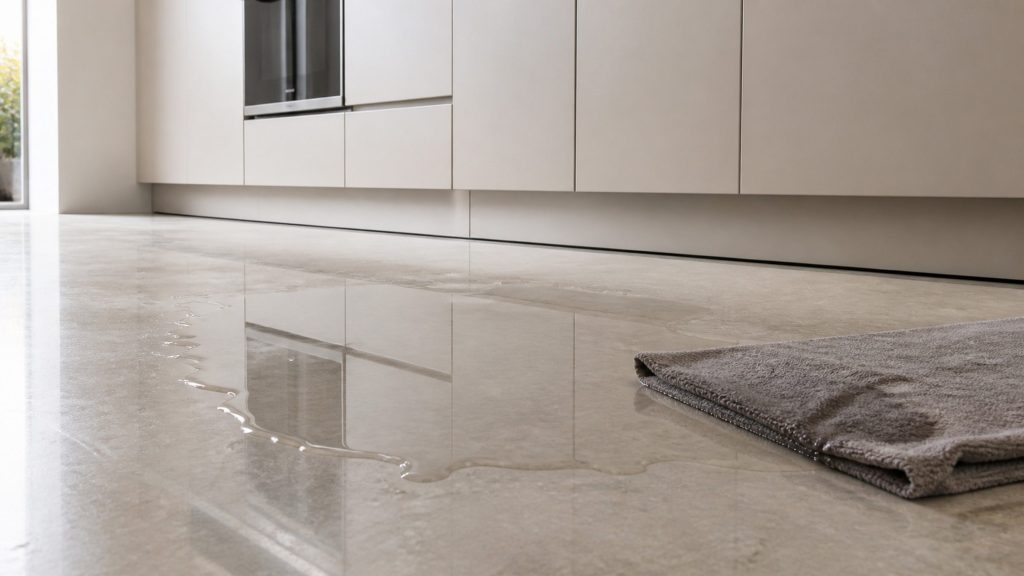
On a built-in appliance a leak damages the cabinetry and the floor before it makes a visible puddle, which is why this one is worth a same-day look. Where it comes from depends on whether the appliance takes water in.
- A damp patch at the base
- Water on the floor in front
- Swollen cabinetry beside the unit
-
from $185 Drain pump and drain repair
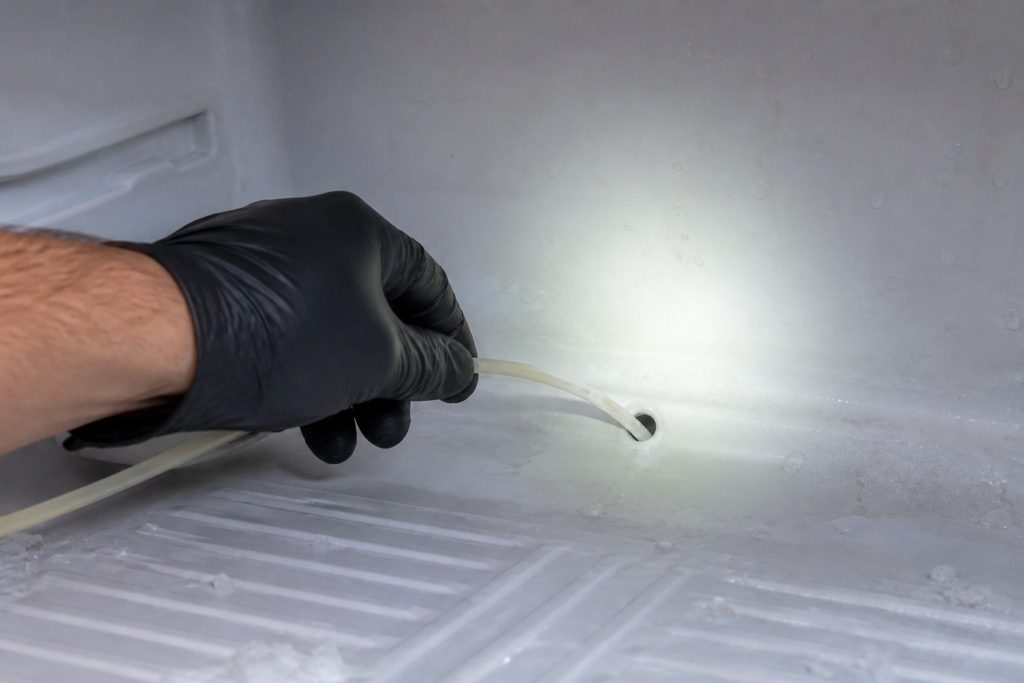
Where there is no gravity drain, an ice machine has a pump, and the maker logs a circuit error for it — P1, qualified in the same breath as only if the unit has a drain pump. Half this job is establishing whether yours has one. The other half matters more than it sounds: on a built-in machine a drain problem damages joinery before it makes a puddle.
- Pump and gravity installations told apart first
- The hose run checked before the pump is blamed
- Cabinetry damage looked for, not waited for
-

from $145 Appliance maintenance
The visit that stops the other visits. On this equipment it is a short and specific list, and in this climate it pays for itself: a condenser at floor level in a humid kitchen, a seal that works harder here than anywhere, a drain that must not block, and on an ice machine a cleaning cycle the machine itself has been asking for.
- Condenser, seals, doors, drain — and the ice cycle where there is one
- The maker's own intervals, adjusted for South Florida
- Findings written down, not just fixed
-
from $185 Cooling and defrost repair
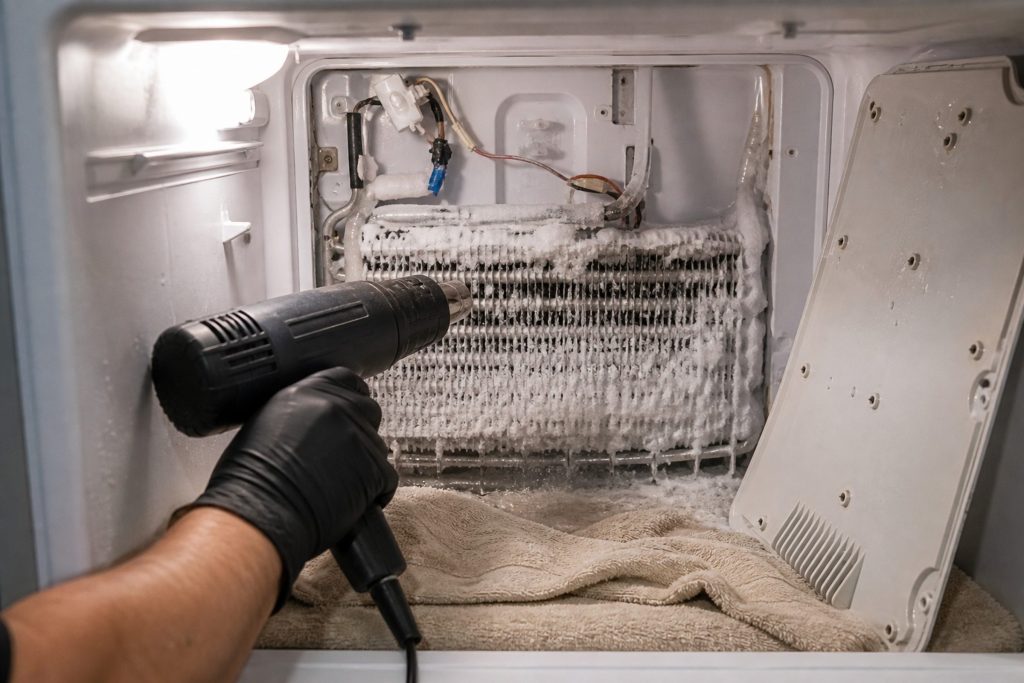
Frost where there should not be frost, or a cabinet that has quietly stopped keeping up. On these controls the defrost interval and duration are settings rather than a mechanical timer — the service menu will show and change both — which shortens the diagnosis considerably and also means a wrongly programmed board can produce this on its own.
- Defrost interval and duration read off the control
- Frost told apart from a seal problem before parts
- The maker's own thresholds, not a rule of thumb
Questions people ask about this
Where is the drain hole on a refrigerator?
On most cold cabinets it is a small opening at the bottom of the rear wall inside, directly below the evaporator area, sometimes under a shelf or a cover. It is where defrost meltwater is supposed to leave, and it is the first place to look when there is water inside the cabinet rather than under it.
Can I use a wire coat hanger?
Please do not. The drain tube is soft and it runs close to refrigerant tubing and to the evaporator itself. Something rigid is exactly what punctures either, and the cost difference between a blocked drain and a sealed-system repair is several hundred dollars. Warm water first, then something soft.
Should I put bleach or vinegar down it?
A weak solution of either is sometimes used against slime, but the honest answer is that hot water does most of the work and neither should be poured through in quantity. What comes out at the other end ends up in a drain pan near the compressor.
Why does it keep blocking?
Because meltwater carries whatever is in the cabinet with it. Crumbs, sugars from spills, and biological film build in the same place every time. On a cabinet that is used heavily it is a maintenance interval rather than a defect, and it belongs on the same visit as the condenser.
There is water under the unit rather than inside it.
Then work out whether the appliance is plumbed. A refrigerator or wine cooler has only defrost meltwater and a drain pan, so the list is short. An ice machine has an inlet, a reservoir and a drain — and on many installations a drain pump, which U-Line logs its own error for.
Maintenance & Prevention
More guides like this one
-
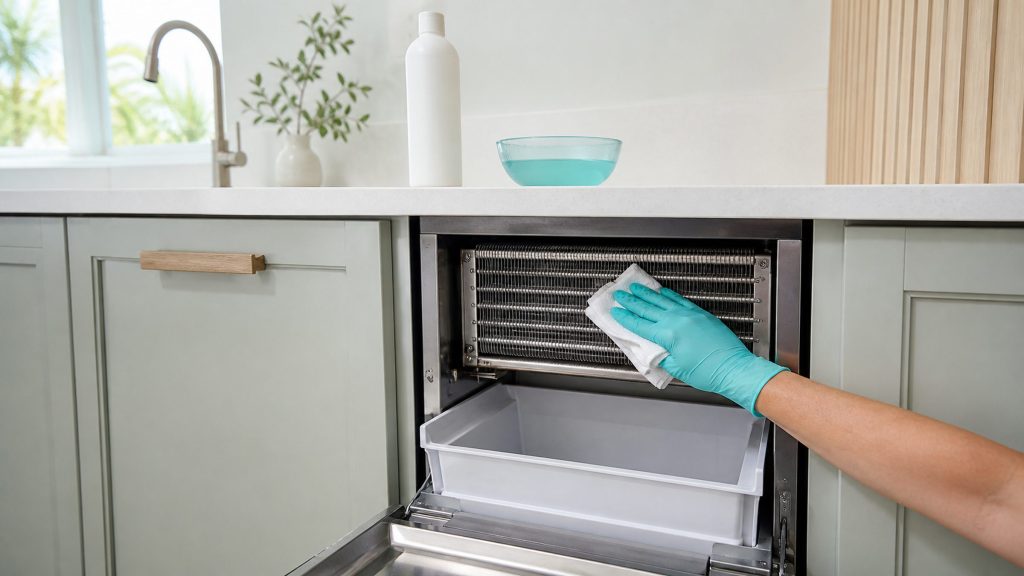
How to Clean a U-Line Ice Machine, Including the Nugget
The machine asks for this every six months and keeps asking until it gets it. Here is the actual sequence, and why six months is optimistic on South Florida water.
Read more -
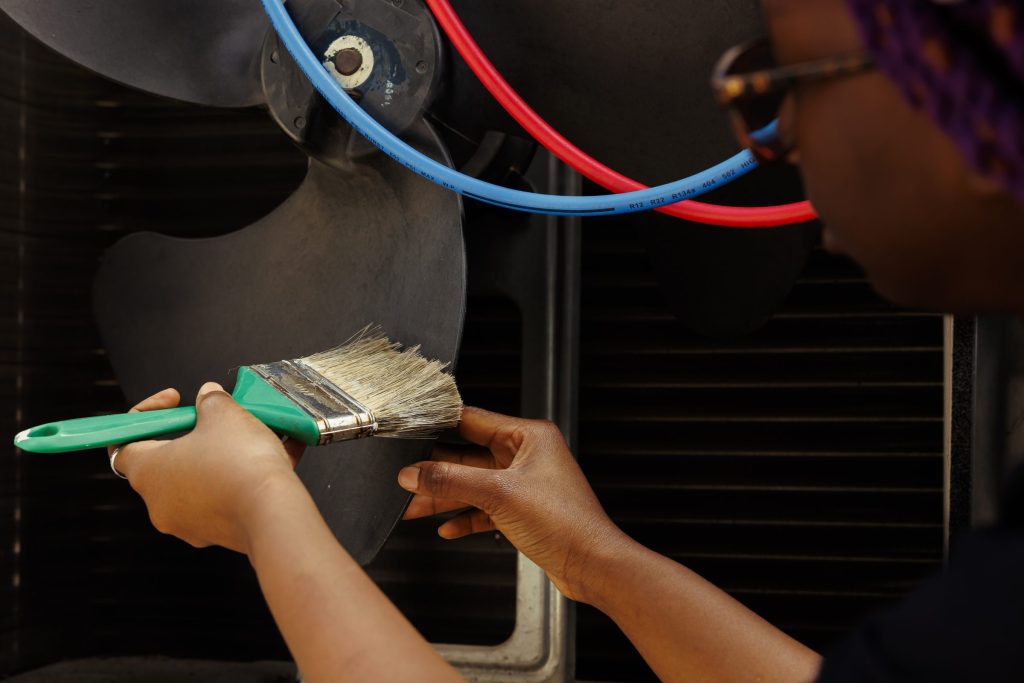
Behind the Grille: Cleaning the Condenser and the Drain Pan
Two things live behind the grille at the bottom of an undercounter unit, and both are worth ten minutes. One is the maker's own first answer for a cabinet that is not cold enough.
Read more -
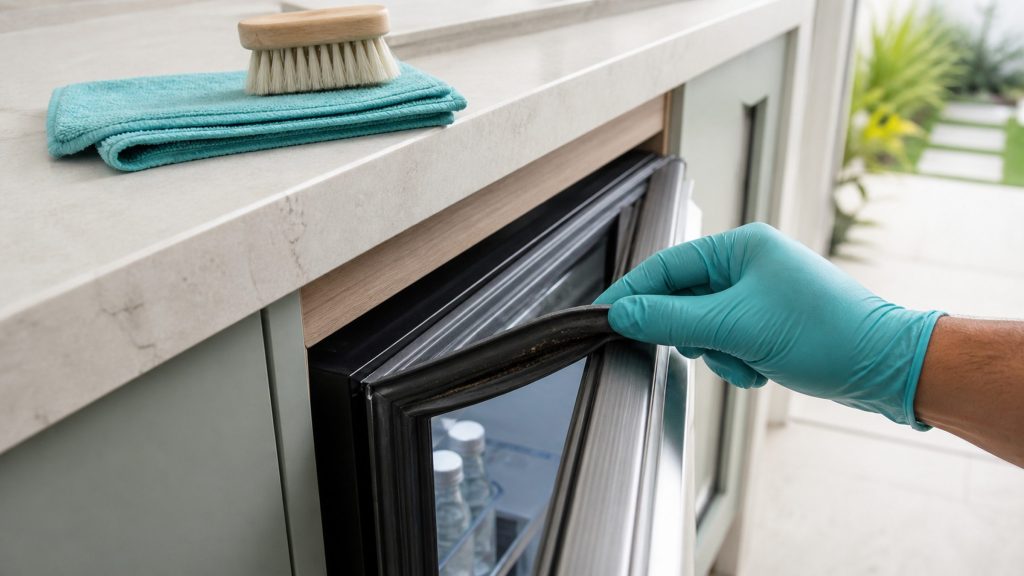
How to Clean a Refrigerator Door Gasket — and the Test That Follows
Cleaning takes five minutes. The part that tells you whether the seal still works takes ten seconds and a sheet of paper — and on an undercounter cabinet in this climate it matters more than most people think.
Read more
Tell us the model number and what it is doing.
This article is based on:
- Official manufacturer documentation
- Internal repair procedures
- Technician repair history
- Company quality standards