Common Problems
Can You Use a Regular Refrigerator Outdoors? What Outdoor-Rated Means
No — an indoor refrigerator put on a terrace will work for a while and then fail, and the reasons are mechanical rather than a warranty technicality. Four things change on an outdoor-rated unit. The control is rated for a wider ambient range, so it still behaves when the air around it is 100°F rather than 75°F. The materials are chosen for corrosion, which in South Florida means the fixings, the hinges and the door hardware rather than only the visible steel. The seals and the cabinet are built to handle a much larger moisture load, because every opening outdoors admits far wetter air than any kitchen. And the condenser and its fan are specified for a hotter environment, which is the difference between an appliance that keeps up in August and one that runs continuously and never arrives. Salt is the part nobody mentions: it holds moisture against metal, so it corrodes and insulates at the same time, and it is why an outdoor unit needs servicing on a shorter interval than any manual assumes.
The full guide
Can any refrigerator be used outside? The short answer, and why it is not a technicality
No. An indoor refrigerator on a terrace will run for a season or two and then start failing, and the reasons are specific.
The useful thing about asking this on a U-Line site is that the comparison is visible in one catalog. Twenty-six of the seventy-six US models are built for outdoors and the other fifty are not, and they are otherwise similar appliances doing a similar job. What changes between them is exactly the answer to this question.
Four things that are different
The ambient the control is rated for. Every refrigeration control assumes a range of temperatures around it. An indoor unit is specified for a room; an outdoor one is specified for an environment that will be at 100°F in August and cooler than a kitchen ever gets in January. Outside that range the control is not wrong, it is simply working somewhere it was not characterized for.
The materials, and specifically the fixings. It is easy to look at a stainless door and assume it is the same appliance. What differs is behind it — brackets, screws, hinges, door hardware, the fasteners that hold panels on. Those are the parts that corrode first and, in a repair, they are what turns a straightforward job into an awkward one.
Seals and cabinet construction. Every door opening outdoors admits air carrying far more water than any kitchen. On an indoor cabinet used outside, that shows up as frost that keeps returning, condensation somewhere it should not be, and a seal that ages fast.
The condenser and the fan. This is the one that decides whether an appliance keeps up in August. A condenser sized for a kitchen ambient, asked to reject heat into 95°F air, runs continuously without ever reaching the set point — and the household concludes the appliance is failing when it is simply out of its depth.
Salt is the part nobody mentions
Heat is a load these appliances are designed for. Salt is what changes them.
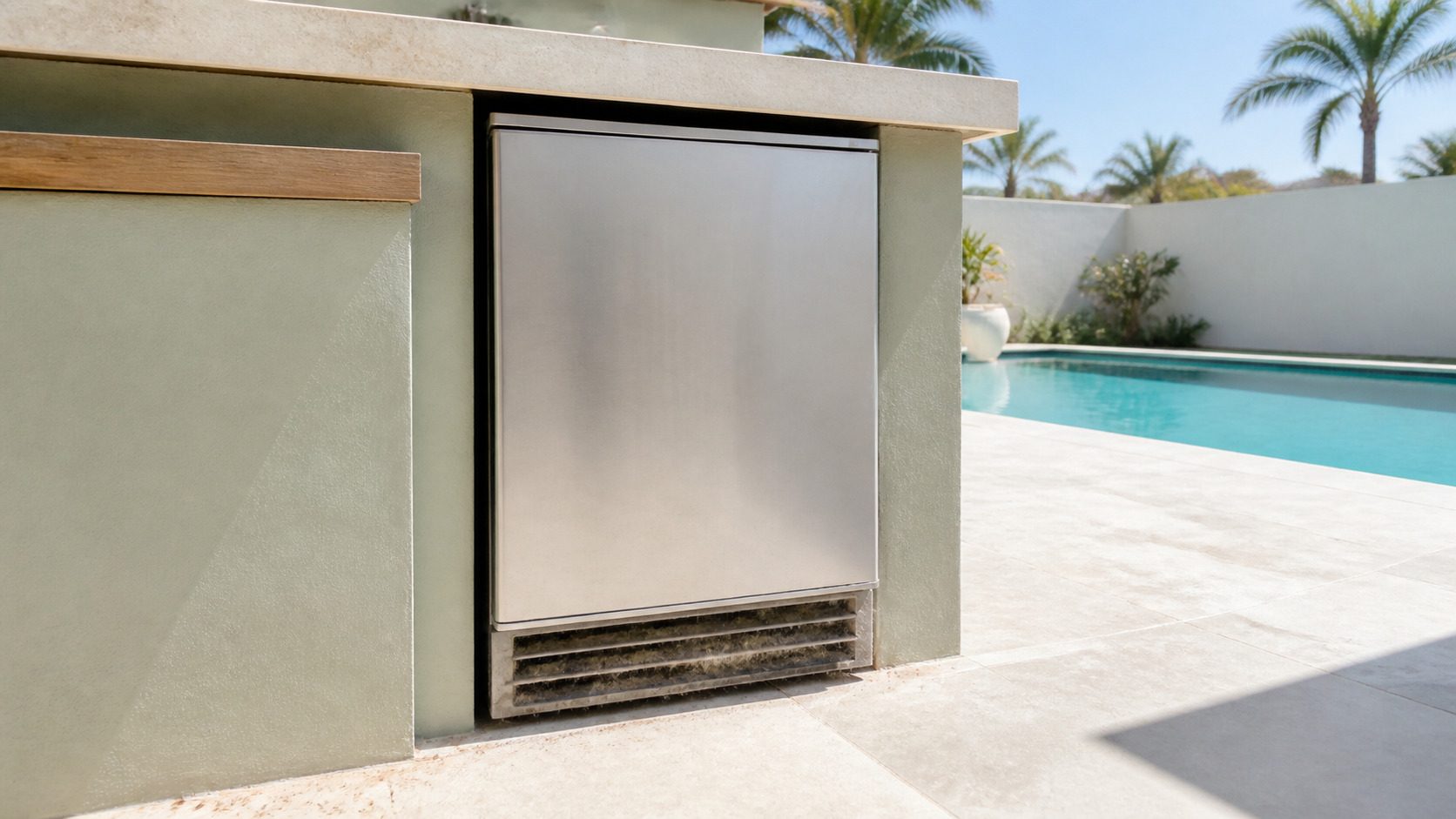
Salt is hygroscopic: it holds moisture against metal instead of letting it dry between rain and sun. The consequence is that it corrodes and insulates at the same time. An outdoor condenser three blocks from the water goes grey rather than clean, loses its ability to shed heat gradually rather than suddenly, and the fixings around it seize while the refrigeration is still working perfectly.
That is why an outdoor unit degrades and then misses a summer rather than failing on a particular day, and why the honest advice is a shorter service interval rather than a heroic repair later.
What that means in practice here
- Set the interval by location, not by calendar. A terrace on the intracoastal and a covered summer kitchen three miles inland are not on the same schedule.
- Shade matters. U-Line's own troubleshooting table names excessive ambient temperature and direct sunlight alongside the door and the condenser. An appliance in afternoon sun with no shade is being asked for more than it can give, and no repair changes that.
- Look at the coil at the end of each summer. Grey rather than clean is the whole diagnosis.
- Do not seal it up for the off season. A cover that does not breathe traps humidity against the appliance.
If it is already outdoors and it is not rated for it
It is not an emergency and it is not going to be fixed by a repair, so the useful things are the ones that reduce the load:
- Shade it. The single most effective change.
- Clean the condenser far more often than you would indoors — quarterly rather than twice a year.
- Check the seal and the door alignment, because they are working harder than they were designed to.
- Expect a shorter life and plan for it rather than being surprised.
And when it is replaced, that is the moment the outdoor-rated question is worth answering properly, because it is the difference between an appliance that lasts a decade out there and one that lasts three summers.
If it turns out to be a repair
What this leads to, and what it costs
Every job on this site is priced the same way: an on-site diagnostic first, the figure agreed in writing before anybody starts.
-
A quarter of this catalog lives outside An outdoor unit struggling in summer
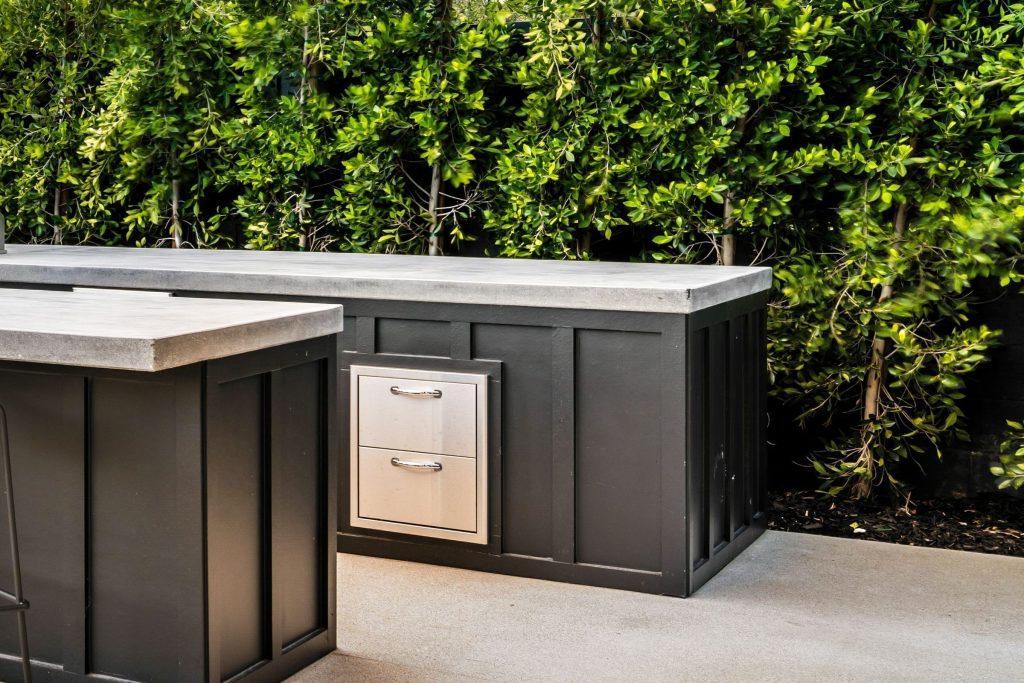
Twenty-six of these seventy-six models are outdoor units, and in South Florida that is a different job rather than a different location. Salt, humidity and an ambient that sits above what any kitchen sees are the load, and the appliance was designed for it — but only when it is maintained for it.
- Fine in winter, poor in August
- Condenser visibly dirty or corroded
- Running constantly on the hottest days
-
from $195 Outdoor and marine unit service
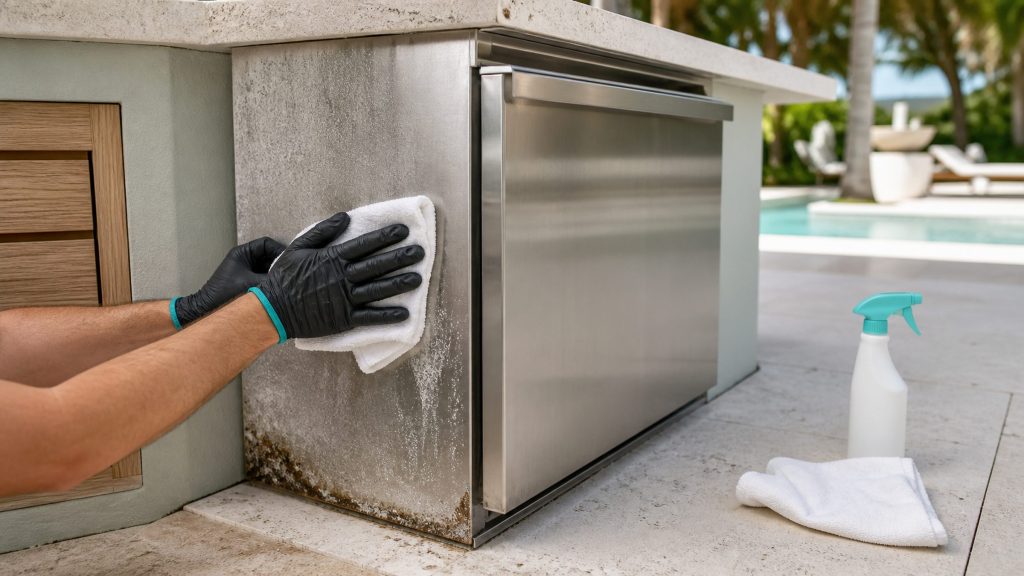
A quarter of this catalog lives outside, and salt air is a different repair rather than a different setting. An outdoor unit's condenser breathes whatever the yard has, its fasteners corrode, and on the Marine models the appliance is on a boat. It is priced above the indoor condenser service because it is more work, and it is scheduled differently because the interval between services is shorter.
- Salt, humidity and what they do to a condenser
- Corrosion checked on the fixings, not only on the coil
- Marine and 230V models included
-
26 models · terraces, summer kitchens and boats Outdoor refrigeration
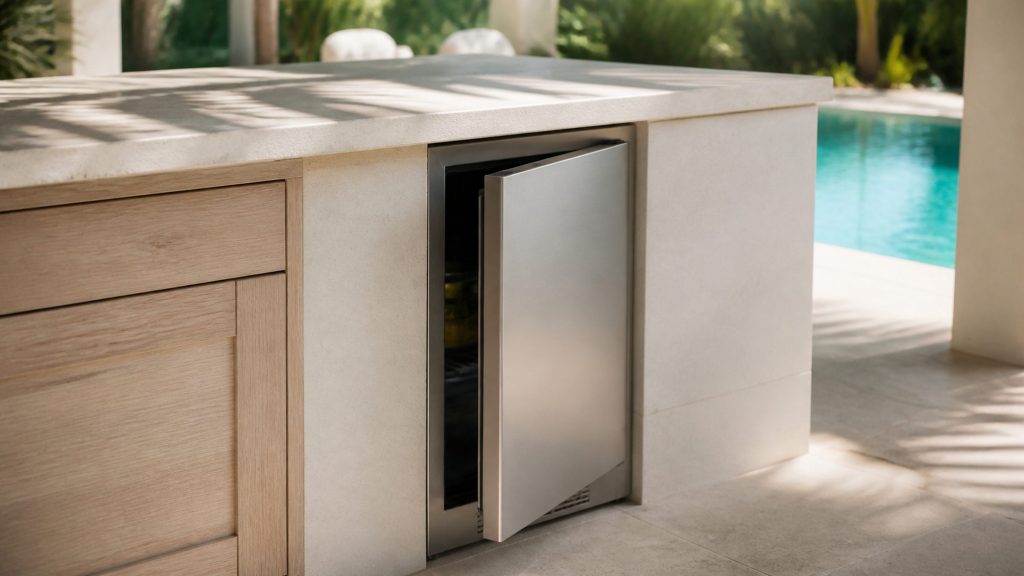
26 of the 76 models in U-Line's US catalog are outdoor units, and several more are marine. That is a quarter of the range living in salt air, sun and August humidity — conditions the appliances are built for, and built for with maintenance. Out here the interval between services is shorter than any manual assumes, and salt does to a repair what nothing in a kitchen does.
- A quarter of the catalog lives outside
- Salt corrodes the fixings before it stops the cooling
- Marine models, and the boats they are on
-
from $145 Condenser and airflow service
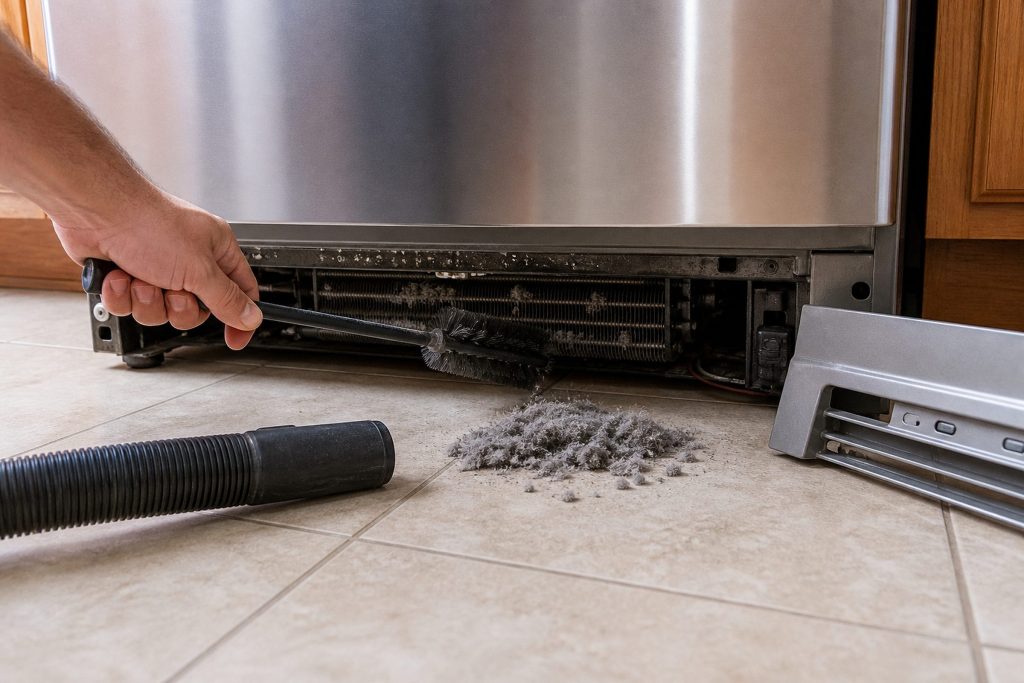
The maker's own first answer for a unit that is not cold enough is the grille and the condenser, and on an undercounter appliance it is right more often than anywhere else: the condenser sits behind a grille at floor level, in a kitchen, under a counter. It fills with dust and lint, and the unit does not complain — it just runs longer and holds less.
- The maker's own first check for "not cold enough"
- Cleaned the way the manual allows, not with a chemical
- Clearance around the unit checked, not only inside it
Questions people ask about this
Can I put a normal fridge in my garage or on the patio?
It will run and it will not last. An indoor appliance in an unconditioned space is being asked for more than its control, its condenser and its seals were specified for, and it fails gradually rather than immediately — which is why so many people conclude it works fine for the first year.
What actually makes a refrigerator outdoor-rated?
A control rated for a wider ambient range, materials and fixings chosen for corrosion, seals and cabinet construction built for a much larger moisture load, and a condenser and fan specified for a hotter environment. It is four things rather than a badge.
Is salt really that different from ordinary humidity?
Yes, because salt is hygroscopic — it holds moisture against metal rather than letting it dry. That corrodes and insulates at the same time, so an outdoor coil loses its ability to shed heat gradually while its fixings quietly seize. It is the single biggest difference between an appliance three blocks from the water and one inland.
Should I cover it in the off season?
Only with something that breathes. A sealed cover in this climate traps humidity against the appliance, which is worse than the weather it was keeping out. If a unit is going to be unused for months, the better answer is usually to empty it, clean it and leave the door ajar.
Does an outdoor unit need more servicing?
Considerably, and it is the interval rather than the work. A condenser collecting salt loses efficiency faster than one collecting dust, and the corrosion around a repair makes any later job longer. A schedule that suits a kitchen unit does not suit one on a terrace.
Common Problems
More guides like this one
-
How to Defrost a Freezer Fast Without Damaging It
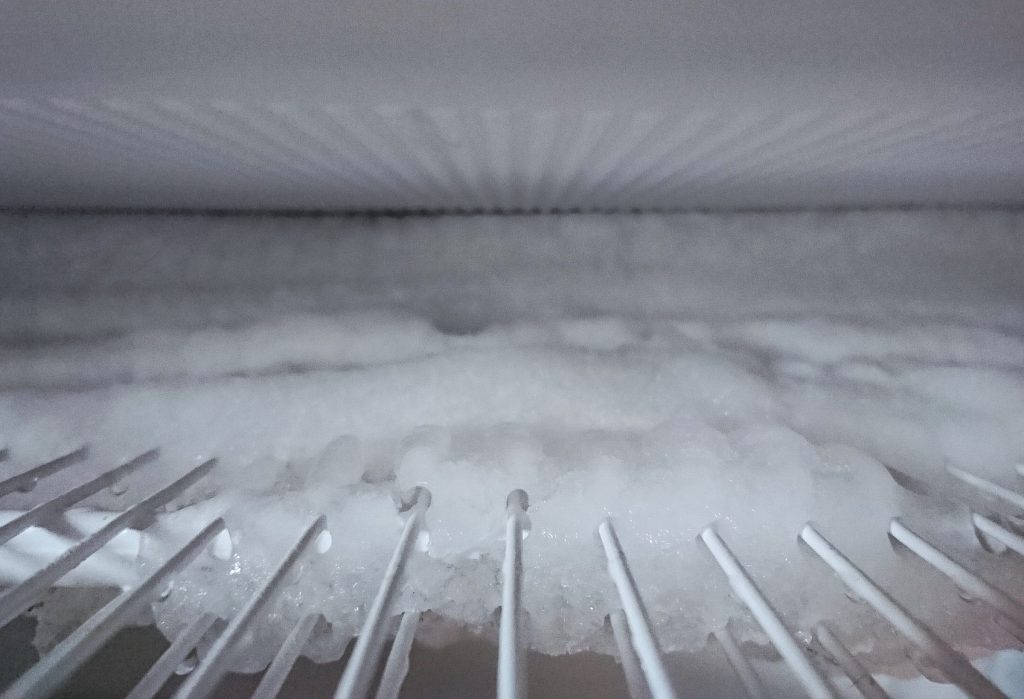
The method is easy. The part that matters is what comes after: frost is a symptom, and a freezer defrosted without finding out where the moisture came from will do it again.
Read more -
A Built-In Door That Will Not Close — Appliance, or Cabinetry?
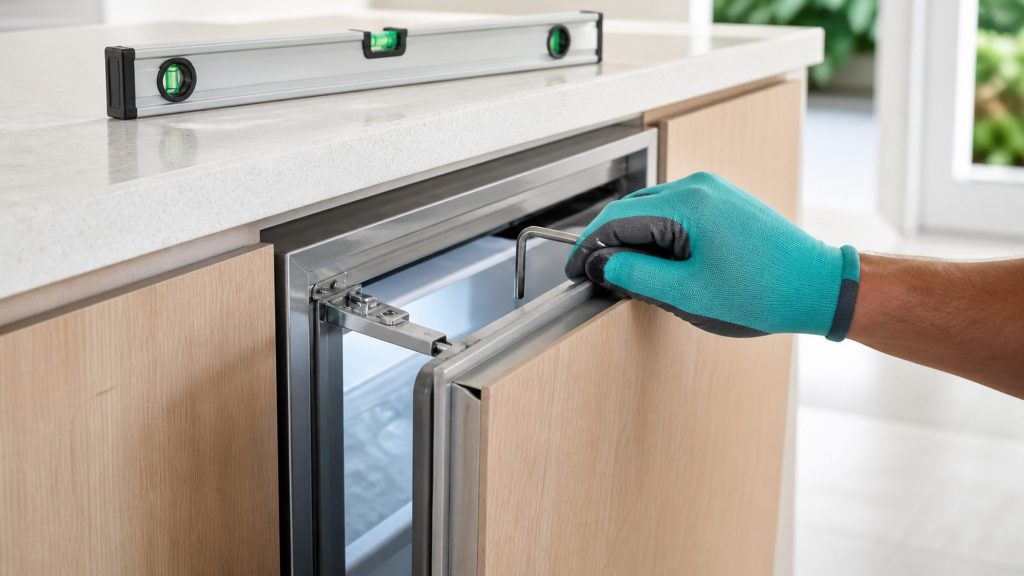
On a built-in appliance this question has an extra answer nobody expects: the kitchen may have moved rather than the appliance. Three problems look like one, and a sheet of paper separates them.
Read more -
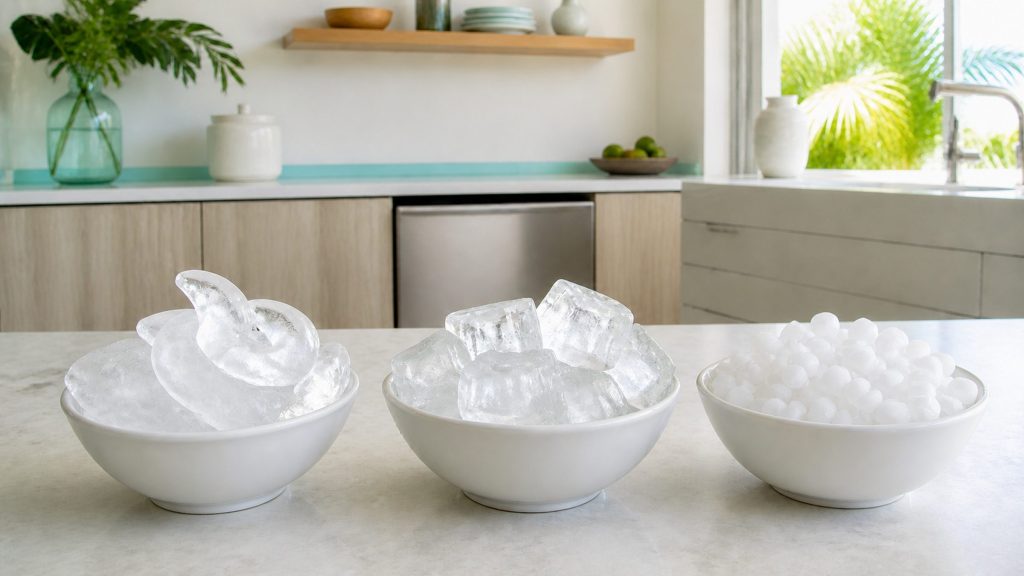
Crescent, Clear and Nugget — Three Machines That All Make Ice
Not a buying guide. Three completely different machines wear the same word, and knowing which you own changes what a noise means and what a stoppage costs.
Read more
Tell us the model number and what it is doing.
This article is based on:
- Official manufacturer documentation
- Internal repair procedures
- Technician repair history
- Company quality standards