Troubleshooting
How to Check Your Refrigerator Temperature — the Maker’s Own Method
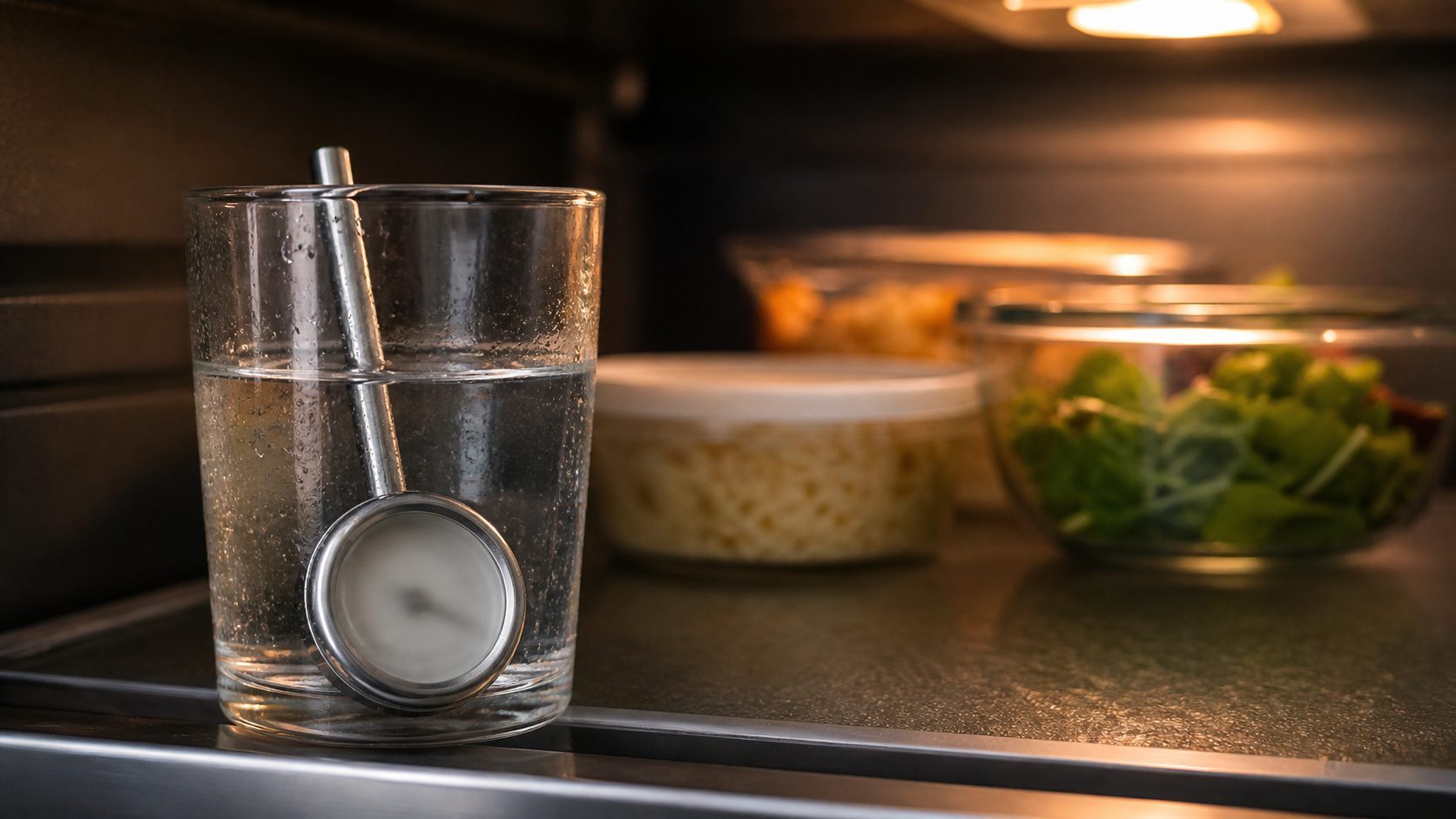
Part-fill a plastic bottle with water, put a thermometer in it, tighten the cap, stand it where the problem seems to be, and leave it twenty-four hours without opening the door. Then read it. That is U-Line's own published procedure, and each part of it is doing something: the water gives the thermometer thermal mass so it reads the temperature of contents rather than of air, the closed door keeps the test honest, and the twenty-four hours cover a full defrost cycle rather than a lucky moment. Air temperature and product temperature are different numbers — the maker says so in as many words — and on this make there is a second reason to distrust the display: it shows what the control believes, and the control is reading a sensor that may be exactly what is wrong. If the bottle and the display disagree by more than a couple of degrees, that gap is the first real evidence anybody has.
The full guide
How to check refrigerator temperature with thermometer: the method is the manufacturer's
This is not a workaround. It is printed in U-Line's own manual, in the section on checking product temperature, and it reads almost exactly like the steps above.
Part-fill a plastic bottle with water. Insert an accurate thermometer. Tighten the cap. Place the bottle in the desired area for twenty-four hours. Avoid opening the unit during the testing period. After twenty-four hours, check the temperature of the water.
Each instruction is load-bearing, which is unusual for a manufacturer's procedure and is why it is worth following rather than approximating.
Why water, and why a day
Air is not the measurement anybody cares about. The maker puts it bluntly in its troubleshooting table: air temperature does not indicate product temperature. Open a door for fifteen seconds and the air inside is a different temperature; the bottles and the food are not. Water in a bottle behaves like the contents rather than like the air, which is what makes the number meaningful.
And refrigeration is a cycle, not a state. These cabinets run, stop, and defrost. A thermometer read at the end of a long run and one read fifteen minutes after a defrost will disagree by several degrees, and both readings are honest. Twenty-four hours flattens that out.
What the number should be
For a food cabinet, at or below 40°F is the safety line and most people run colder. Beyond that, resist the temptation to compare with a table — compare with your own set point instead.
That is the comparison that diagnoses something. A cabinet set to 37°F and reading 38°F is working. A cabinet set to 37°F and reading 46°F is not, regardless of whether 46°F sounds alarming to you.
Wine is a separate conversation: a wine cooler is deliberately warmer than a refrigerator, often by fifteen degrees or more, and a serving zone for reds sits warmer still. A wine cabinet is not broken for being warmer than the fridge in your kitchen.
The part that is specific to this make
On most appliances the display is a reasonable proxy for the truth. On a U-Line there is a documented reason it may not be.
When a zone thermistor fails, U-Line's control does not stop. It enters Self Preservation Mode — the maker's own term — and keeps the cabinet cooling on a fixed cycle to protect the contents, while otherwise operating normally. Nothing appears on the display. The set point still reads whatever you set it to.
So on this equipment a confident display over a warm cabinet is not a puzzle. It is a known pattern with a known cause, and the bottle of water is what proves it before anybody starts quoting.
Where to put the bottle
- On the shelf where things are actually spoiling. Not in the middle by default — the middle is where the control is trying to hold, and the complaint is usually somewhere else.
- Not in the door. Door shelves are the warmest part of any cabinet and always have been.
- Not against the back wall. That is the coldest surface in the cabinet, and something pressed against it will read several degrees below everything else — which is also, incidentally, why cans at the back freeze while the middle is perfect.
- In each zone, on a dual-zone cabinet. Two bottles, two thermometers, twenty-four hours. On a dual-zone wine cooler that single test settles whether you have a zone problem or a cabinet problem, and those are very different repairs.
What to do with the answer
Write down three things: what it is set to, what the bottle says, and what the display says. Those three numbers together are more diagnostic than any description of the symptom, and they take a day of doing nothing.
If the bottle agrees with the set point, the appliance is doing its job and the problem is elsewhere — loading, door openings, or an expectation. If it does not, you now have evidence rather than an impression, and on this make the next place to look is the sensor rather than the compressor.
If it turns out to be a repair
What this leads to, and what it costs
Every job on this site is priced the same way: an on-site diagnostic first, the figure agreed in writing before anybody starts.
-
It works, but it never quite arrives Not cold enough
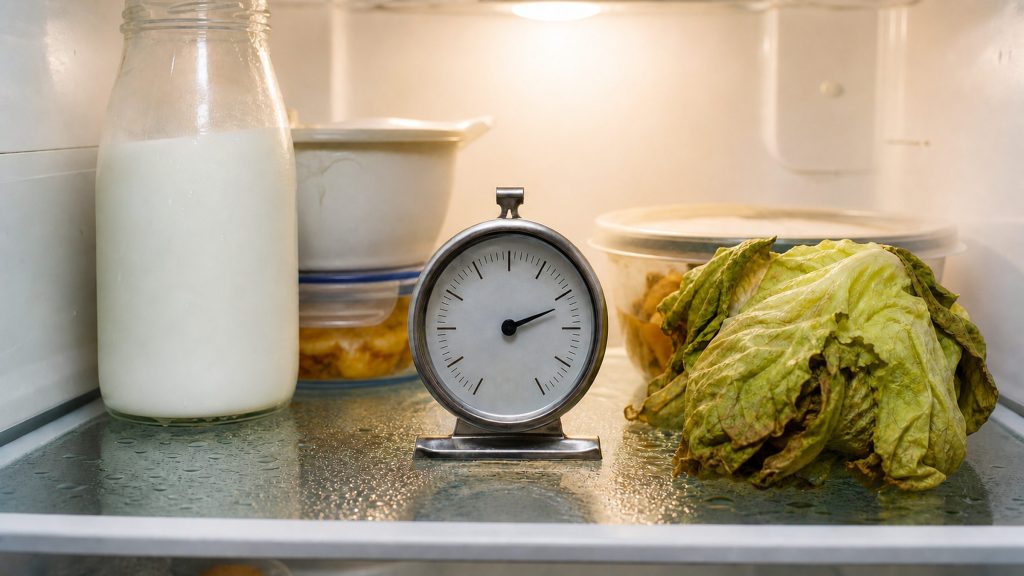
A cabinet that is cold, but not at its set point, and never has been since something changed. On this make that pattern has a specific and documented cause that shows nothing on the display, which is why it gets lived with for months.
- A few degrees out, all the time
- Worse when the kitchen is warm
- Runs longer than it used to
-
Ten minutes on, forty minutes off, over and over It cycles on and off in a strange rhythm
This one is worth its own page because the rhythm is a diagnosis. U-Line publishes the numbers: when a zone sensor fails, a 2000 Series unit runs ten minutes on and forty minutes off, whatever the cabinet actually needs, and says nothing about it.
- A fixed rhythm that ignores the load
- Nothing on the display
- Started suddenly rather than gradually
-
from $95 Diagnostic visit
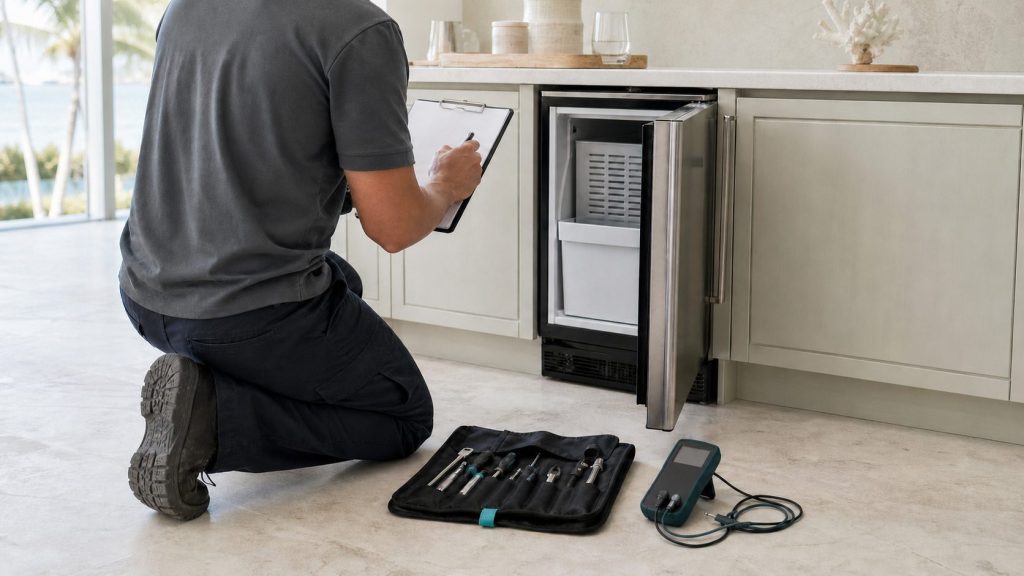
We find out what is actually wrong before anybody quotes a part. On a U-Line that starts with a question most visits skip: is the appliance reporting a problem, or is it in a mode somebody enabled by accident? A unit that lights up and will not cool is showroom mode as often as it is a sealed system, and the two are not the same conversation. The fee is credited toward the work when you go ahead.
- Modes ruled out before any part is named
- The error log read, not guessed at
- Credited toward the repair
-
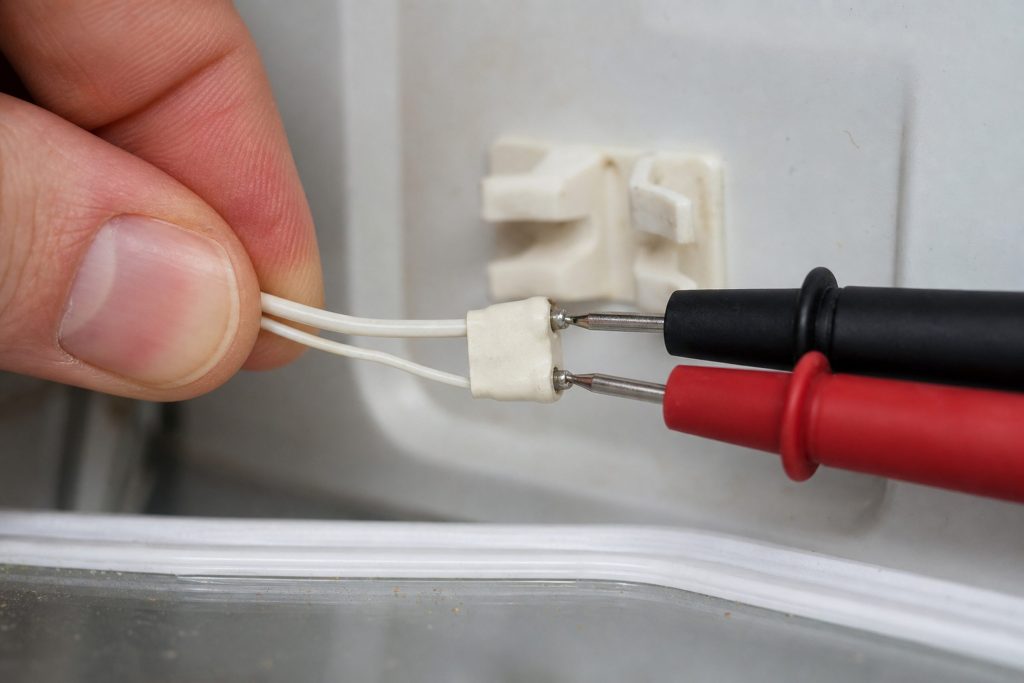
from $165 Thermistor and temperature sensor replacement
The most likely single failure on a U-Line, and the one the appliance is designed not to mention. When a zone sensor fails the unit does not stop — the maker's own backup keeps it cooling on a fixed cycle to protect what is inside, and it otherwise behaves normally. So the complaint that arrives is never "the sensor has failed". It is "it runs all the time and still is not cold enough".
- The failure behind most "not cold enough" calls
- Measured against the maker's own figure, not swapped on sight
- Connections cleaned and re-greased, which is half the repair
Questions people ask about this
How can I check the temperature without a thermometer?
You cannot, meaningfully, and it is worth saying plainly. Feeling the air tells you almost nothing — a cabinet at 42°F and one at 34°F feel identical to a hand. A cheap dial or digital thermometer costs less than an hour of anybody's time and is the difference between a diagnosis and a guess.
Why water in a bottle rather than just the thermometer?
Because air changes temperature the instant a door opens and water does not. The bottle makes the thermometer behave like the food does, which is the number that actually matters, and it stops one door opening from ruining the reading.
What should an undercounter refrigerator be at?
For food storage, at or below 40°F, and most people set colder. A wine cooler is a different question entirely and is deliberately warmer. A beverage center sits between the two. The useful comparison is not against a rule of thumb but against what your own control is set to — the gap is the diagnosis.
The display and the bottle disagree. Which is right?
The bottle. The display is showing what the control believes, and the control believes its sensor. On U-Line specifically, a sensor that has failed puts the appliance into a backup mode that keeps it running and says nothing, so a confident display over a warm cabinet is a known pattern rather than a puzzle.
Do I really need to wait a whole day?
For a real answer, yes. Refrigeration cycles, and it defrosts. A reading taken twenty minutes after a defrost and one taken at the end of a long run are both true and neither is the number you want. Twenty-four hours averages the machine out.
Troubleshooting
More guides like this one
-
Your U-Line Is Keeping an Error Log You Cannot See
Every U-Line manual says the same sentence: all errors are logged in memory, and only the door error is displayed. The numbers are real. You just are not being shown them.
Read more -
The Light Works, the Display Works, and Nothing Is Cold
On most refrigerators this points at the compressor. On a U-Line, check the degree symbol first — there is a setting that runs the display and the light and switches the cooling off entirely.
Read more -
How to Reset a U-Line — and Why There Is No Reset Button
There is no reset button on a U-Line. What exists is a power cycle, two modes people mistake for a failure, and a service menu — and one of those choices destroys the only evidence the appliance kept.
Read more
Tell us the model number and what it is doing.
This article is based on:
- Official manufacturer documentation
- Internal repair procedures
- Technician repair history
- Company quality standards