Safety & Risks
Mold on a Refrigerator Door Seal — Why It Keeps Coming Back
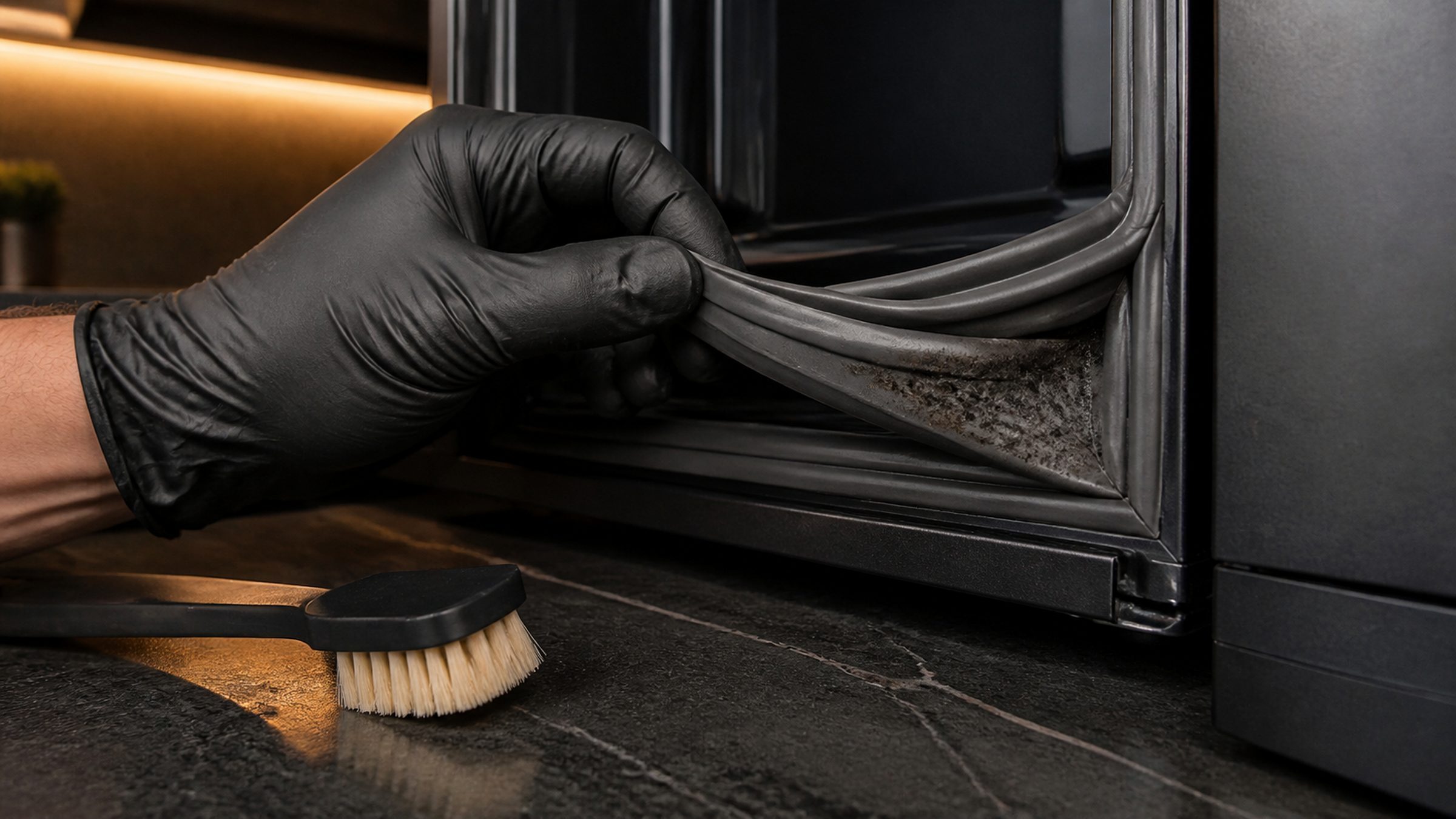
Wash the fold with warm water and a mild detergent, get into the underside where it collects, and — this is the half that matters — dry it thoroughly afterwards. Mold grows on damp, not on dirt, so a gasket wiped and left wet in a Miami kitchen is growing again within a fortnight. Avoid bleach and regular strong vinegar: both harden rubber over time and a hardened gasket stops sealing, which makes the underlying problem worse. Then ask why it is there. Mold appears where moisture sits, and moisture sits where the seal is no longer gripping, so a patch that returns to the same place every time is not a hygiene failure — it is the seal telling you where it has stopped working. Do the paper test at that spot. If the paper slides out freely, cleaning will keep failing, and the answer is a seal or a door alignment rather than a stronger chemical.
The full guide
How to clean mold from refrigerator door gasket: cleaning it is the easy part
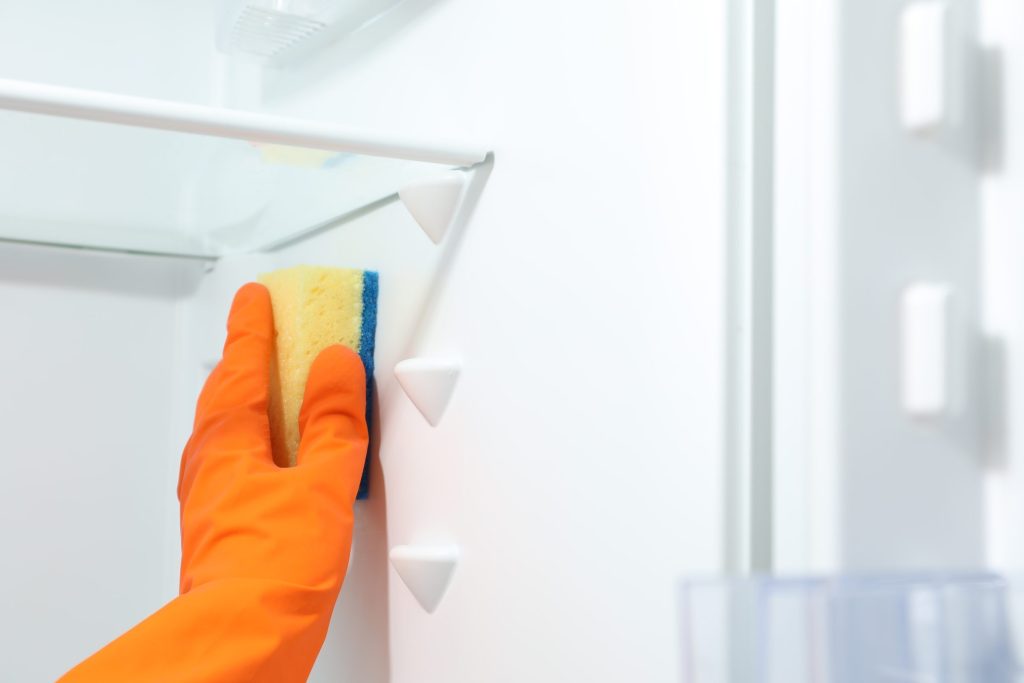
Warm water, mild detergent, an old toothbrush for the underside of the fold, and then dried thoroughly. That is the method, and the drying is not an afterthought — it is most of the reason it works or does not.
Mold grows on damp rather than on dirt. A gasket that is scrupulously clean and permanently wet will have something on it within a fortnight. A gasket that is merely tidy and reliably dry will not.
What to keep away from it:
- Bleach hardens rubber, and a hardened gasket stops sealing.
- Strong vinegar used regularly does the same, which is awkward because vinegar is the popular home answer for mold specifically.
- Anything abrasive, which damages the surface and gives the next colony more to hold on to.
The question the search is actually asking
Almost nobody cleans a door seal once. They clean it, and a month later it is back, in the same place, and that is when they search.
A patch that returns to the same spot is not a hygiene problem. It is a map.
Mold appears where moisture sits. Moisture sits where warm humid air meets a cold surface and stays there — which is precisely where a seal has stopped pressing against the cabinet. So a recurring patch is the gasket showing you, more reliably than looking ever will, where it has failed.
Paper-test that exact spot. Close the door on a sheet of paper there and pull. It should drag. If it slides out freely, no amount of cleaning is going to change the outcome, and the answer is a seal or a door alignment.
Why South Florida is a harder case
The mechanism is condensation, and this climate supplies the raw material generously.
A kitchen here spends nine months of the year at a relative humidity a refrigerator in Denver never sees. Every door opening puts that air into a cold cabinet, and every closing traps a film of it at the seal line. On an undercounter appliance the door is opened more often than a full-size one — it is at hand height in a working area — and the volume inside is a fraction of the size, so the same amount of moisture is a bigger proportion of what is in there.
That is why frost, condensation and seal-mold complaints are effectively the same complaint on this equipment and in this city.
What else the same damp is doing
Worth saying, because it moves this from a cosmetic issue to a maintenance one.
- The rubber is degrading. Constantly wet rubber ages faster, and a seal that hardens stops gripping, which produces more damp.
- The cabinet is taking on moisture too. What condenses at the seal is a fraction of what got in; the rest is inside, and it ends up as frost on the coldest surface.
- The appliance is working harder. A gap is a continuous load, all day, every day.
None of that is urgent this week. All of it is the reason a returning patch of mold is worth ten minutes of investigation rather than another wipe.
The other places it grows
While you are looking:
- The drip channel and drain hole at the base of the rear wall inside. Slime here is common and it is also what blocks a drain.
- The drain pan near the compressor, behind the grille. It should not smell.
- Under the bins and in shelf channels, where spills collect out of sight.
Those are a maintenance visit rather than a Saturday morning, and they are the same visit as the condenser.
When it is not a cleaning job at all
Call somebody when:
- the seal fails the paper test at the spot the mold keeps returning to;
- the mold is accompanied by frost or condensation inside the cabinet;
- the seal has hardened — press it, and if it stays where you pushed it, it is finished;
- the door is not sitting square, which on a built-in appliance is as likely to be the cabinetry moving as the appliance.
If it turns out to be a repair
What this leads to, and what it costs
Every job on this site is priced the same way: an on-site diagnostic first, the figure agreed in writing before anybody starts.
-
from $155 Door seal replacement
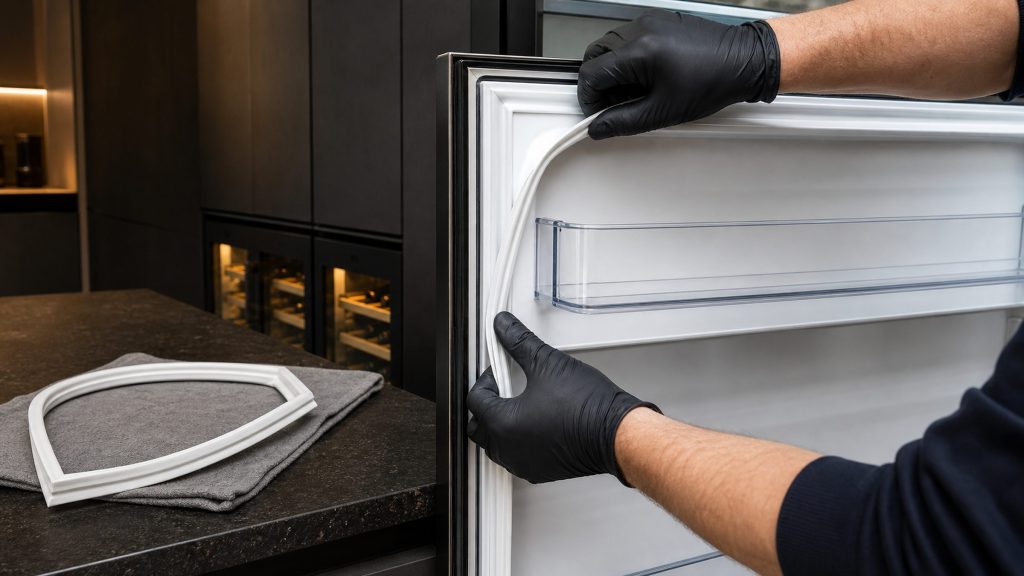
The cheapest part on the appliance that costs you temperature, and the first thing worth looking at behind condensation on a wine cooler door. A seal that has taken a set no longer touches the cabinet along its whole run, and the gap is usually somewhere nobody looks — the hinge side, low down, behind the door front.
- Checked along the whole run, not at the handle
- Fitted to a door that closes square, or it will fail again
- Condensation and frost traced to the seal before anything else
-
from $175 Door alignment and hinge repair
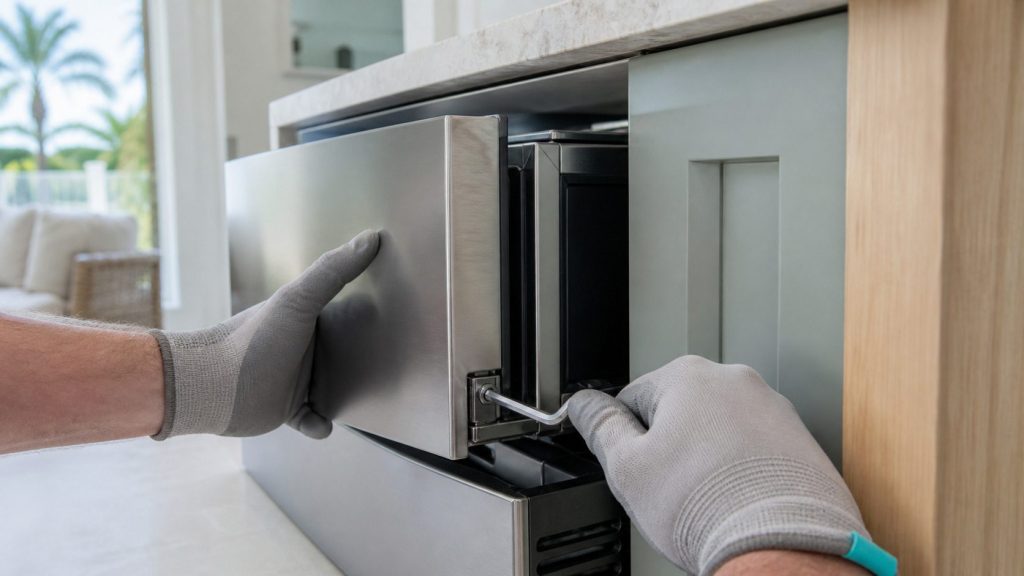
Priced apart from the seal on purpose: one is a part and the other is joinery. Nearly every U-Line is built in, and many carry a customer's own cabinet front on an integrated door. Aligning that door against the run either side — so it closes square, sits flush and does not hold itself open a millimeter — is most of the visit and is the part nobody quotes for.
- Integrated doors aligned against your cabinetry, not just to the appliance
- Door swing, door stop and adjustment as the maker sets them
- A door that closes itself instead of resting
-
Outside is weather, inside is the appliance Condensation on the door or the outside
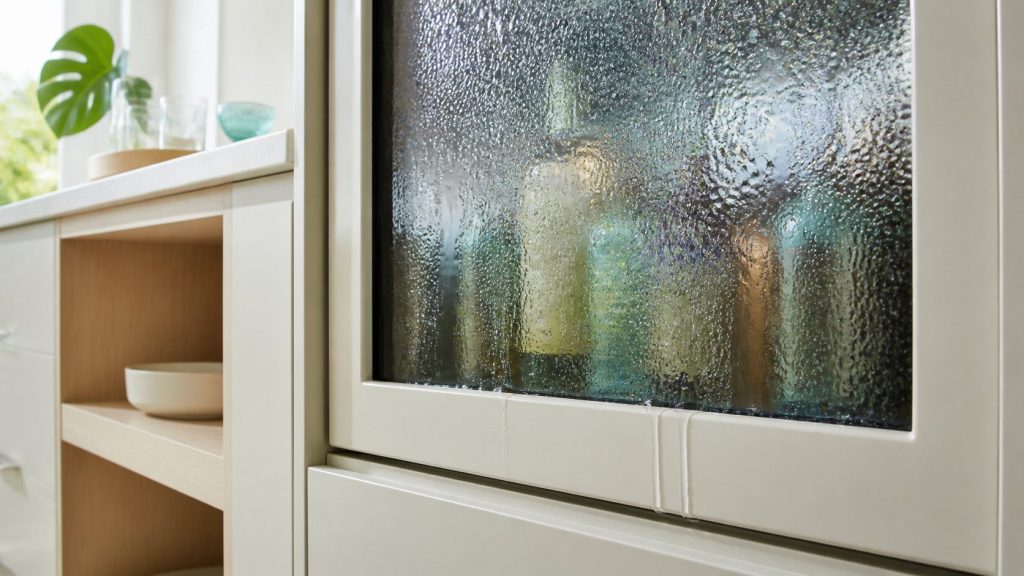
Water on the outside of a cabinet in South Florida is often the room rather than the appliance, and the maker says so: the unit is exposed to excessive humidity and the moisture dissipates as humidity falls. Water on the inside of a glass door is a different question.
- Beads on the outside of the door
- Misting on the inside of the glass
- Damp on the cabinetry around it
-
from $145 Appliance maintenance
The visit that stops the other visits. On this equipment it is a short and specific list, and in this climate it pays for itself: a condenser at floor level in a humid kitchen, a seal that works harder here than anywhere, a drain that must not block, and on an ice machine a cleaning cycle the machine itself has been asking for.
- Condenser, seals, doors, drain — and the ice cycle where there is one
- The maker's own intervals, adjusted for South Florida
- Findings written down, not just fixed
Questions people ask about this
How do I get mold off a rubber seal on a refrigerator?
Warm water, a mild detergent, a soft brush or an old toothbrush for the fold, and then dried properly. That deals with what is there. What stops it coming back is the drying and, if it returns to one spot, dealing with the seal at that spot.
Is mold on a door seal dangerous?
It is unpleasant rather than an emergency, and it is worth removing promptly for a reason beyond hygiene: the same damp that grows it is degrading the rubber and getting into the cabinet. Anyone with a mold sensitivity in the house has a better reason still.
Why does it keep coming back in the same place?
Because that place is holding water, and it is holding water because the seal is not gripping there. Mold is a very reliable indicator of exactly where a gasket has failed — better than looking, because a failed seal usually looks perfect.
Can I use bleach on it?
Once, carefully diluted, if you must. Regularly, no — bleach hardens rubber and a hardened gasket does not seal, which is how a cleaning habit turns into a repair. The same is true of strong vinegar used often, and vinegar is the popular answer precisely because it deals with mold.
Does the climate really make a difference?
Substantially. A refrigerator door in a room at 70% relative humidity is condensing water on a cold surface every time it is opened, and an undercounter cabinet in a busy kitchen is opened constantly. The same appliance in a dry climate has a much easier time of it.
Safety & Risks
More guides like this one
-
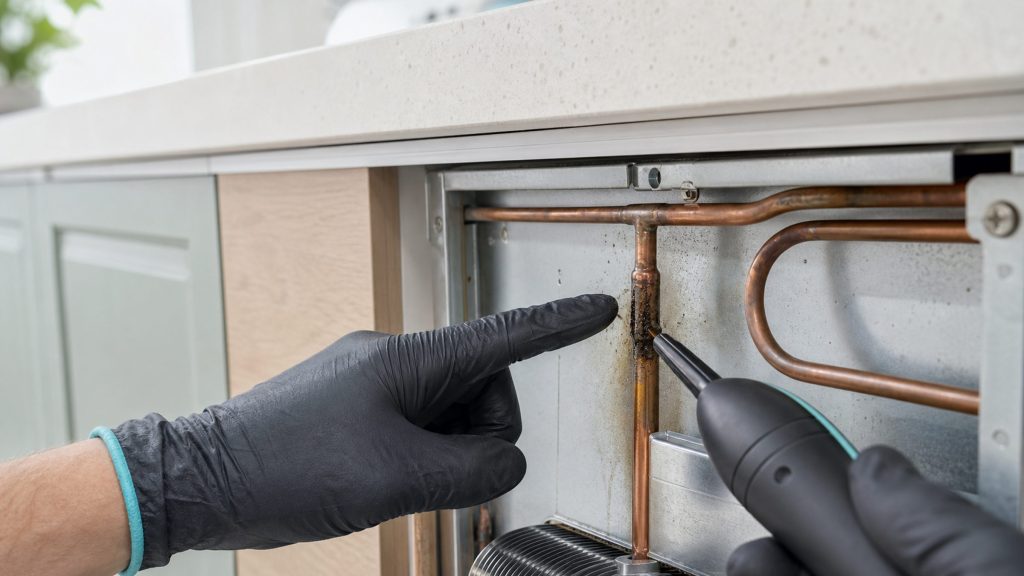
Signs of a Refrigerant Leak — and What R600a Changes
A sealed system does not use refrigerant up. If it is low, it is leaking — and the current U-Line range runs a refrigerant most people have never been told about.
Read more -
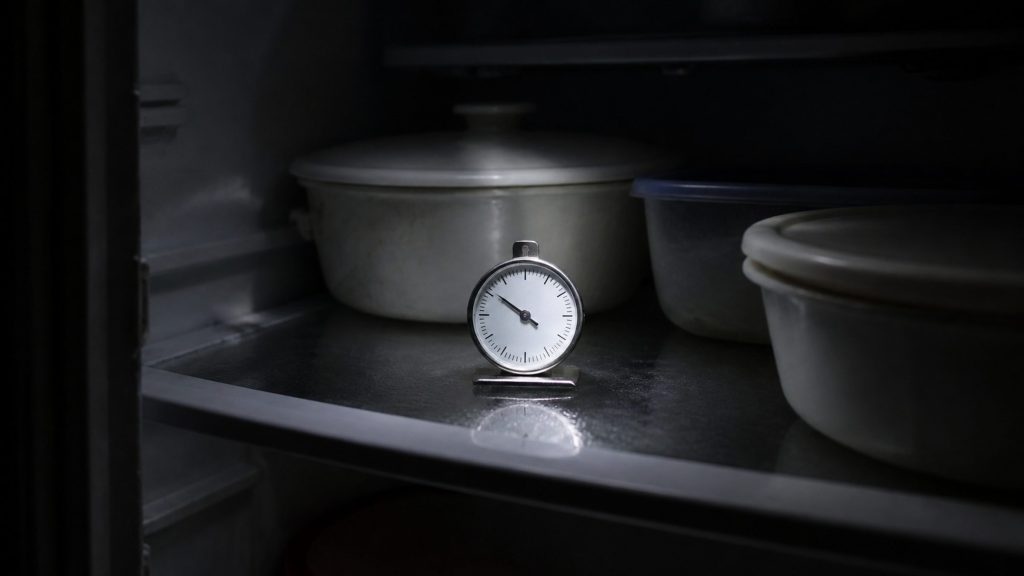
How Long Food Lasts Without Power — and What an Undercounter Cabinet Changes
Four hours in a refrigerator, twenty-four to forty-eight in a freezer — with the doors shut. An undercounter cabinet has less of everything those numbers depend on.
Read more -
A Burning or Electrical Smell From a Refrigerator
The one symptom on this site that does not wait until Monday — and the one it is most often confused with, which waits perfectly well.
Read more
Tell us the model number and what it is doing.
This article is based on:
- Official manufacturer documentation
- Internal repair procedures
- Technician repair history
- Company quality standards