Safety & Risks
How Long Food Lasts Without Power — and What an Undercounter Cabinet Changes
With the doors kept shut, a refrigerator holds food safely for about four hours and a full freezer for about forty-eight, or twenty-four if it is half full. Those are the standard figures and they assume a full-size appliance in an ordinary room. An undercounter cabinet is worse on every variable they depend on: there is less thermal mass inside, less insulated volume, and in a South Florida kitchen a higher ambient to lose heat into. Treat four hours as two on a fifteen-inch cabinet that was not full to begin with. The rules that matter are simpler than the numbers: keep the doors shut, do not open one to check, judge by temperature rather than by appearance when the power returns, and throw out anything that has been above 40°F for more than two hours. Refreezing is about quality, not safety — food that still has ice crystals and is at or below 40°F can be refrozen and will simply be worse.
The full guide
How long will food last in freezer power outage? The standard figures, and where they come from
With the doors kept shut:
- A refrigerator holds food safely for about four hours.
- A full freezer holds for about forty-eight hours.
- A half-full freezer holds for about twenty-four.
Those are the widely published food-safety figures and they are sound. What is worth understanding is what they are actually measuring, because that is what tells you whether they apply to your appliance.
They are measuring thermal mass and insulation, not the machine. A powerless refrigerator is a cool box. How long it stays cold depends on how much cold stuff is inside it, how much insulated volume surrounds that, and how warm the room is — and not at all on how good the compressor is.
Why fullness matters more than anything
This is the part that surprises people: a full freezer holds twice as long as a half-full one.
Frozen food is its own cold store. Every kilogram of it has to absorb a great deal of heat before it changes state, and while it is doing that it is holding everything around it at freezing point. A freezer with three things in it has almost nothing doing that work.
Which is the practical advice for a hurricane season: fill the empty space. Bottles of water frozen in advance work perfectly and cost nothing, and they are useful afterwards.
What an undercounter cabinet changes
Every published figure assumes a full-size appliance. A U-Line is not one, and the difference runs the wrong way on all three variables.
Less contents. A fifteen-inch beverage center holds a fraction of what a full-size refrigerator does, and much of what is in it — cans, bottles — is liquid rather than frozen mass.
Less insulated volume. A smaller box has more surface area per unit of contents, and surface area is where heat comes in.
A warmer room, faster. In South Florida the power going out takes the air conditioning with it, and a closed kitchen climbs quickly. The four-hour figure assumes an ordinary room temperature, not a Miami kitchen in August at hour three.
A practical rule: halve the standard figures on a small undercounter cabinet. Two hours rather than four in a refrigerator; a day rather than two in a small freezer that was full.
What to actually do
Keep the doors shut. All of them, including the wine cooler nobody is worried about — every opening costs time you cannot get back.
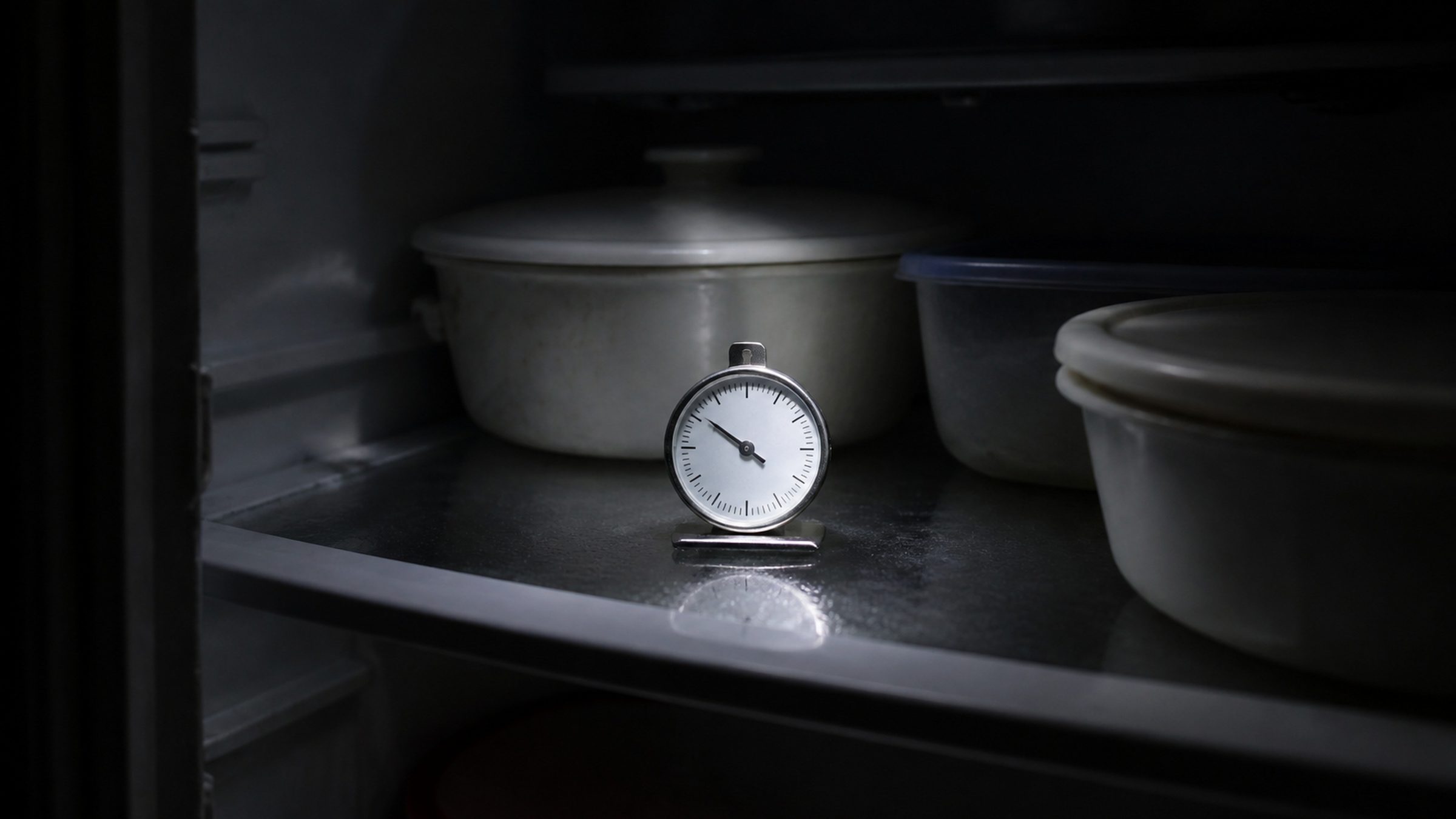
Do not open one to check. If you want to know, a thermometer left inside is the answer, and it is worth putting one in before the season rather than during it.
Get a thermometer reading before you decide anything. When the power comes back, the question is not how long it was off but how warm things got. Those are different numbers, especially in a cabinet that was full.
The line is 40°F for more than two hours. Above that for longer than that, it goes — regardless of how it looks or smells. Bacteria that make people ill do not announce themselves.
Refreezing
A quality question rather than a safety one, within limits.
Food that still has ice crystals in it and has stayed at or below 40°F can be refrozen. It will be worse — the cell walls have been broken and the texture will show it — and it will be safe.
Food that has fully thawed and stayed cold can be cooked and then frozen, which is often the better answer for meat.
Food that has been warm goes in the bin. It is not worth the argument.
The appliance-specific part
Two things about U-Line are worth knowing here.
The door alert is your friend after an outage. If a door was left ajar during the confusion, the appliance will tell you — a tone every minute and a door icon are the one error this make puts on the display.
And a cabinet that seems fine but never recovers is worth measuring. A power event is a common moment for a control or a sensor to fail, and on this make a failed thermistor does not announce itself: the unit switches to a fixed backup cycle, keeps running, and never quite reaches its set point again. If a cabinet has been "not quite right since the storm", the bottle-of-water test is the way to find out rather than waiting for it to get worse.
If it turns out to be a repair
What this leads to, and what it costs
Every job on this site is priced the same way: an on-site diagnostic first, the figure agreed in writing before anybody starts.
-
It hums, it lights up, and nothing is cold Not cooling but still running
The most common call on this make and the one with the cheapest answer hiding inside it. Before anything is opened, two modes have to be ruled out — one of them lights the display, works the light and deliberately stops the refrigeration.
- Running, lit, and warm inside
- Started after a move or a delivery
- Everything looks normal except the temperature
-
from $95 Diagnostic visit
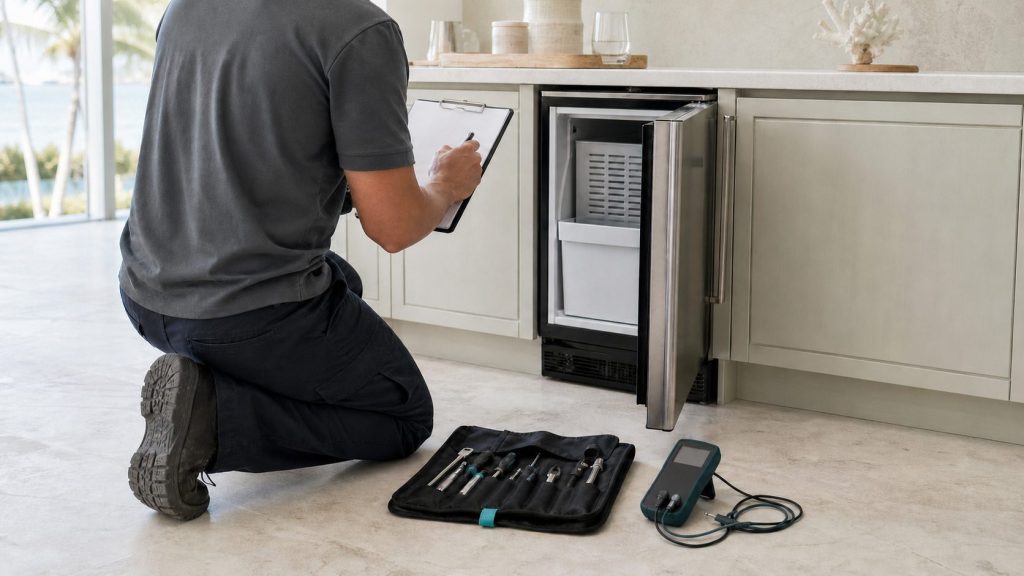
We find out what is actually wrong before anybody quotes a part. On a U-Line that starts with a question most visits skip: is the appliance reporting a problem, or is it in a mode somebody enabled by accident? A unit that lights up and will not cool is showroom mode as often as it is a sealed system, and the two are not the same conversation. The fee is credited toward the work when you go ahead.
- Modes ruled out before any part is named
- The error log read, not guessed at
- Credited toward the repair
-
from $145 Appliance maintenance
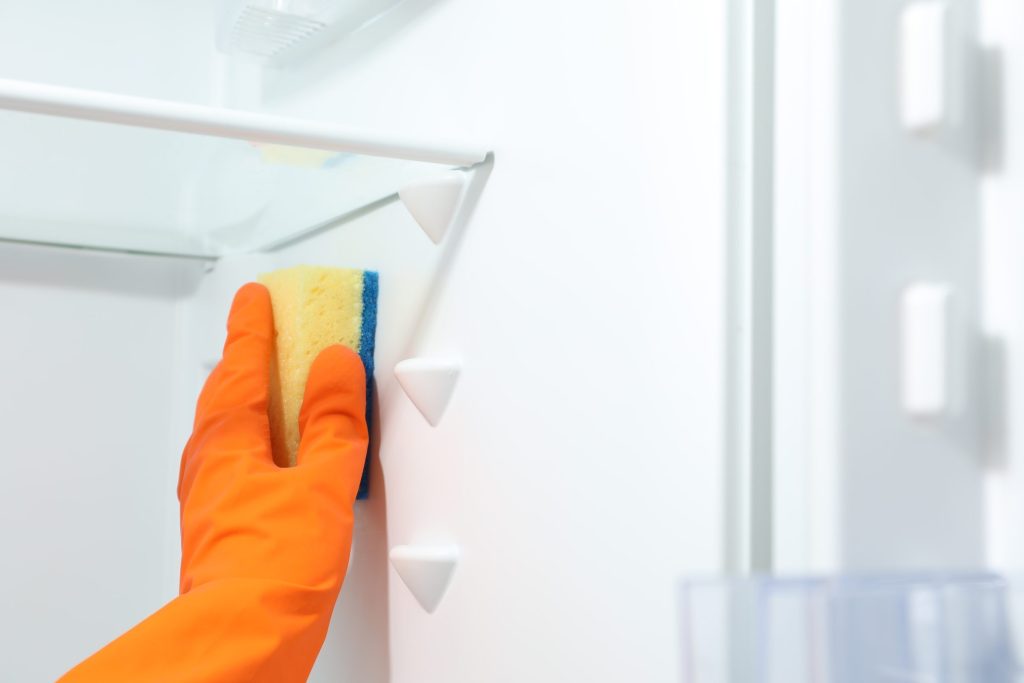
The visit that stops the other visits. On this equipment it is a short and specific list, and in this climate it pays for itself: a condenser at floor level in a humid kitchen, a seal that works harder here than anywhere, a drain that must not block, and on an ice machine a cleaning cycle the machine itself has been asking for.
- Condenser, seals, doors, drain — and the ice cycle where there is one
- The maker's own intervals, adjusted for South Florida
- Findings written down, not just fixed
-
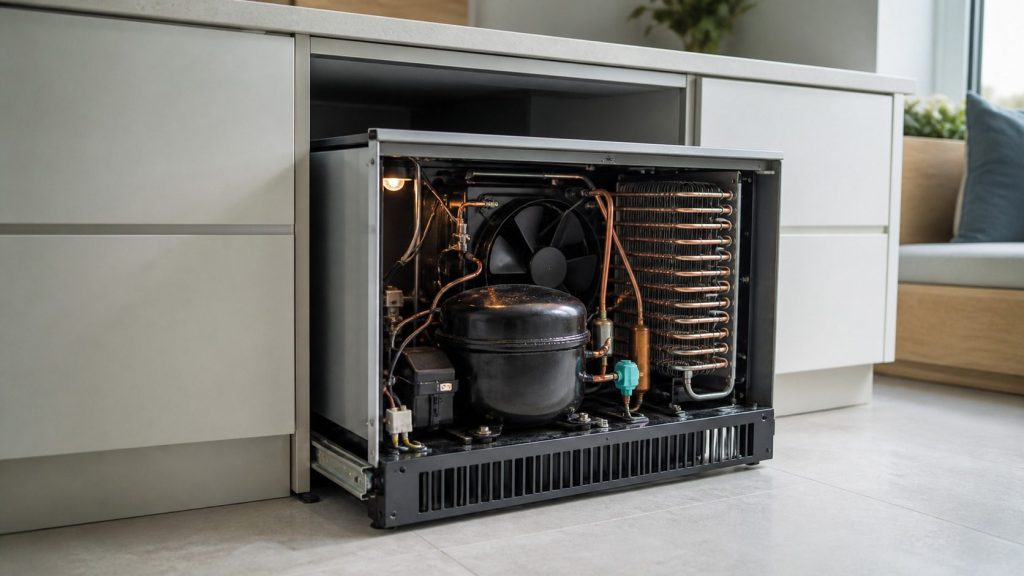
Ten minutes on, forty minutes off, over and over It cycles on and off in a strange rhythm
This one is worth its own page because the rhythm is a diagnosis. U-Line publishes the numbers: when a zone sensor fails, a 2000 Series unit runs ten minutes on and forty minutes off, whatever the cabinet actually needs, and says nothing about it.
- A fixed rhythm that ignores the load
- Nothing on the display
- Started suddenly rather than gradually
Questions people ask about this
How long will food last in a freezer during a power outage?
About forty-eight hours in a full freezer with the door kept closed, and about twenty-four in one that is half full. Fullness is the variable that matters most, because frozen food is its own cold store — a packed freezer holds because of what is in it rather than because of the appliance.
Does an undercounter cabinet hold as long?
No, and it is worth knowing before hurricane season rather than during it. A fifteen- or twenty-four-inch cabinet has a fraction of the contents and a fraction of the insulated volume, and it is usually in a kitchen that gets warm quickly when the air conditioning stops. Halve the usual figures and you will not be far off.
Can I refreeze food that thawed?
If it still has ice crystals in it and has stayed at or below 40°F, yes — it is a quality question rather than a safety one, and it will be worse for it. Anything that has been above 40°F for more than two hours goes, and that includes food that looks and smells fine.
Should I open the door to check on things?
No. Every opening replaces cold air with room air, and on a small cabinet a single look costs a meaningful share of the time you have. If you need to know the temperature, that is what a thermometer left inside is for.
Is a generator worth it for a refrigerator?
For a household that loses power regularly, a modest portable generator will keep a refrigerator and a freezer going comfortably — these are not large loads. What matters is the transfer arrangement being safe, which is an electrician's question rather than an appliance one.
Safety & Risks
More guides like this one
-
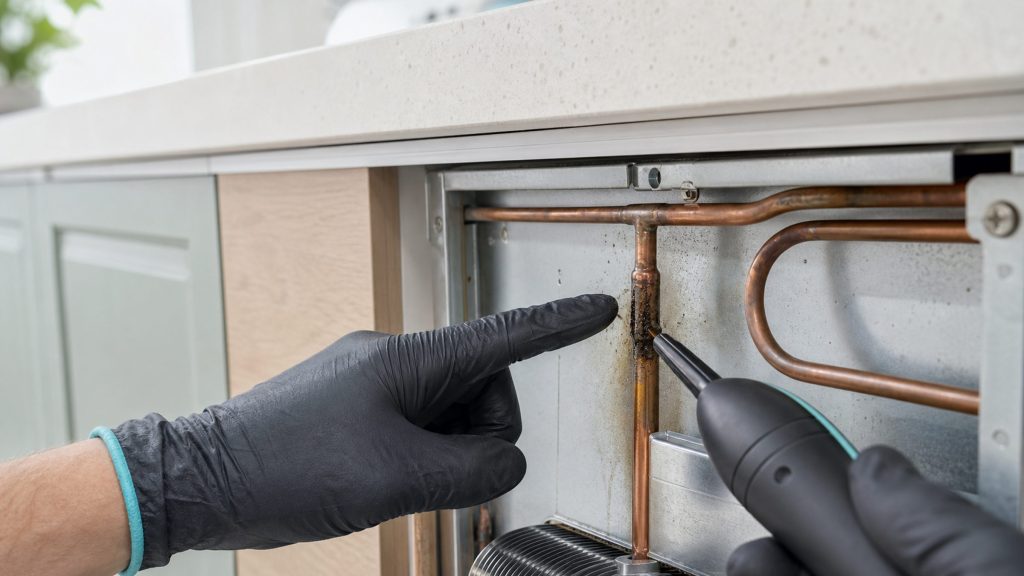
Signs of a Refrigerant Leak — and What R600a Changes
A sealed system does not use refrigerant up. If it is low, it is leaking — and the current U-Line range runs a refrigerant most people have never been told about.
Read more -
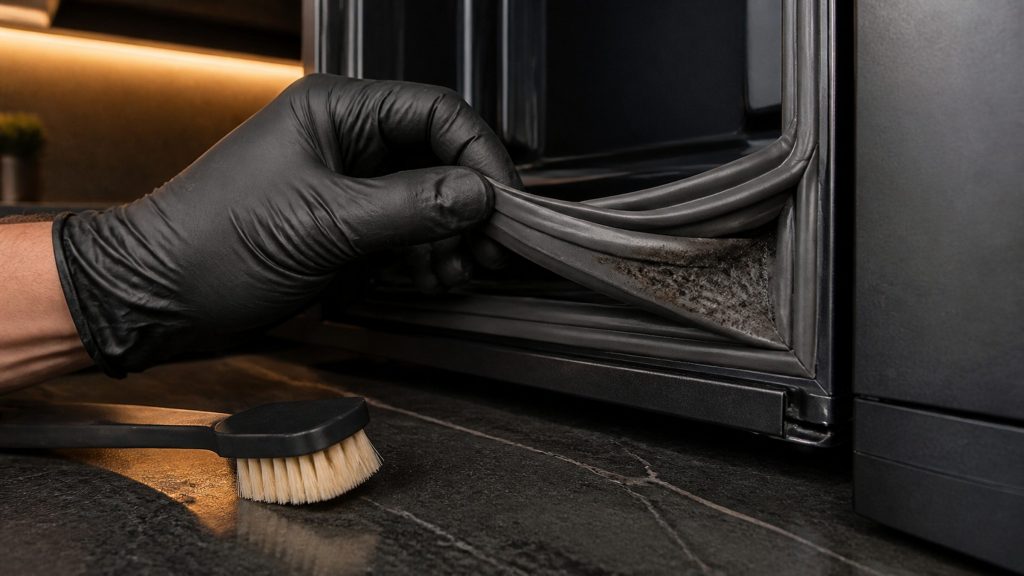
Mold on a Refrigerator Door Seal — Why It Keeps Coming Back
Cleaning it is easy and it returns, which is the actual question. Mold on a seal is a humidity problem with a mechanical cause, and in South Florida the humidity half is not going anywhere.
Read more -
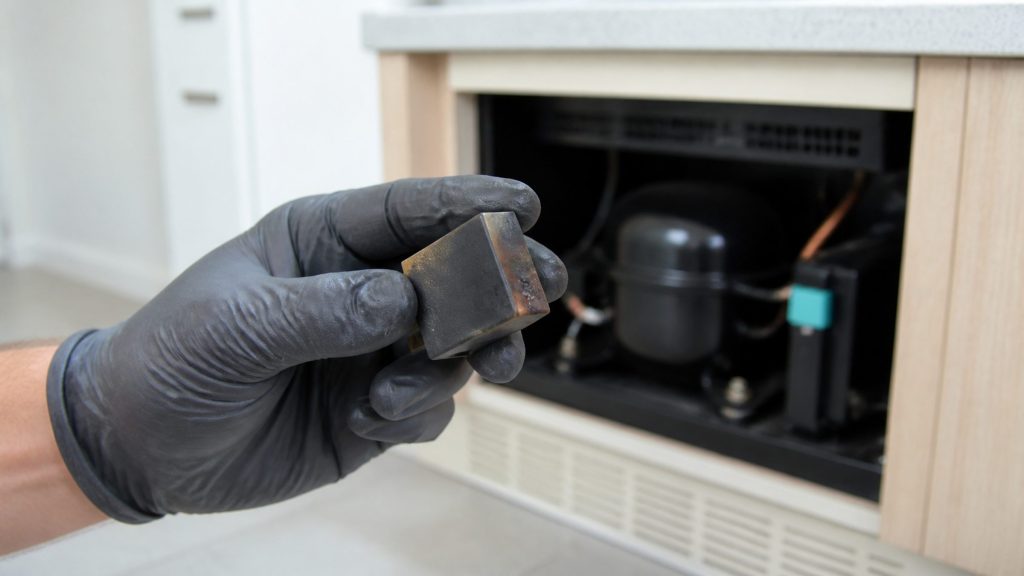
A Burning or Electrical Smell From a Refrigerator
The one symptom on this site that does not wait until Monday — and the one it is most often confused with, which waits perfectly well.
Read more
Tell us the model number and what it is doing.
This article is based on:
- Official manufacturer documentation
- Internal repair procedures
- Technician repair history
- Company quality standards