Safety & Risks
Signs of a Refrigerant Leak — and What R600a Changes
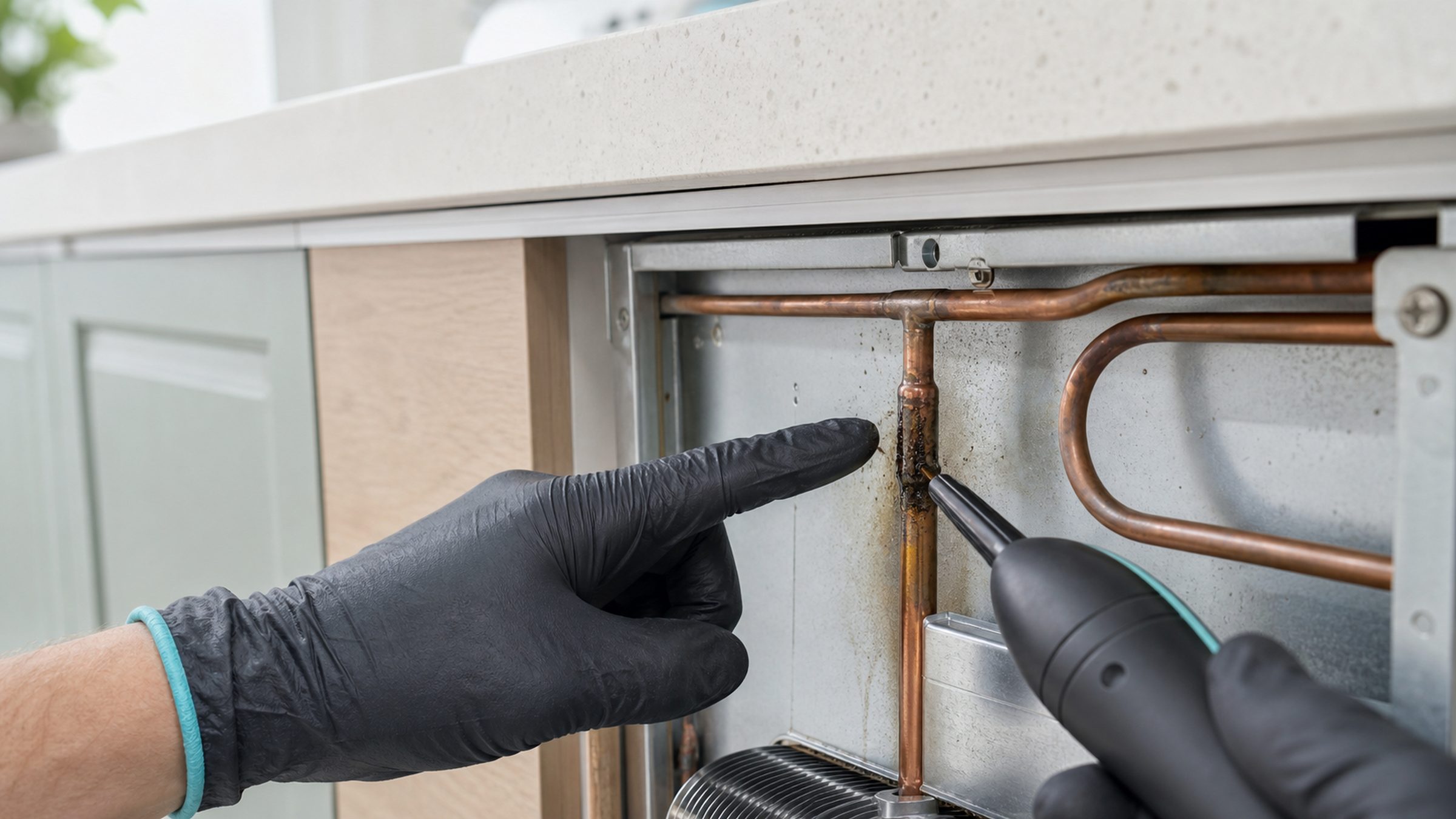
The reliable signs are a cabinet that cools less and less over weeks rather than failing overnight, a compressor that runs almost continuously without reaching the set point, frost or ice forming in one small patch on the evaporator rather than evenly, and — occasionally — an oily residue near a joint, because refrigerant carries compressor oil with it as it escapes. What is not a reliable sign is a smell: the charge in an undercounter appliance is tiny and disperses immediately. The important principle is that a sealed system is sealed. It does not consume refrigerant, so a system that is low is a system that is leaking, and topping it up without finding the leak is money spent twice. Two things are specific to this equipment. U-Line's current range uses R600a, a hydrocarbon that is flammable, which does not change the price but does change who may open the system — it is licensed work with specific procedures. And on this make a slowly failing cabinet is more often a temperature sensor than a leak, because the maker's own backup mode produces exactly the same complaint.
The full guide
Refrigerator freon leak symptoms: the one principle worth taking away
A sealed system is sealed. It does not consume refrigerant, burn it off, or need topping up as part of maintenance. The charge that went in at the factory is the charge that should be in there in fifteen years.
So if a system is low, it is low for one reason: it is leaking. That single fact settles most of the arguments people have about this, including the one about topping up.
What a leak actually looks like
Leaks in this equipment are usually slow, and the pattern is more diagnostic than any single symptom.
It gets worse over weeks, not overnight. A cabinet that was fine in spring, then a bit off, then noticeably warm by midsummer. A refrigerator that fails abruptly is more often electrical or a control problem.
The compressor runs and runs. With less refrigerant to move, the system cannot reach the set point, so it never gets the signal to stop. Long run times without the cabinet arriving are the classic picture.
Frost forms unevenly. On a healthy evaporator, frost forms across the surface. With a low charge it forms in one patch near the inlet and stops, because that is as far as the refrigerant is getting.
An oily residue. Refrigerant carries compressor oil with it, so a leak that has been running a while sometimes leaves a faint oily film near the joint it is escaping from. It is not always visible and it is worth looking for.
What is not a sign: a smell. The charge in an undercounter cabinet is grams, and it disperses instantly. Anybody who tells you they can smell a refrigerant leak in a kitchen is describing something else.
What R600a changes
The current U-Line range runs R600a — isobutane. The spec sheet in the manual names it plainly, alongside the compressor data.
It is a hydrocarbon, and it is flammable. That is a genuine difference from the refrigerants most people have in mind, and it is not usually mentioned in the sales conversation.
What it does not change: the risk to a household from a working appliance. The charge is deliberately tiny, the system is sealed, and the appliance is designed, tested and certified around exactly this refrigerant.
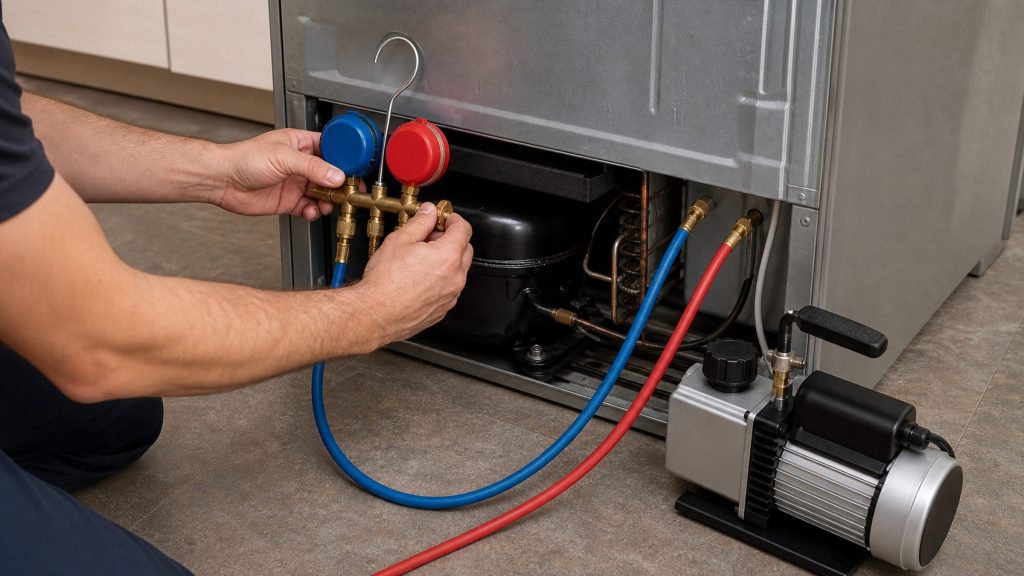
What it does change: who may open the system. Sealed-system work on a hydrocarbon charge means recovery equipment, the right procedure and someone licensed to do it. It is not a job for a general handyman, and it is one of the reasons the sealed-system figure on this site sits where it does.
Before you accept a sealed-system diagnosis
On a U-Line specifically, this is worth insisting on, because the appliance has a documented way of imitating a leak.
When a zone thermistor fails, U-Line's control enters Self Preservation Mode: it keeps cooling on a fixed cycle to protect the contents and otherwise operates normally, showing nothing at all on the display. The result is a cabinet that runs constantly and never quite arrives — which is the description at the top of this page.
So the order that saves money is:
- Measure the cabinet with a bottle of water and a thermometer for twenty-four hours.
- Read the error log — a thermistor error is E1, E2, E5 or E6 and it is sitting in there whether or not anybody has looked.
- Clean the condenser and check the door, because both produce long run times.
- Then take pressures against the maker's own chart.
U-Line publishes that chart: suction pressure, suction line, compressor discharge, condenser, capillary tube, evaporator and wattage, across normal, overcharge, undercharge, partial restriction, complete restriction and no gas. A sealed-system diagnosis is read against that table rather than asserted.
And the arithmetic afterwards
If it genuinely is the sealed system, that is the most expensive repair one of these can need, and on the smaller cabinets it is a real question whether it is worth it. The current range spans more than three to one in price across appliances that look broadly similar, and twenty of the seventy-six models in the catalog are out of production, so the answer moves with the cabinet. The starting figures and the reasoning behind them are on the sealed system repair cost page.
On a dual-zone wine cooler the repair is usually right. On a fifteen-inch beverage center it frequently is not, and that is a conversation to have before the work rather than after it.
If it turns out to be a repair
What this leads to, and what it costs
Every job on this site is priced the same way: an on-site diagnostic first, the figure agreed in writing before anybody starts.
-
from $650 Sealed system repair
Refrigerant work: leaks, restrictions, an undercharge or a system that has lost its gas altogether. Licensed work with recovery equipment, and on the current U-Line range the refrigerant is R600a, which is flammable — that does not change the price but it does change who may open the system. It is the most expensive thing on this list after a compressor, and the most over-diagnosed.
- Diagnosed against the maker's own pressure and temperature table
- Ruled in, not assumed, after the sensors and the airflow
- An honest answer when the appliance is not worth it
-
It works, but it never quite arrives Not cold enough
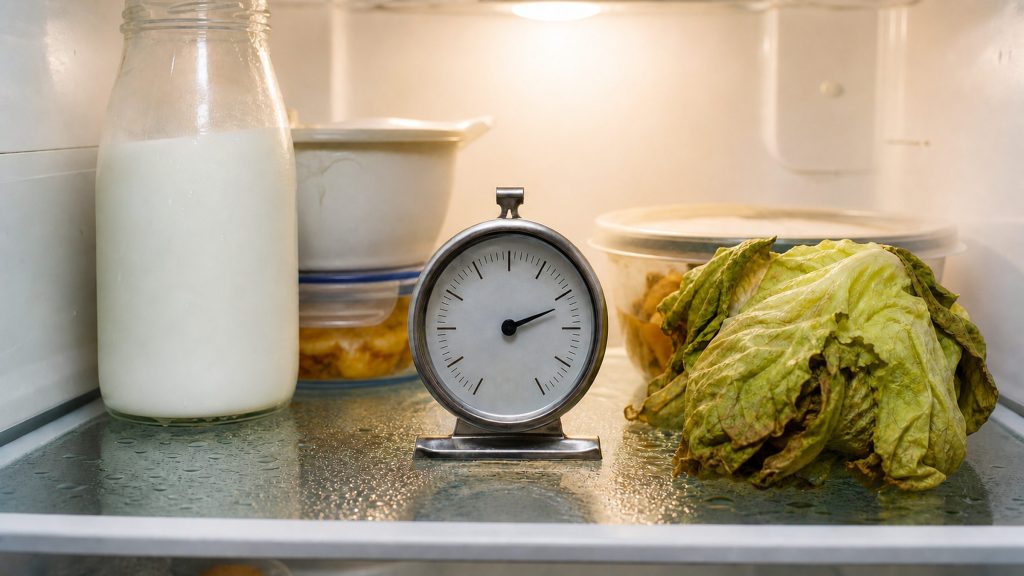
A cabinet that is cold, but not at its set point, and never has been since something changed. On this make that pattern has a specific and documented cause that shows nothing on the display, which is why it gets lived with for months.
- A few degrees out, all the time
- Worse when the kitchen is warm
- Runs longer than it used to
-
from $95 Diagnostic visit
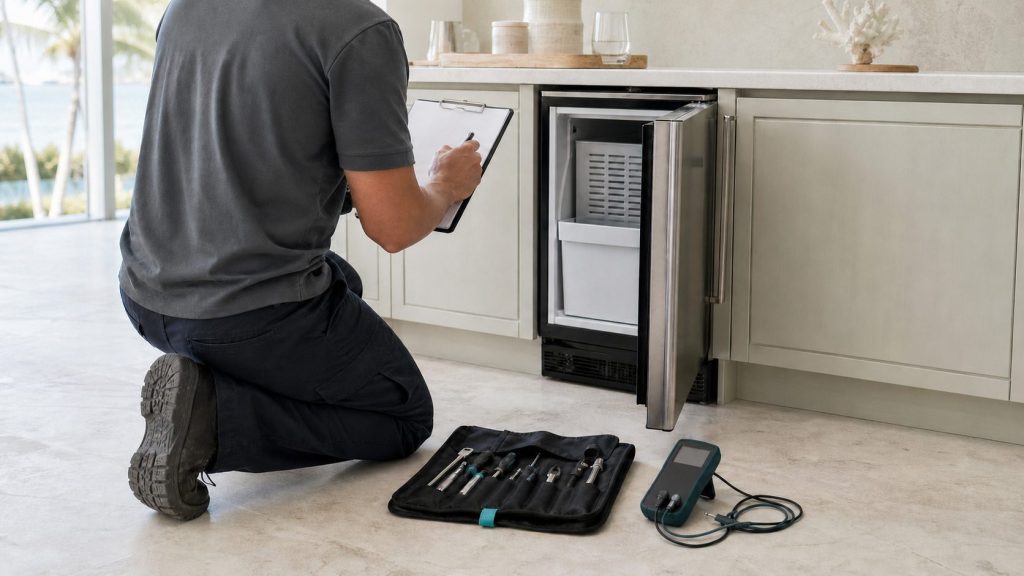
We find out what is actually wrong before anybody quotes a part. On a U-Line that starts with a question most visits skip: is the appliance reporting a problem, or is it in a mode somebody enabled by accident? A unit that lights up and will not cool is showroom mode as often as it is a sealed system, and the two are not the same conversation. The fee is credited toward the work when you go ahead.
- Modes ruled out before any part is named
- The error log read, not guessed at
- Credited toward the repair
-
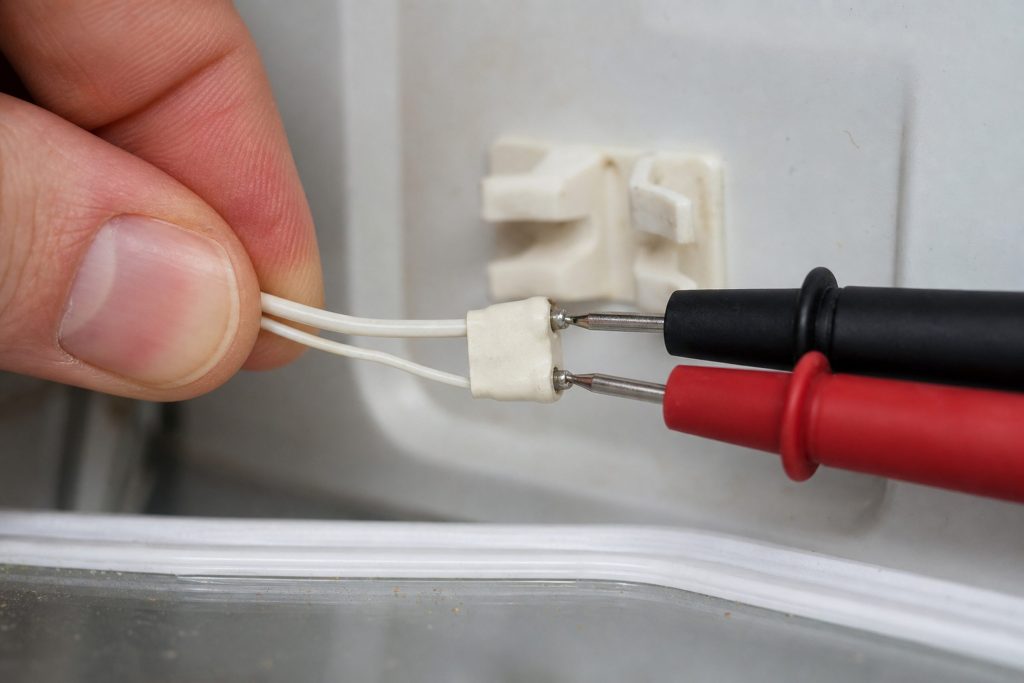
from $165 Thermistor and temperature sensor replacement
The most likely single failure on a U-Line, and the one the appliance is designed not to mention. When a zone sensor fails the unit does not stop — the maker's own backup keeps it cooling on a fixed cycle to protect what is inside, and it otherwise behaves normally. So the complaint that arrives is never "the sensor has failed". It is "it runs all the time and still is not cold enough".
- The failure behind most "not cold enough" calls
- Measured against the maker's own figure, not swapped on sight
- Connections cleaned and re-greased, which is half the repair
Questions people ask about this
Can freon leak from a refrigerator?
Yes, though 'freon' is a brand name for refrigerants most modern appliances no longer use. The system is a closed loop of tubing with brazed joints, and a joint or a section of tubing can develop a leak — usually slowly, and usually where vibration or corrosion has been working on it for years.
Is a refrigerant leak dangerous?
The charge in an undercounter appliance is a matter of grams and it disperses immediately in a normal room. R600a is flammable, which is a real difference, and it is also why the quantities are kept small and the appliances are certified for it. The practical risk is to the appliance rather than to the household.
Can I just top it up?
No, and anybody offering to is not doing you a favor. A sealed system does not use refrigerant, so a low charge means a leak; adding gas without finding it buys a few months at full price. Recovering, finding the leak, repairing it, evacuating and recharging is the actual job.
How do I tell a leak from a sensor problem?
By measurement, and on a U-Line it is worth doing in that order because a sensor is the far cheaper answer. A failed thermistor puts the appliance into a fixed backup cycle that produces exactly this complaint. A bottle of water and a thermometer for a day, then the error log, then pressures.
What is R600a?
Isobutane. A hydrocarbon refrigerant used across the current U-Line range and much of the modern industry, chosen for its efficiency and its low environmental impact. It is flammable, the charge is deliberately small, and the appliance is designed and certified around it.
Safety & Risks
More guides like this one
-
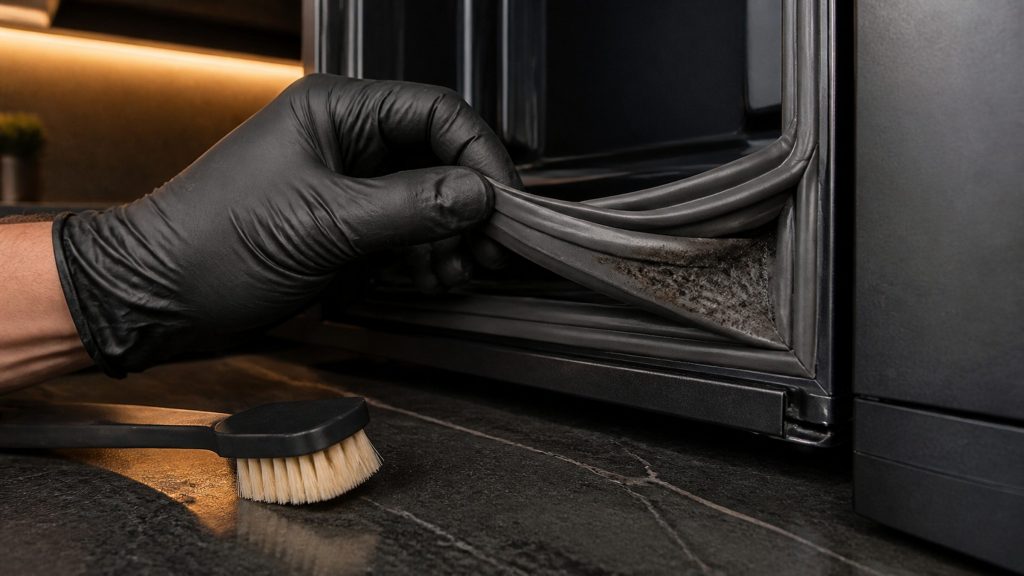
Mold on a Refrigerator Door Seal — Why It Keeps Coming Back
Cleaning it is easy and it returns, which is the actual question. Mold on a seal is a humidity problem with a mechanical cause, and in South Florida the humidity half is not going anywhere.
Read more -
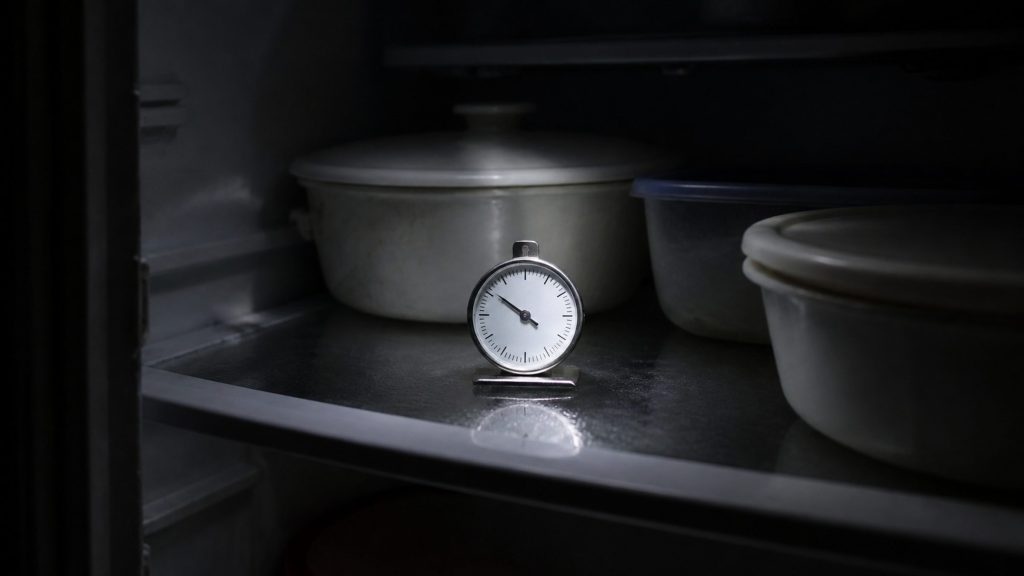
How Long Food Lasts Without Power — and What an Undercounter Cabinet Changes
Four hours in a refrigerator, twenty-four to forty-eight in a freezer — with the doors shut. An undercounter cabinet has less of everything those numbers depend on.
Read more -
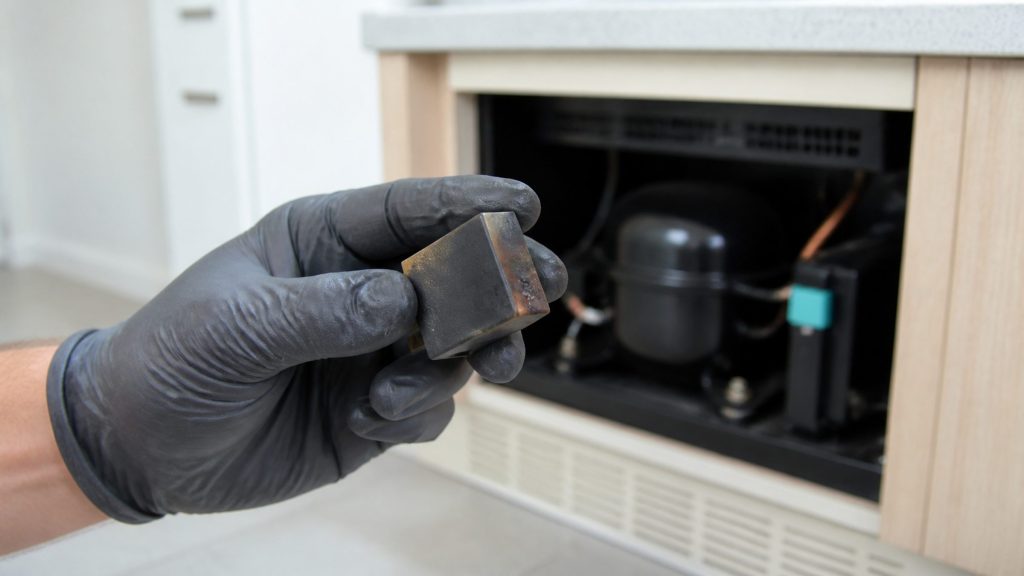
A Burning or Electrical Smell From a Refrigerator
The one symptom on this site that does not wait until Monday — and the one it is most often confused with, which waits perfectly well.
Read more
Tell us the model number and what it is doing.
This article is based on:
- Official manufacturer documentation
- Internal repair procedures
- Technician repair history
- Company quality standards