Maintenance & Prevention
How to Clean a Refrigerator Door Gasket — and the Test That Follows
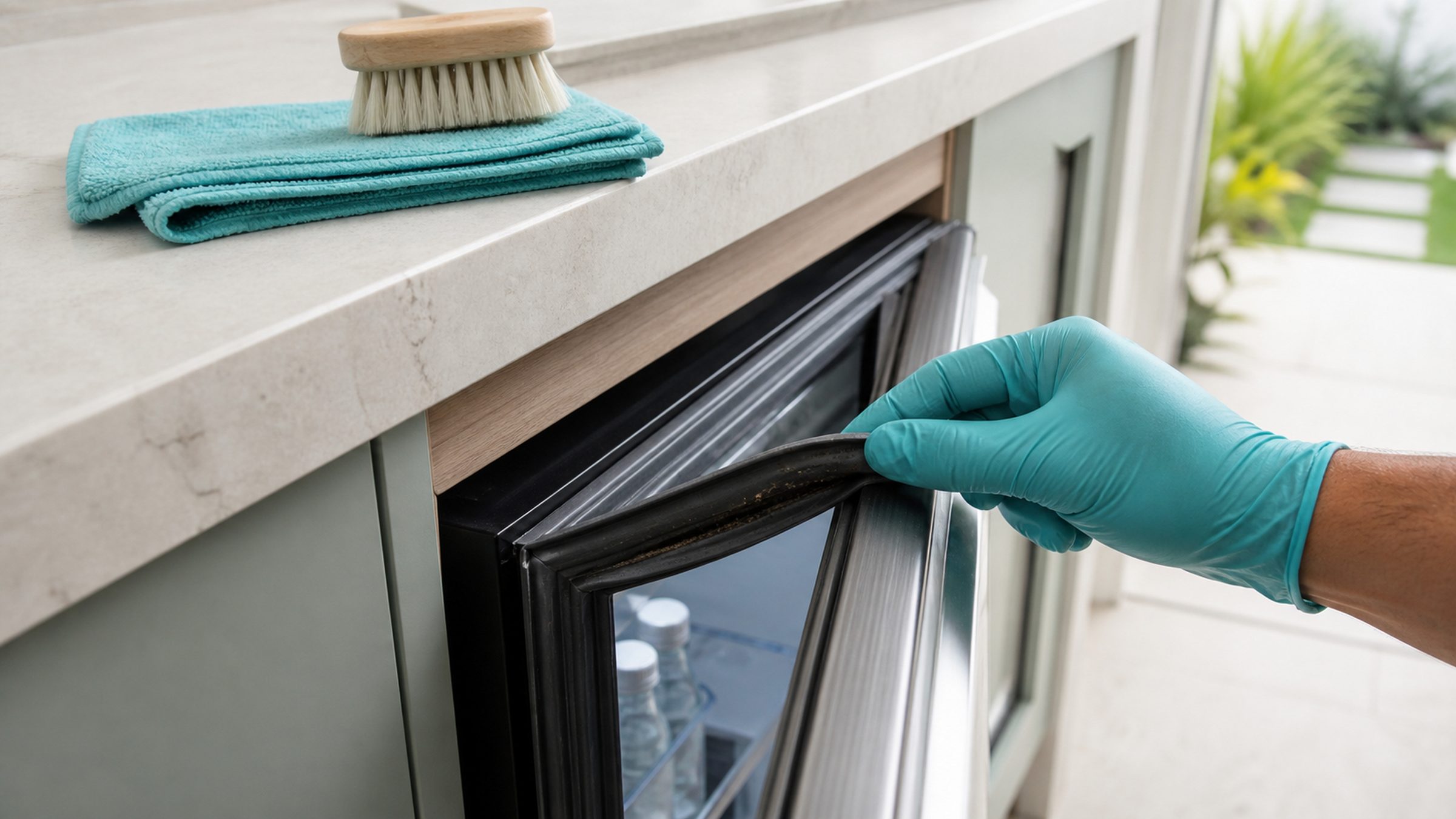
Warm water and a mild detergent on a soft cloth, worked into the folds of the rubber, then dried. That is the whole method, and anything stronger is a risk rather than an improvement — bleach, strong vinegar used regularly, and solvent cleaners all harden the rubber, and a hardened gasket does not seal however clean it looks. Pay attention to the underside of the fold, where crumbs and damp collect and where mold starts. Then do the part almost nobody does: close the door on a sheet of paper and pull. It should drag. Repeat at six or eight points around each door, corners included, because corners fail first. Where the paper slides out with no resistance, the seal is not gripping there — and on a fifteen-inch undercounter cabinet opened into a humid Miami kitchen, that gap is putting moisture and heat into a very small volume of air every minute of the day.
The full guide
How to clean refrigerator door gasket: cleaning it takes five minutes
The method for how to clean refrigerator door gasket folds is dull on purpose:
Warm water, a mild detergent, a soft cloth. Work into the folds of the rubber, where crumbs and damp collect. Dry it afterwards.
That is genuinely all of it, and the reason to keep it that dull is that everything stronger costs you the seal eventually:
- Bleach hardens rubber.
- Strong vinegar, used regularly, does the same more slowly.
- Solvent cleaners do it fastest.
- Petroleum jelly attracts dirt and degrades the rubber it is supposed to be helping.
A hardened gasket does not seal, however clean it looks.
Drying matters more than the detergent. Mold grows on damp rather than on dirt, and a gasket wiped and left wet in a Miami kitchen is a gasket that will be growing something again in a fortnight.
The part almost nobody does
A lot of people search for how to clean a gasket. Almost nobody searches for how to test one, which is backwards — cleaning is housekeeping, and the test is what tells you whether the appliance is losing cold every minute of every day.
The paper test. Close the door on a sheet of ordinary paper so half of it is inside, and pull. It should drag.
Do it at six or eight points around each door, and do the corners specifically. Corners fail first, because that is where the rubber is asked to bend and stay bent.
Where the paper slides out with no resistance, the seal is not gripping there.
What it costs on an undercounter cabinet, specifically
A gap in the seal of a full-size refrigerator is a nuisance. A gap in the seal of a fifteen-inch undercounter cabinet is proportionally a much bigger hole into a much smaller volume, and there is far less thermal mass inside to absorb the consequences.
In this climate, what comes through that gap is not just heat. Miami air carries a great deal of water, and every gram of it ends up on the coldest surface inside the cabinet. That is why frost complaints and seal complaints are the same complaint here more often than they are elsewhere.
The maker gives a threshold worth knowing: frost on the evaporator plate vents is normal and clears on the off cycle, and a quarter of an inch of build-up or more is not.
Seal, or door?
This is the distinction that decides whether you are buying a part or an hour, and the paper test separates them:
- The paper drags everywhere except one spot — that is usually the seal. A section that has taken a set, torn, or come out of its channel.
- The paper slides out along one whole side or across the top — that is usually the door. It is not sitting square, so a perfectly good seal is not being pressed onto the cabinet evenly.
On a U-Line the second is common and has an extra cause nobody expects: the cabinetry may have moved rather than the appliance. These units are set into runs of joinery, and a run that has settled over six years can hold a door open by a millimeter without anything about the appliance having changed.
Fitting a new seal to a door that is out of alignment gets you a new seal failing at the same point within a season. That is why the two are separate jobs on this site rather than one.
When to replace rather than clean
- When it fails the paper test after cleaning. Clean rubber that does not grip is still rubber that does not grip.
- When it has hardened. Press it: a healthy gasket is soft and springs back. One that stays where you pushed it is finished.
- When it is torn, or has pulled out of its channel anywhere along its run.
- When mold keeps returning to the same spot. That spot is holding water, and it is holding water because it is not sealing.
The maintenance version
Twice a year, with the condenser — the same visit, ten extra minutes. Wash, dry, paper-test, note anything that has changed. On an appliance whose whole job is to hold a temperature, the cheapest part in it is the one that decides whether it can.
If it turns out to be a repair
What this leads to, and what it costs
Every job on this site is priced the same way: an on-site diagnostic first, the figure agreed in writing before anybody starts.
-
from $155 Door seal replacement
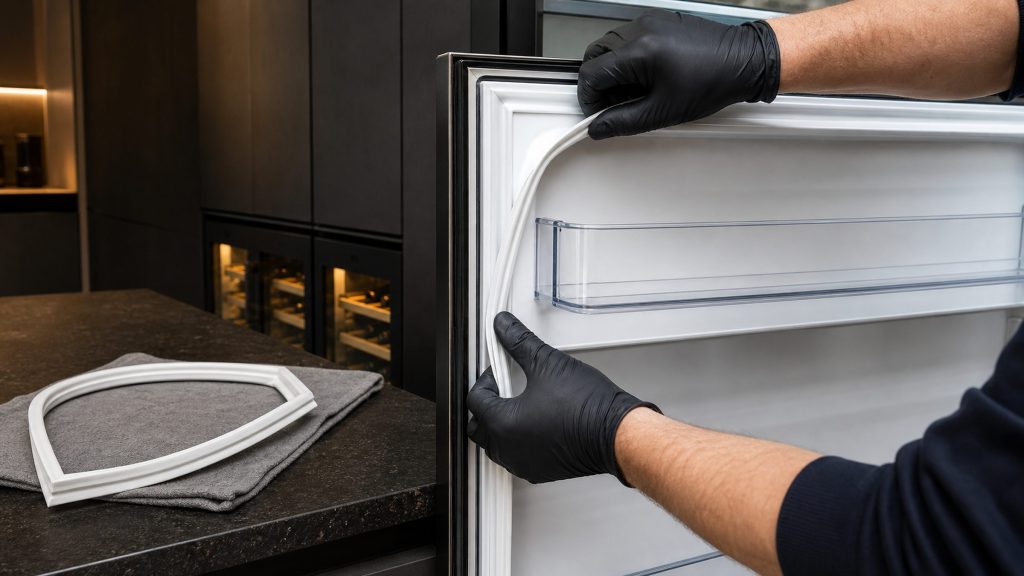
The cheapest part on the appliance that costs you temperature, and the first thing worth looking at behind condensation on a wine cooler door. A seal that has taken a set no longer touches the cabinet along its whole run, and the gap is usually somewhere nobody looks — the hinge side, low down, behind the door front.
- Checked along the whole run, not at the handle
- Fitted to a door that closes square, or it will fail again
- Condensation and frost traced to the seal before anything else
-
from $175 Door alignment and hinge repair
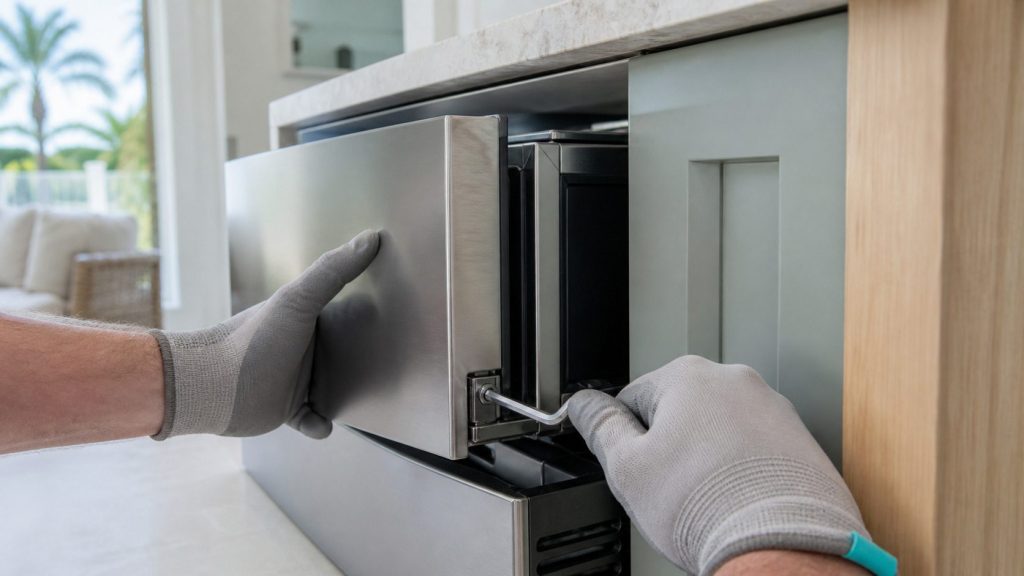
Priced apart from the seal on purpose: one is a part and the other is joinery. Nearly every U-Line is built in, and many carry a customer's own cabinet front on an integrated door. Aligning that door against the run either side — so it closes square, sits flush and does not hold itself open a millimeter — is most of the visit and is the part nobody quotes for.
- Integrated doors aligned against your cabinetry, not just to the appliance
- Door swing, door stop and adjustment as the maker sets them
- A door that closes itself instead of resting
-
Some of it is normal, and the maker gives the threshold Frost building up inside
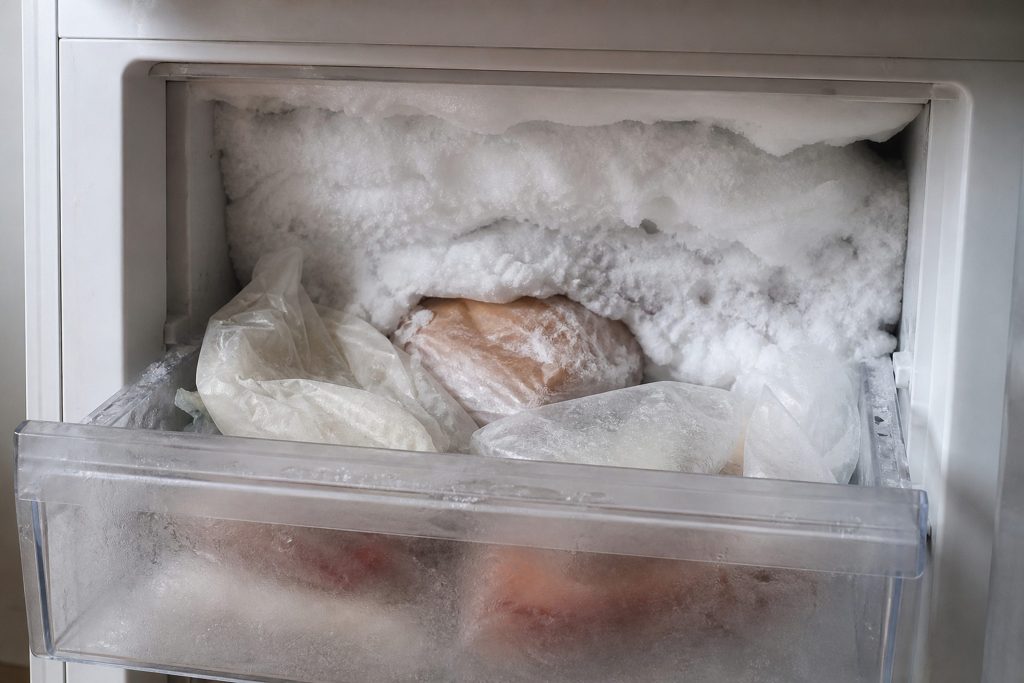
Frost on the evaporator plate vents is normal on these units and melts during each off cycle — the manual says so. What is not normal is a quarter of an inch or more, and in a humid kitchen the difference between the two arrives faster than the manual assumes.
- Ice on the back wall
- Frost that never melts away
- A quarter inch or more of build-up
-
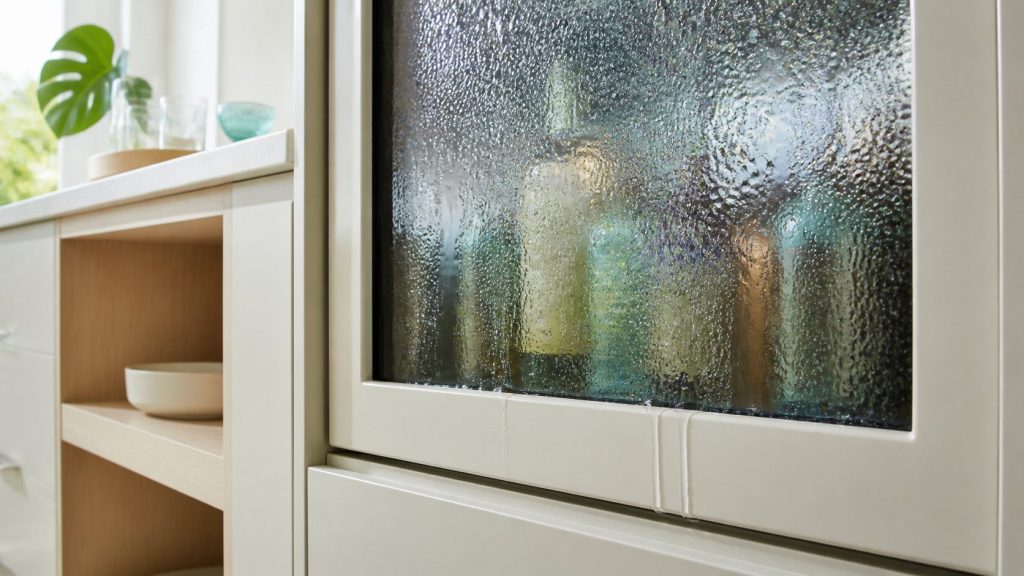
Outside is weather, inside is the appliance Condensation on the door or the outside
Water on the outside of a cabinet in South Florida is often the room rather than the appliance, and the maker says so: the unit is exposed to excessive humidity and the moisture dissipates as humidity falls. Water on the inside of a glass door is a different question.
- Beads on the outside of the door
- Misting on the inside of the glass
- Damp on the cabinetry around it
Questions people ask about this
Can I clean a refrigerator gasket with vinegar?
Occasionally and weak, yes — it is popular because it deals with mold. Used regularly and strong, it hardens rubber, and a hardened seal is a seal that no longer grips. Warm soapy water does the same job with none of that, and drying afterwards does more against mold than any chemical.
How do I know if my door seal is bad?
The paper test. Close the door on a sheet of ordinary paper so half is inside, and pull. It should drag noticeably. Do it at six or eight places around each door and specifically at the corners, because that is where a seal goes first and where nobody looks.
Does a bad seal actually cost anything?
It costs run time, which costs compressor life; it costs stable temperature, which on a wine cooler is the entire purpose of the appliance; and it puts moisture into the cabinet, which becomes frost. It is the cheapest thing on a cold appliance and the one with the best return.
Should I put petroleum jelly on it?
No. It attracts dirt and degrades rubber over time. If a seal sticks rather than leaks, a light wipe of a silicone-safe product is the trade answer — and a seal that has hardened enough to need help is usually a seal to replace.
My seal looks perfect and the cabinet still frosts.
They usually do look perfect. A seal that has taken a set is not torn or obviously damaged; it has simply stopped springing back into contact. Only the paper test shows it, and on a built-in unit the other possibility is that the door is no longer square rather than that the seal has failed.
Maintenance & Prevention
More guides like this one
-
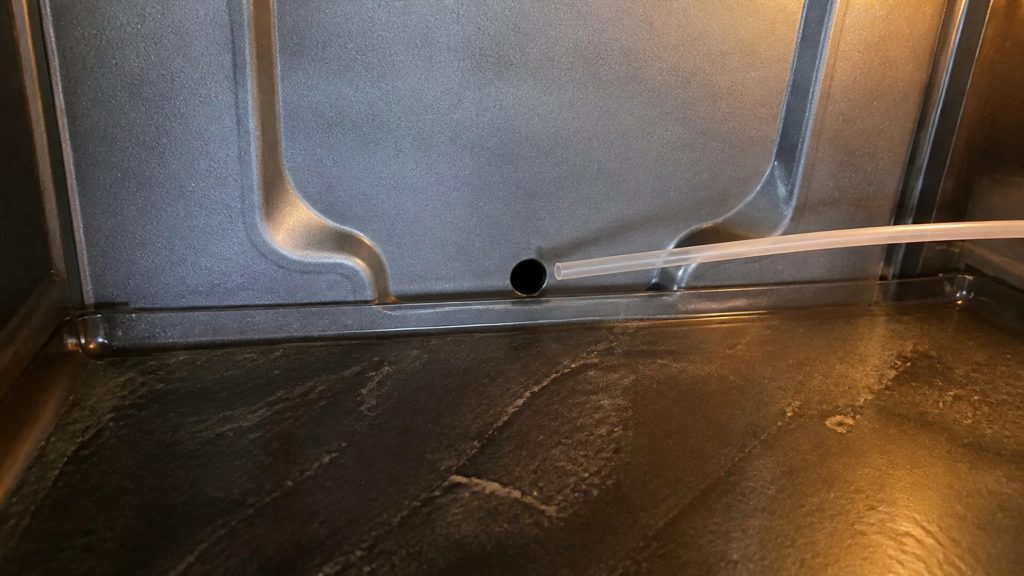
How to Clean a Refrigerator Drain Line Before It Reaches Your Cabinetry
On a built-in appliance a blocked drain does not make a puddle first. It puts water into the carcase and the floor, and by the time anything shows, the joinery has been wet for a while.
Read more -
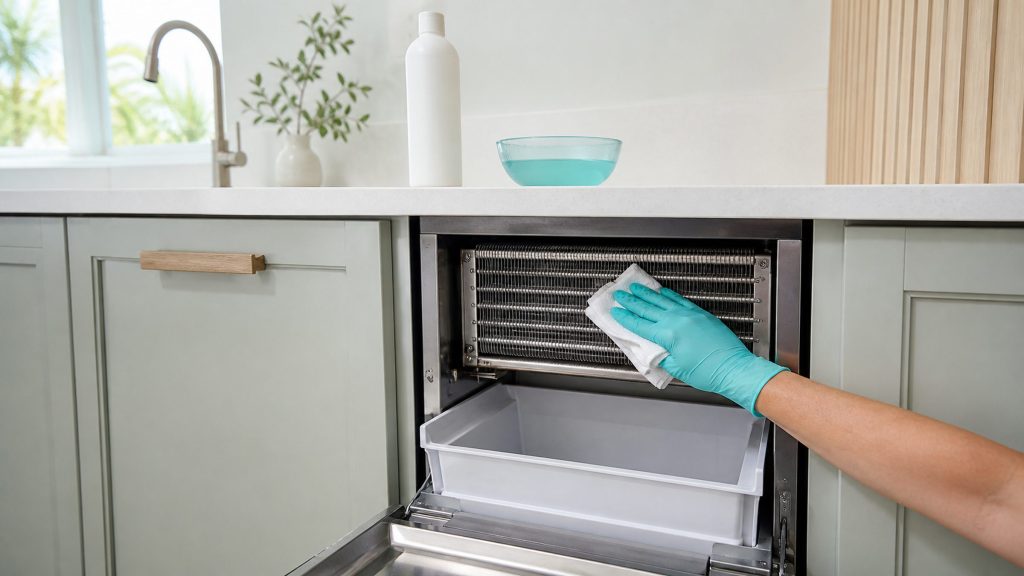
How to Clean a U-Line Ice Machine, Including the Nugget
The machine asks for this every six months and keeps asking until it gets it. Here is the actual sequence, and why six months is optimistic on South Florida water.
Read more -
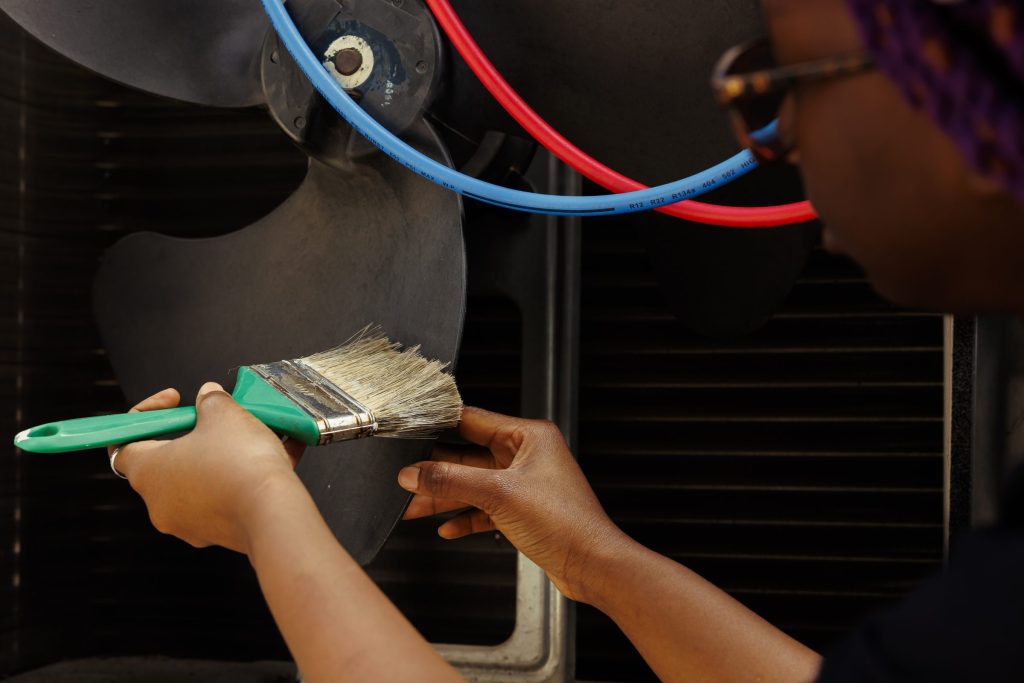
Behind the Grille: Cleaning the Condenser and the Drain Pan
Two things live behind the grille at the bottom of an undercounter unit, and both are worth ten minutes. One is the maker's own first answer for a cabinet that is not cold enough.
Read more
Tell us the model number and what it is doing.
This article is based on:
- Official manufacturer documentation
- Internal repair procedures
- Technician repair history
- Company quality standards