Maintenance & Prevention
Behind the Grille: Cleaning the Condenser and the Drain Pan
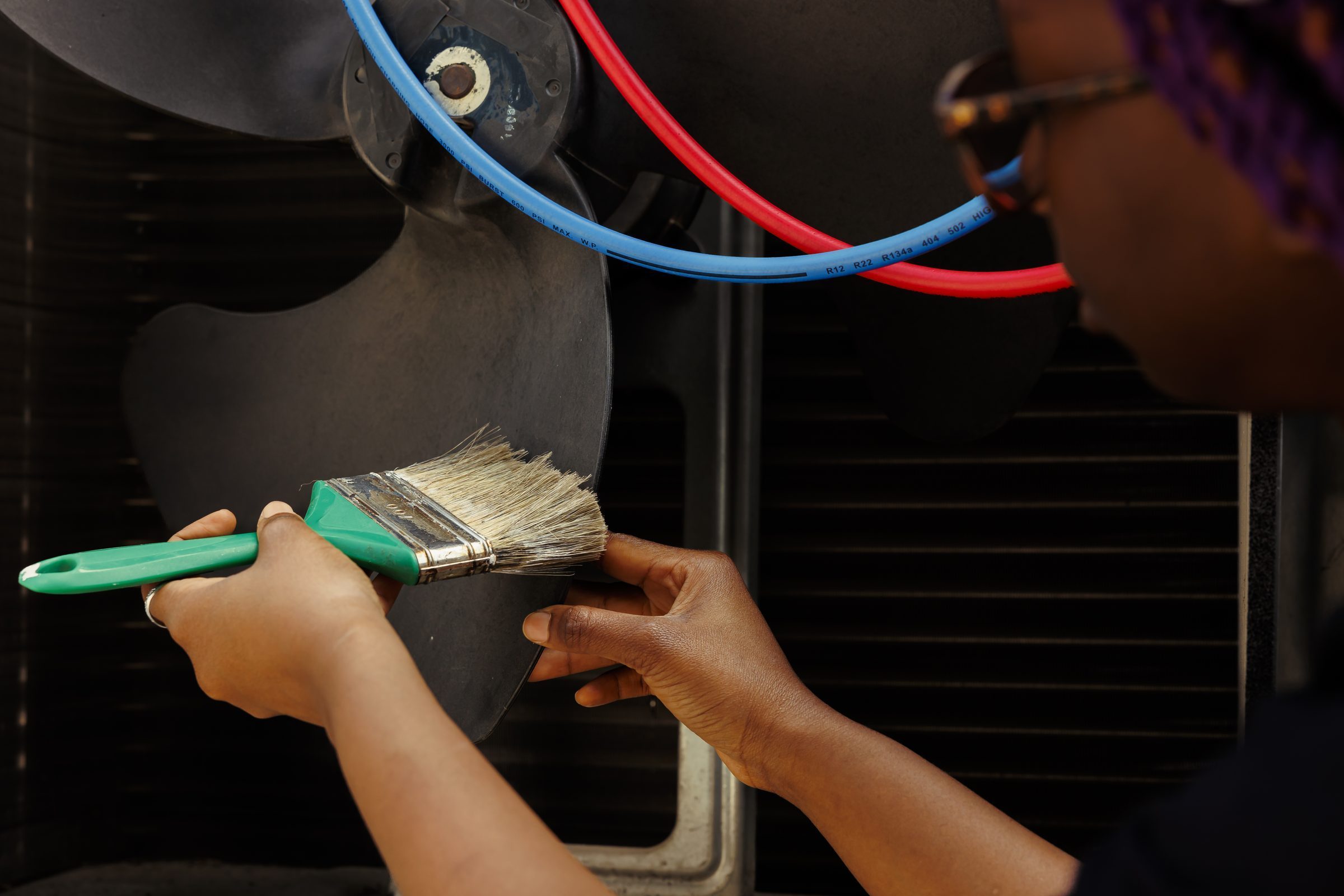
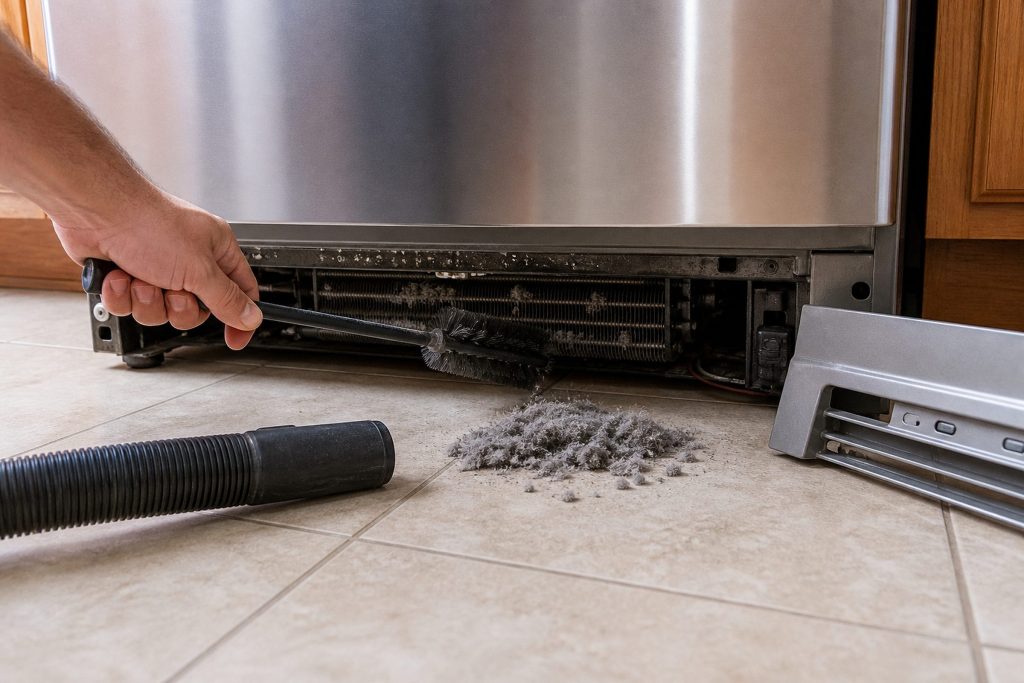
Switch the appliance off at the breaker and take the grille off the bottom front: the condenser, the condenser fan and the drain pan are all behind it. Clean the coil with a soft brush and a vacuum — U-Line's manual is explicit that no cleaner of any type goes on the condenser, because a residue on a coil is a permanent insulator. Work from the top down so what you loosen falls where the vacuum is, and clear anything against the fan blade while you can see it. Then the drain pan, which sits near the compressor and catches the meltwater the defrost cycle produces: it should be damp rather than brimming, and it should not smell. A pan that is full means far more water is arriving than the cycle should be making, and that is a door or a defrost problem rather than a drain one; a pan that smells is telling you what has been growing in the tube above it. Do both at least twice a year in a Miami kitchen and more often on an outdoor unit, where the coil collects salt as well as dust.
The full guide
How to clean refrigerator drain pan and coil: start with the manufacturer's own first answer
Open a U-Line manual at the troubleshooting table, find the row for a unit that is not cold enough, and the answers are in this order: check the temperature setting, check the ambient, check the door, check the interior light has not been left on, ensure nothing is blocking the front grille at the bottom of the unit, and ensure the condenser coil is clean and free of any dirt or lint build-up.
The same instruction appears against a unit that runs too long. It is the cheapest item on both lists and it is right often enough to be the first thing anybody does.
Why it fills faster on an undercounter appliance
A full-size refrigerator hides its condenser at the back or underneath, where it collects dust slowly and undisturbed. An undercounter unit puts its condenser and its fan behind a grille at the bottom front, at floor level, facing into the room.
That is a good engineering decision — the coil can be reached without pulling the appliance out — and a difficult environment. Floor level in a kitchen is where dust, lint, pet hair and everything that gets swept toward a toe-kick ends up. In a house with a dog it is remarkable how fast a coil goes grey.
Doing it
Switch it off at the breaker. There is a fan behind that grille, it starts on its own schedule, and it does not know your hand is in there. On a built-in unit the breaker is the practical switch because the plug is behind the appliance.
Take the grille off. Usually a few screws or clips along the bottom front. Put them somewhere you will find them.
Brush and vacuum, top down. A soft brush to lift the mat of lint off the fins, a vacuum following to take it away. Work downward so what you loosen falls where the nozzle already is.
No cleaner. At all. The manual could not be clearer: *do not use any type of cleaner on the condenser unit. Condenser may be cleaned using a vacuum, brush or compressed air.* Anything that leaves a film behind puts a permanent insulator on the one surface in the appliance whose entire purpose is to give heat away.
Clear the fan area. The blade should turn freely with nothing against it, and while it is visible is the only convenient time to check.
Check the drain pan. It sits near the compressor and it should be damp rather than brimming, and it should not smell.
Refit the grille. A grille left off is a condenser service in six months, because the coil is now unshielded. And keep the front of it clear afterwards — a recycling bin standing in front of a toe-kick grille undoes the whole job.
Outdoors is a different interval
On the twenty-six outdoor models in U-Line's catalog, everything above still applies and it applies more often. An outdoor condenser collects salt as well as dust, and salt is not simply extra dirt: it holds moisture against metal, which corrodes the fins as well as insulating them.
A unit three blocks from the water is on a different schedule from one in an inland kitchen, and the honest way to set that schedule is to look at the coil at the end of a summer and decide.
The drain pan, while you are in there
The pan sits near the compressor, behind the same grille, and catches the meltwater every defrost cycle produces. The heat coming off the compressor evaporates it away again, which is why a healthy pan is damp rather than wet.
Damp is correct. A pan that is brimming means far more water is arriving than a normal cycle should produce, and that points at the door or the defrost circuit rather than at the pan.
A smell is information. What grows in a pan grew in the drain tube above it first, and that tube is the thing worth clearing.
Where the model lets the pan lift out, wash it and dry it and put it back level. Where it does not, wipe it in place — the point of looking is the diagnosis rather than the tidiness.
What it fixes, and what it does not
It fixes: a cabinet running longer than it used to, a cabinet that cannot quite reach its set point on hot afternoons, a compressor cutting out on its own overload, and a condenser fan that has been working against a mat of lint.
It does not fix: a failed temperature sensor, and on this make that is the other likely cause of the same complaint. U-Line's backup mode keeps a cabinet cooling on a fixed cycle after a thermistor fails and shows nothing at all — so if a clean coil does not change anything, the next step is a measurement rather than a bigger repair.
Doing the cheap one first is not a shortcut. It is the order the maker itself publishes.
If it turns out to be a repair
What this leads to, and what it costs
Every job on this site is priced the same way: an on-site diagnostic first, the figure agreed in writing before anybody starts.
-
from $145 Condenser and airflow service
The maker's own first answer for a unit that is not cold enough is the grille and the condenser, and on an undercounter appliance it is right more often than anywhere else: the condenser sits behind a grille at floor level, in a kitchen, under a counter. It fills with dust and lint, and the unit does not complain — it just runs longer and holds less.
- The maker's own first check for "not cold enough"
- Cleaned the way the manual allows, not with a chemical
- Clearance around the unit checked, not only inside it
-

from $145 Appliance maintenance
The visit that stops the other visits. On this equipment it is a short and specific list, and in this climate it pays for itself: a condenser at floor level in a humid kitchen, a seal that works harder here than anywhere, a drain that must not block, and on an ice machine a cleaning cycle the machine itself has been asking for.
- Condenser, seals, doors, drain — and the ice cycle where there is one
- The maker's own intervals, adjusted for South Florida
- Findings written down, not just fixed
-
It works, but it never quite arrives Not cold enough
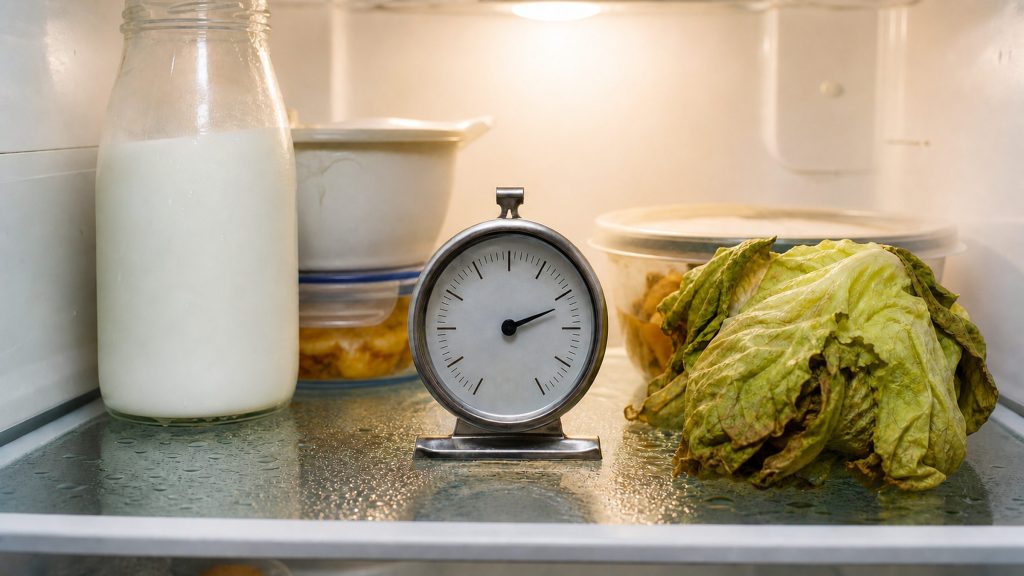
A cabinet that is cold, but not at its set point, and never has been since something changed. On this make that pattern has a specific and documented cause that shows nothing on the display, which is why it gets lived with for months.
- A few degrees out, all the time
- Worse when the kitchen is warm
- Runs longer than it used to
-
from $195 Outdoor and marine unit service
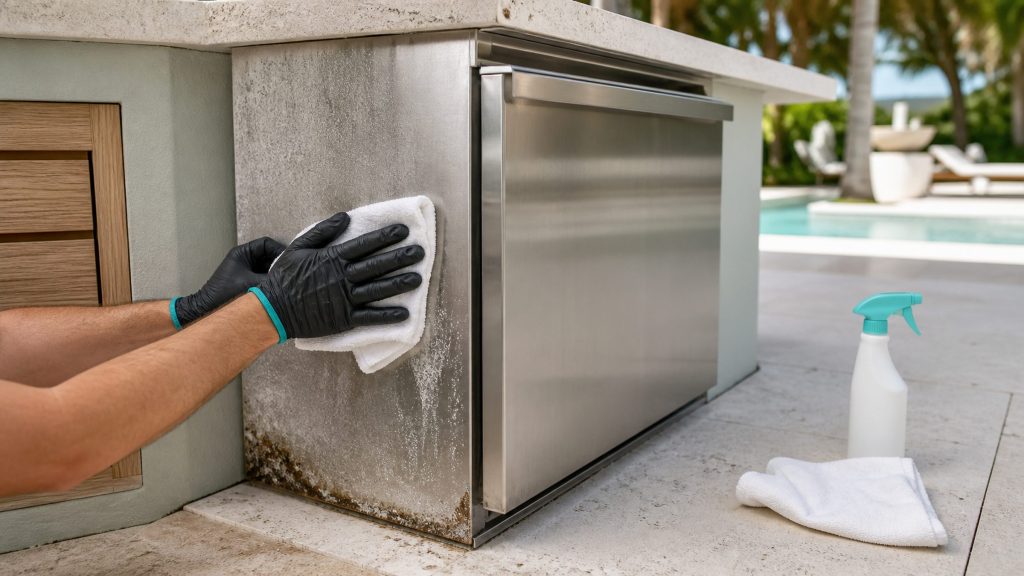
A quarter of this catalog lives outside, and salt air is a different repair rather than a different setting. An outdoor unit's condenser breathes whatever the yard has, its fasteners corrode, and on the Marine models the appliance is on a boat. It is priced above the indoor condenser service because it is more work, and it is scheduled differently because the interval between services is shorter.
- Salt, humidity and what they do to a condenser
- Corrosion checked on the fixings, not only on the coil
- Marine and 230V models included
Questions people ask about this
Where is the condenser on an undercounter refrigerator?
Behind the grille at the bottom front of the unit, along with the condenser fan. That location is why it fills so quickly: it is at floor level, in a kitchen, breathing whatever the floor has. On a full-size refrigerator the coil is usually behind or underneath the cabinet, which is dirtier still but disturbed far less often.
Can I use a cleaner or a degreaser on the coil?
No, and the manual says so directly: do not use any type of cleaner on the condenser. It may be cleaned using a vacuum, a brush or compressed air. Anything that leaves a residue leaves an insulating film on the exact surface whose job is to shed heat.
How often should this be done?
Twice a year is a reasonable baseline in a Miami kitchen, and quarterly is not excessive on an outdoor unit or in a house with pets. The honest test is to look: a coil that is grey rather than clean is not doing its job, regardless of what the calendar says.
Will cleaning the condenser fix a cabinet that is not cold enough?
Sometimes completely, and it is the maker's own first answer for that complaint. When it does not, it has at least removed the cheapest cause before anybody starts on the expensive ones — and on this make the next place to look is a temperature sensor rather than the sealed system.
Is there anything else behind the grille worth checking?
The condenser fan, which should spin freely and be clear of anything; the drain pan, which should be damp rather than brimming; and on an ice machine the water and drain connections. It is a good five minutes to spend while everything is open.
How do I clean the drain pan?
Where the model allows it to be lifted out, wash it with warm soapy water, dry it and refit it level. Where it does not, wipe it in place. What matters more than the cleaning is what it tells you: a pan that is consistently full is receiving more water than a healthy defrost cycle produces, and a pan that smells is reporting what is growing in the drain tube above it.
Maintenance & Prevention
More guides like this one
-
How to Clean a Refrigerator Drain Line Before It Reaches Your Cabinetry
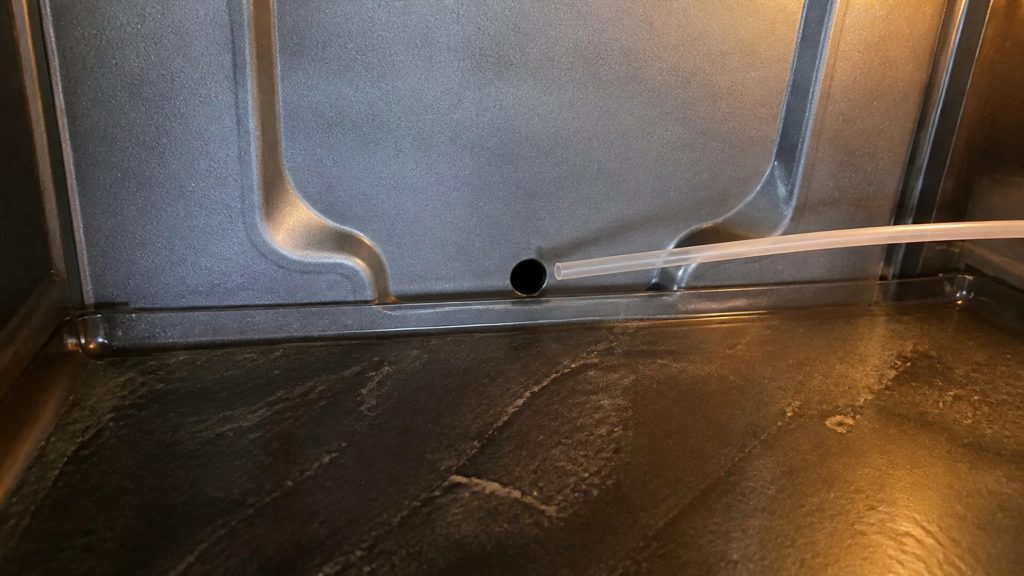
On a built-in appliance a blocked drain does not make a puddle first. It puts water into the carcase and the floor, and by the time anything shows, the joinery has been wet for a while.
Read more -
How to Clean a U-Line Ice Machine, Including the Nugget
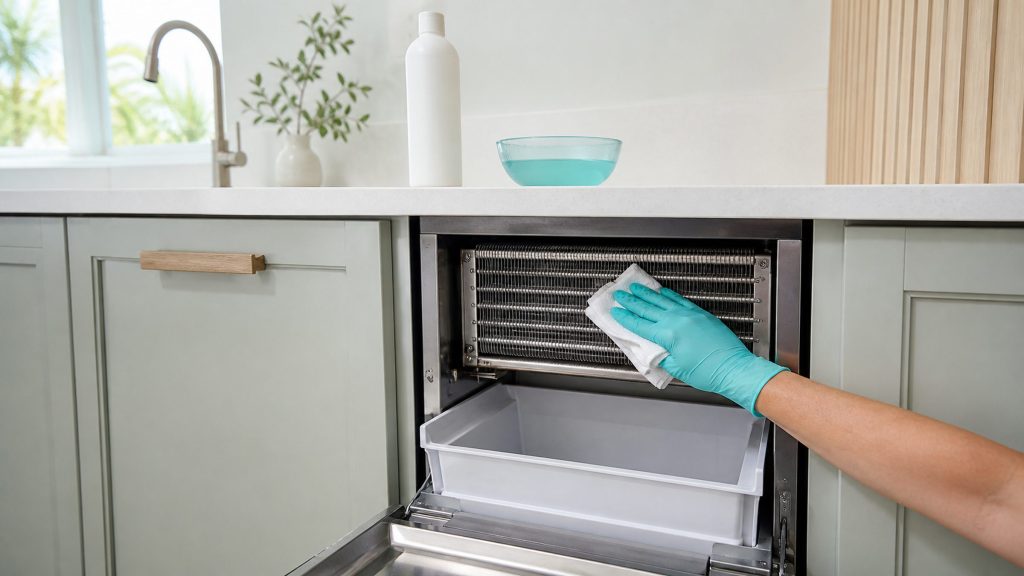
The machine asks for this every six months and keeps asking until it gets it. Here is the actual sequence, and why six months is optimistic on South Florida water.
Read more -
How to Clean a Refrigerator Door Gasket — and the Test That Follows
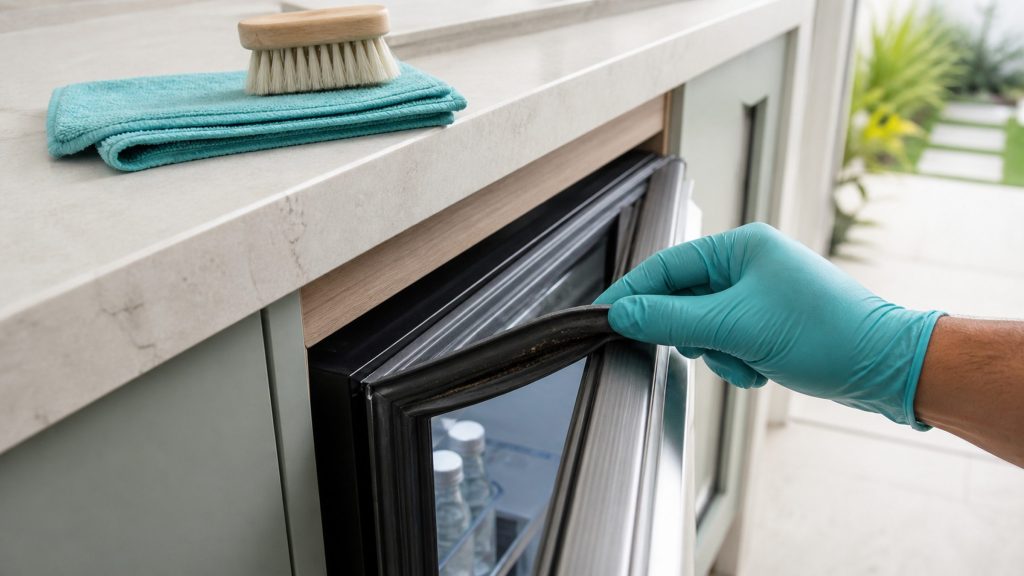
Cleaning takes five minutes. The part that tells you whether the seal still works takes ten seconds and a sheet of paper — and on an undercounter cabinet in this climate it matters more than most people think.
Read more
Tell us the model number and what it is doing.
This article is based on:
- Official manufacturer documentation
- Internal repair procedures
- Technician repair history
- Company quality standards